WhatsApp: +86 16626708626
 Email:
  Phone: +86 16626708626
Description
Key Technical Specifications
| Parameter | Value |
|---|---|
| Model Number | 3300/16-12-01-01-00-00-00 |
| Alternate Search Format | 330016-12-01-01-00-00-00 |
| Manufacturer | Bently Nevada |
| Product Series | 3300 Machinery Protection System |
| Product Type | 3300/16 XY/Gap Dual Vibration Monitor |
| Measurement Channels | Two independent channels |
| Primary Measurements | Radial shaft vibration and average shaft position, also called DC gap |
| Input Type | Proximity-probe / Proximitor transducer-system inputs |
| Typical Sensor Compatibility | Bently Nevada 3300 series, 3300 XL 8 mm, and 7200 series 200 mV/mil Proximitor systems; verify the installed transducer system |
| Vibration Input Range | 0 to 10 mils peak-to-peak, subject to configuration and sensor scaling |
| Vibration Frequency Options | 1 Hz to 10 kHz overall; published filter options include 4–4,000 Hz or 1–600 Hz |
| Output Types | Configurable voltage and current outputs; verify exact order-code options and installed rack wiring |
| Alarm Functions | Configurable Alert and Danger alarm relay functions |
| Installation Platform | Bently Nevada 3300 rack |
| Measurement Method | Processes AC vibration and DC gap components from proximity-probe signals |
| Intended Machinery | Turbines, compressors, pumps, motors, generators, gearboxes, and other rotating assets with radial bearings |
| Lifecycle Status | Legacy / obsolete 3300-series machinery-protection hardware |
| Compatibility Warning | This is not a Bently Nevada 3500-series module and does not install in a 3500 rack |
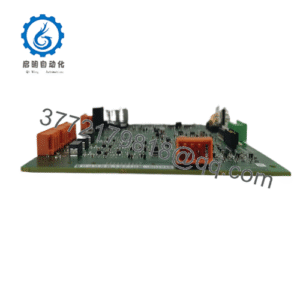
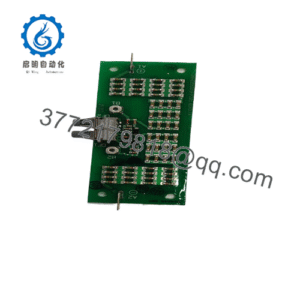
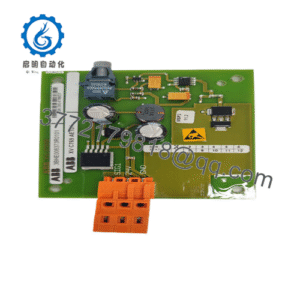
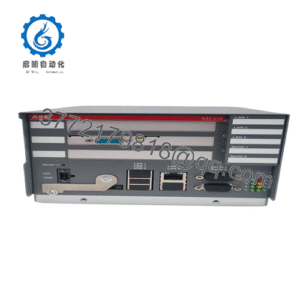
Available product sources identify the full part number as a Bently Nevada 3300/16 XY/Gap Dual Vibration Monitor. It continuously monitors two independent radial-vibration channels and associated average shaft-position measurements from proximity-probe inputs. Published reseller data cites a 0–10 mils peak-to-peak range and lists 3300/7200/3300 XL 8 mm transducer-system compatibility, but the exact installed configuration must be verified from the card faceplate, rack wiring, and OEM documentation.
Product Introduction
The Bently Nevada 3300/16-12-01-01-00-00-00 is a two-channel XY/Gap Dual Vibration Monitor for legacy Bently Nevada 3300 machinery-protection racks. It accepts proximity-probe signals, separates the dynamic vibration component from the DC gap component, and monitors radial shaft vibration plus average shaft position at two bearing locations or two probe axes.
This monitor is used on critical rotating machinery where early warning of vibration growth, shaft movement, bearing instability, rub, misalignment, or process-driven loading changes can prevent extended downtime. It must match the existing 3300 rack, sensor sensitivity, filter selection, alarm configuration, output option, and installed field wiring.
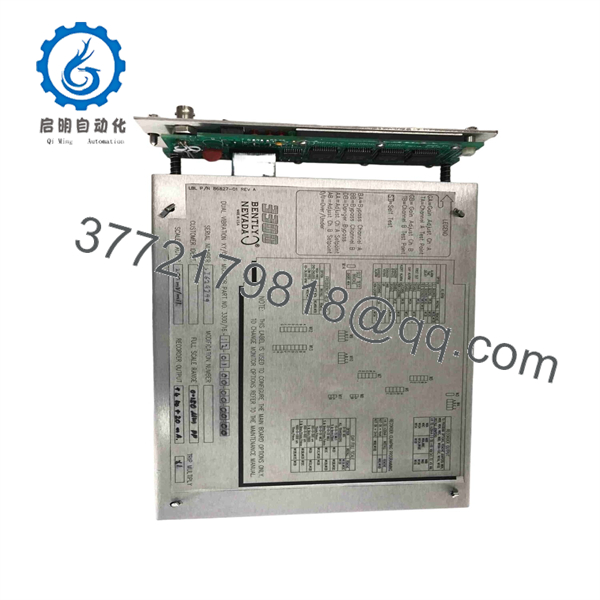
330016-12-01-01-00-00-00
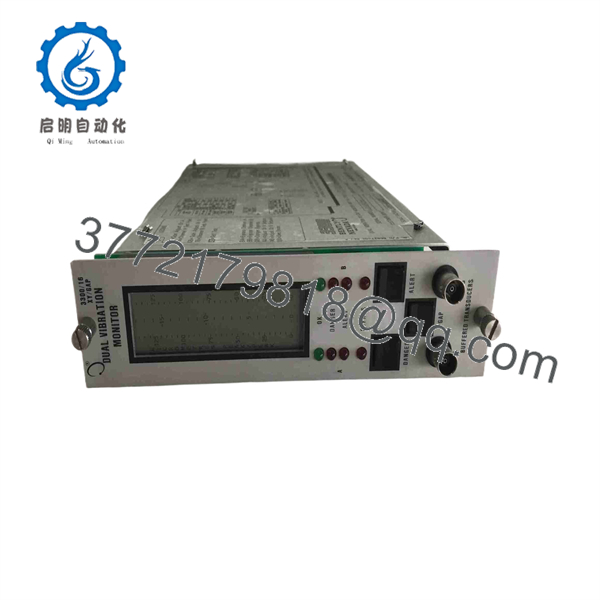
330016-12-01-01-00-00-00
Troubleshooting Quick Reference
| Symptom | Possible Cause | Relevance to This Part | Quick Check Method | Recommendation |
|---|---|---|---|---|
| One channel indicates NOT OK or no valid reading | Failed proximity probe, damaged extension cable, failed Proximitor, open circuit, short circuit, poor terminal connection | ✅ Medium | Measure probe bias/gap voltage at the monitor input terminal and compare it with the healthy channel. Inspect probe, extension cable, connector, and Proximitor supply. | Diagnose the transducer loop first. One-channel faults are usually probe-system or field-wiring faults, not monitor-card failures. |
| Both channels are dead | Monitor not seated, 3300 rack power fault, backplane issue, failed monitor card, common wiring fault | ✅ High | Check rack power status, adjacent monitor operation, monitor seating, and rack connector condition. Reseat the card only with the approved procedure. | Verify rack power and backplane health before replacing the 3300/16. |
| Vibration reading is high but gap is normal | Actual shaft vibration, loose probe bracket, rub, bearing issue, process upset, cable noise | ✅ Medium | Compare vibration trend to historical baseline. Inspect probe mounting, bearing condition, process load, speed, and buffered signal waveform if test access is available. | Treat the indication as a possible machinery problem until verified. Do not replace the monitor simply because vibration is high. |
| Gap value shifts suddenly while vibration remains stable | Probe movement, bracket loosening, shaft position change, thermal growth, thrust movement, transducer-cable issue | ✅ High | Compare current gap voltage and position reading with baseline data. Inspect probe mounting, target surface, cable strain relief, and machine operating condition. | Investigate the mechanical condition and probe installation before changing hardware. |
| Reading is noisy or fluctuates | Poor shield grounding, EMI, damaged cable, loose terminal, VFD interference, incorrect probe cable routing | ✅ Medium | Check cable shields, terminal torque, cable routing near high-current conductors, and compare signal waveform against a known-good channel. | Correct shielding and cable problems first. Do not widen alarm delays or filtering to hide a noise issue. |
| Alert or Danger alarm activates immediately after replacement | Wrong monitor configuration, wrong sensor sensitivity, wiring moved, alarm setpoints changed, module installed in wrong slot | ✅ High | Document and compare the removed unit’s faceplate code, rack slot, sensor type, gap voltage, and alarm settings. Verify all field terminals against the approved drawing. | Restore the original configuration and wiring. Test alarms under a controlled machinery-protection procedure before returning equipment to service. |
| Analog output to DCS is incorrect | Wrong output scaling, incorrect receiving input type, open output wiring, DCS engineering-unit scaling error | ❌ Low | Compare the monitor’s local indication or buffered signal with the DCS value. Measure the output at the rack terminal and confirm the DCS input configuration. | Correct output scaling and DCS engineering values before replacing the monitor. |
| Alarm relay does not change state | Incorrect setpoint or relay logic, relay wiring fault, external load issue, failed monitor output relay | ✅ Medium | Confirm the monitor alarm condition and relay state. With approved isolation, test relay contact continuity and measure external circuit voltage. | Check logic and external wiring first. Replace the monitor only if the relay does not transition with a verified alarm command. |
| Fault occurs only during startup or coastdown | Critical-speed response, transient shaft movement, probe-gap issue, loose cable, process condition | ✅ Medium | Trend vibration and gap against speed during startup and coastdown. Compare with prior run-up plots and known critical-speed behavior. | Review machinery behavior with vibration specialists. Do not assume the monitor has failed because it detects a repeatable speed-related event. |
| Monitor or rack terminals show corrosion or heat damage | Moisture ingress, contaminated cabinet, loose terminal, field transient, failed rack supply | ✅ High | De-energize according to the plant procedure. Inspect terminals, edge connector, card surface, and rack contacts for corrosion, discoloration, or burned areas. | Replace damaged hardware and correct the cabinet, power, grounding, or wiring cause before installing the replacement. |
❗ Do not confuse high vibration with a bad monitor. The 3300/16 reports what the probe system sees. A rising value can indicate real bearing degradation, looseness, rub, misalignment, hydraulic instability, or a process upset. Compare the trend, gap voltage, shaft speed, and machine operating condition before replacing the card.
❗ Photograph the old monitor before removal. Capture the full 3300/16 order code, front faceplate, rack slot, sensor-cable terminals, alarm relay wiring, output wiring, and any switch or configuration settings. Small differences in the order-code suffix can affect filtering, outputs, and application compatibility.
❗ Verify the transducer system. A 200 mV/mil proximity system must be matched to the monitor’s expected sensitivity and configuration. Installing a monitor configured for the wrong probe system can produce incorrect vibration scale and misleading alarm behavior.
❗ Do not install this in a 3500 rack. The 3300/16 belongs to the legacy Bently Nevada 3300 platform. It is not mechanically or functionally interchangeable with Bently Nevada 3500-series monitors.
If the fault remains unclear, provide technical support with photos of the monitor faceplate, full order code, 3300 rack slot, probe and cable labels, gap-voltage readings, vibration trend, buffered waveform capture, alarm settings, and DCS output scaling. Keep these checks in mind and you will save yourself 90% of typical rework time.
Frequently Asked Questions (FAQ)
What is the Bently Nevada 3300/16-12-01-01-00-00-00?
It is a Bently Nevada 3300/16 XY/Gap Dual Vibration Monitor for the legacy 3300 machinery-protection system. It monitors two independent proximity-probe channels for radial shaft vibration and average shaft position, also called gap.
How many channels does the 3300/16 monitor support?
It supports two independent measurement channels. In a typical radial-bearing application, the channels can represent two orthogonal probe axes, often called X and Y, or two independent radial measurement points depending on the machinery-protection design.
Does this monitor measure both vibration and shaft position?
Yes. It processes the AC component of the proximity-probe signal for vibration and the DC component for average shaft position, or gap. This makes it useful for checking both dynamic shaft motion and changes in probe-to-shaft clearance.
Which proximity probes are compatible?
Available product information lists compatibility with Bently Nevada 3300-series, 3300 XL 8 mm, and 7200-series Proximitor systems using 200 mV/mil sensitivity. Confirm the exact sensor system, extension cable, Proximitor, monitor order code, and rack documentation before replacement. Do not mix probe-system components based only on connector fit.
Can I replace this with a Bently Nevada 3500 monitor?
Not as a direct card-for-card replacement. The 3300/16 is for a 3300 rack, while the 3500 system uses different rack hardware, I/O modules, configuration tools, communications, and protection architecture. A 3500 migration is an engineering project involving hardware, field wiring, sensor verification, alarm philosophy, DCS interfaces, and commissioning—not an emergency plug-in swap.
Can I hot-swap the 3300/16?
Do not assume it is hot-swappable. Removing a vibration monitor can create NOT OK status, activate alarms, interrupt DCS signals, and affect machinery protection. Follow the approved bypass, alarm-management, permit, and return-to-service procedure before removal.
Why does the monitor show high vibration but normal machine operation?
The reading may be real but not yet visible as an operational problem. Compare it with baseline and alarm trends, shaft speed, gap value, process load, bearing temperature, and buffered waveform data. Also inspect probe mounting and cable shielding. Do not override alarms simply because the machine “sounds normal.”
Is the 3300/16 obsolete, and should I hold a spare?
Yes. The Bently Nevada 3300 platform is legacy machinery-protection hardware, so exact replacement availability can be limited. For critical turbines, compressors, pumps, generators, and large motors, keep a verified spare with a matching complete order code and documented configuration. Retain rack drawings, probe-system records, alarm settings, baseline data, and a controlled test procedure with the spare.