WhatsApp: +86 16626708626
 Email:
  Phone: +86 16626708626
Description
Key Technical Specifications
| Parameter | Specification |
|---|---|
| Manufacturer | Bently Nevada |
| Model | 3500/33 |
| Product Type | 16-Channel Relay Output Module |
| System | 3500 Machinery Protection System |
| Number of Relay Channels | 16 |
| Relay Configuration | Form C, SPDT |
| Relay Contacts | Normally open / normally closed / common |
| Relay Logic | Programmable |
| Typical Function | Alarm, trip, status, and control outputs |
| Module Format | Half-height 3500 rack module |
| Configuration | 3500 Rack Configuration Software |
| Output Use | External alarm, shutdown, annunciator, or control circuits |
| Relay Contact Rating | Application-dependent; verify the exact contact rating in the applicable 3500/33 manual |
| Power Source | 3500 rack backplane |
| Installation | Dedicated 3500 rack slot |
| Environmental Limits | Verify against the applicable 3500/33 revision and rack specification |
| Approvals | Configuration-dependent |
| Typical Application | Machinery protection and condition monitoring |
The 3500/33 16-Channel Relay Module provides programmable relay outputs from the 3500 machinery protection system. Each channel uses a Form C relay arrangement, allowing external equipment to use normally open, normally closed, and common contacts. Exact contact ratings and approval details should be checked against the hardware revision and applicable OEM documentation before wiring.
Product Introduction
The Bently Nevada 3500/33 is a 16-channel relay output module for the 3500 Machinery Protection System. It takes alarm, OK, trip, and other configured status conditions from the 3500 rack and presents them as discrete relay outputs for external annunciators, shutdown logic, control circuits, or plant alarm systems.
The module is useful when the 3500 rack must provide hardwired status or trip interfaces to equipment outside the monitoring system. Because relay logic is configurable, the actual behavior of each channel depends on the rack configuration. Verify the existing configuration before replacing a module.
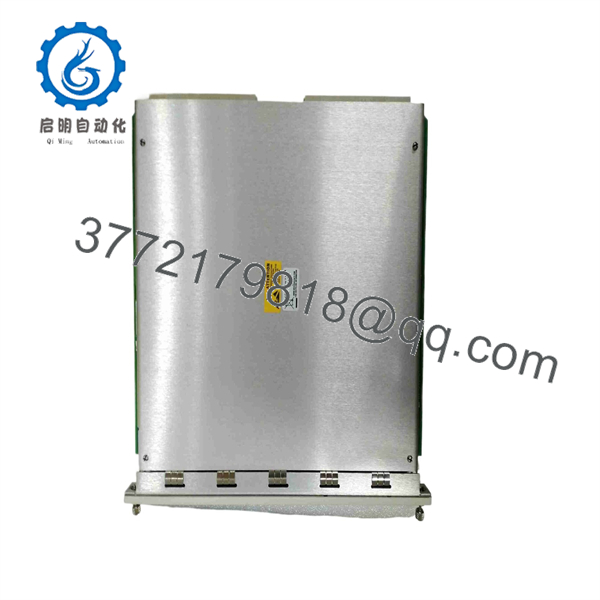
3500/33
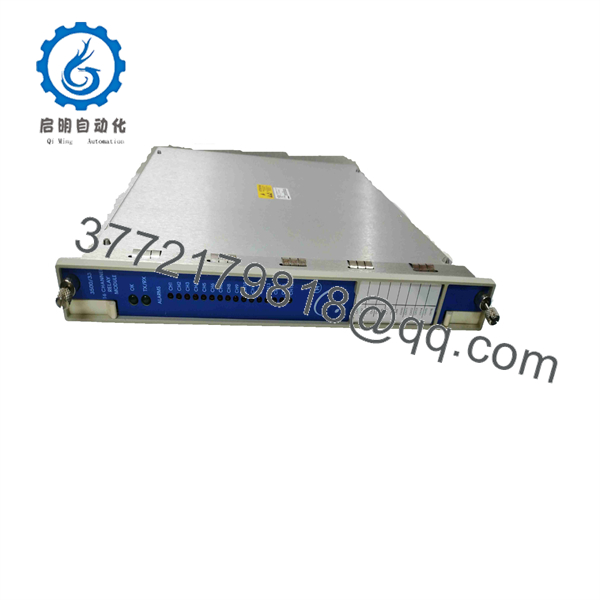
3500/33
Installation & Configuration Guide
Stage 1 — Pre-Installation Preparation
Estimated time: 15–20 minutes
- Confirm the replacement is a Bently Nevada 3500/33.
- Record the existing module’s full part number, revision, and rack position.
- Export or document the current 3500 rack configuration.
- Record which relay channels are used for alarm, trip, shutdown, annunciation, or status functions.
- Photograph the rear terminal wiring before disconnecting anything.
- Prepare an ESD wrist strap, screwdriver, multimeter, wire labels, and smartphone for reference photographs.
- Notify operations and place the monitored machinery in the approved maintenance state.
- Apply LOTO where required by the plant procedure.
⚠️ Do not assume every relay channel has the same function. The 3500/33 is programmable, so channel assignment must be preserved during replacement.
Stage 2 — Removing the Old Module
Estimated time: 10–15 minutes
- Verify the rack is in the approved maintenance condition.
- Confirm external circuits connected to the relay contacts are in a safe state.
- Label each relay connection before removal.
- Disconnect the external wiring without pulling on the terminal block.
- Release the module retaining hardware.
- Withdraw the 3500/33 straight from the rack.
- Inspect the card-edge connector and backplane for contamination, bent contacts, or mechanical damage.
- Keep the removed module available until commissioning is complete.
⚠️ A relay output can operate external shutdown equipment. Treat every connected circuit as potentially safety-critical until the wiring and logic have been verified.
Stage 3 — Installing the New 3500/33
Estimated time: 10–15 minutes
- Verify the replacement module marking and hardware revision.
- Compare the front-panel labeling with the removed unit.
- Inspect the module connector.
- Align the module with the correct 3500 rack slot.
- Insert it carefully until fully seated.
- Secure the module with the appropriate retaining hardware.
- Reconnect each relay circuit according to the photographs and wiring diagram.
- Verify COM, NO, and NC connections for every active relay channel.
- Check that no wire has been moved to an adjacent terminal.
Self-check:
- Correct 3500/33 model
- Correct rack slot
- Relay wiring labeled
- COM/NO/NC wiring verified
- Configuration backed up
- External shutdown circuits identified
Stage 4 — Power-On & Testing
Estimated time: 20–30 minutes
- Perform a continuity check on the external wiring where appropriate.
- Verify there are no unintended shorts between relay contacts and external supply circuits.
- Restore rack power according to the approved procedure.
- Confirm the module reaches its normal operating state.
- Connect the 3500 System Configuration Software.
- Verify that the rack recognizes the 3500/33.
- Compare the loaded relay configuration against the backup.
- Test each used relay channel individually using an approved test condition.
- Confirm the corresponding external alarm, annunciator, or shutdown input responds correctly.
- Return the machinery to normal operation only after the relay test has been documented.
⚠️ Do not force a trip simply to test a relay output. Use the plant’s approved simulation or commissioning method whenever the relay is connected to an actual machine shutdown circuit.
Frequently Asked Questions
Q1. What is the Bently Nevada 3500/33?
The 3500/33 is a 16-channel relay output module used in the Bently Nevada 3500 Machinery Protection System. It provides programmable hardwired relay outputs for alarms, trips, machine status, and external control interfaces.
Q2. How many relay outputs does the 3500/33 provide?
It provides 16 relay channels. The channels use Form C/SPDT contacts, providing common, normally open, and normally closed connections.
Q3. Can I replace a 3500/33 without reprogramming it?
Physically replacing the module does not necessarily mean the relay configuration is lost, but you should not assume the replacement contains the required configuration. Back up the rack configuration before removal and verify every used relay channel after installation.
Q4. Can the 3500/33 be hot-swapped?
Do not assume hot-swapping is permitted for your installation. A relay module may be connected to external alarm or shutdown circuits, and removing it can change those circuit states. Follow the applicable Bently Nevada 3500 maintenance procedure and the plant’s machinery-protection procedure.
Q5. Can every 3500/33 relay channel be used for a machine trip?
The relay hardware can provide discrete outputs, but whether a particular channel is assigned to a trip function depends on the 3500 configuration and plant protection philosophy. Check the actual rack configuration rather than treating all 16 channels as identical trip outputs.
Q6. What should I check before ordering a replacement 3500/33?
Confirm the exact 3500/33 model, full part number and revision, rack compatibility, terminal arrangement, relay configuration, and approval requirements. For a shutdown-critical application, also compare the existing configuration file and relay logic before commissioning the replacement.
Q7. Is the 3500/33 available as new surplus or refurbished?
The 3500/33 is a legacy-system spare commonly encountered through industrial automation surplus channels. Actual condition varies by seller. Specify New Original / New Surplus or Refurbished (tested) when requesting a quotation, and request the unit’s serial number, photographs, test report, and warranty terms before purchase.