 WhatsApp: +86 16626708626
 Email:
  Phone: +86 16626708626
Description
Key Technical Specifications
| Parameter | Value / Specification |
| Number of Channels | 2 independent axial/thrust channels |
| Board Identifier | DVTP-R (72352 sub-assembly variant) |
| Model Code suffix | -01L |
| Primary Input Handling | Proximity sensor inputs for axial shaft displacement |
| Board Material | FR4 multi-layer PCB with industrial conformal coating |
| Signal Processing Linearity | Within ±0.5% of full-scale threshold |
| Backplane Interconnect | High-density gold-plated edge-pin connector |
| Isolation Rating | 500 V RMS continuous galvanic isolation |
| Operating Temperature | 0 to +65 °C (+32 to +149 °F) |
Product Introduction & Supply Chain Strategy
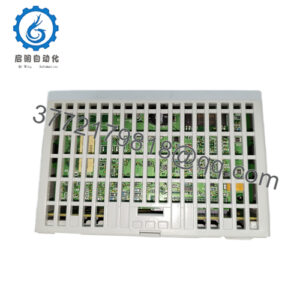
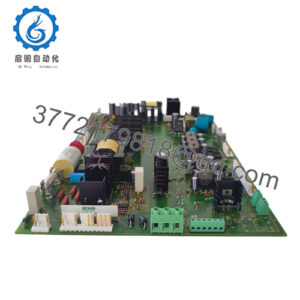
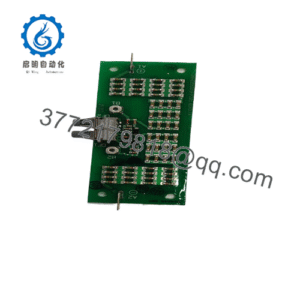
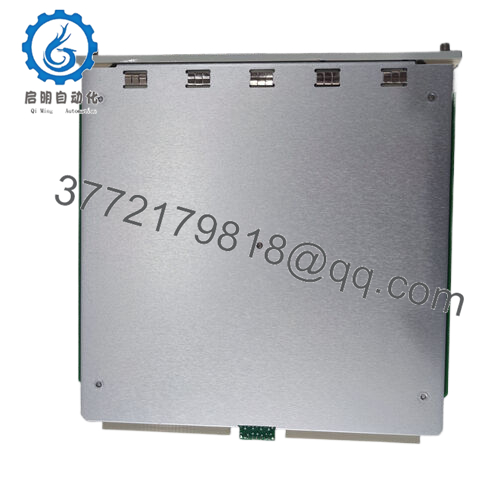
The Bently Nevada 72352-01L is a specialized dual thrust monitor circuit board belonging to the DVTP-R asset protection architecture. Engineered explicitly for critical rotating machinery, this board monitors axial shaft displacement (thrust position) to detect internal bearing wear or catastrophic shifting before contact occurs. The unit handles raw high-frequency signals from proximity sensor drivers, evaluating them against rigid hardware alarm baselines to trigger protection relays.
Because this hardware belongs to a deeply mature legacy generation, acquiring this board as a New Surplus asset represents a critical supply chain calculation. When a thrust monitor fails, your plant risks either running blind on critical assets or suffering an immediate trip; the resulting downtime easily eclipses the price of a component. Procuring a factory-sealed, unenergized surplus board eliminates the immediate risks of degraded capacitors and trace degradation native to second-hand refurbished parts, securing true OEM reliability at a stabilized Total Cost of Ownership (TCO).
Installation & Configuration Guide
Stage 1: Pre-Installation (Prep & Safety)
- De-energize the monitor sub-rack or target bay housing the DVTP-R assembly according to your plant’s lock-out/tag-out standards.
- Put on an ESD wrist strap and ensure it is grounded directly to the bare metal rack frame.
- Document the existing channel layouts and physical calibration profiles of the proximal sensor probes being fed into this board slot.
Stage 2: Removal
- Loosen the retaining structural hardware or module framework holding the card assembly in place.
- Carefully unplug any localized wiring jumpers or terminal ribbon connectors running directly to the face layout.
- Firmly extract the board out from its backplane terminal paths, using steady horizontal pressure to avoid bending the connector pin fields.
Stage 3: Installation (Clone & Seat)
- Inspect the new 72352-01L module and mirror any board-level DIP switch clusters or physical shorting jumpers from the removed card.
- Guide the circuit card straight along its mounting rails inside the sub-rack structure.
- Slide the card in smoothly until you feel the gold edge paths engage with the backplane connector socket, then push firmly to seat the unit.
Stage 4: Power-On & Testing
- Secure the physical mounting anchors or faceplate screws to bond the ground track.
- Restore power to the monitoring assembly rack. Verify that the system’s operational status indicators return to steady healthy green states.
- Connect diagnostic tools or configuration bridges to check for calibration offsets, and clear any historical faults.

- 72352-01L
Firmware/Software Versions & Upgrade Notes
The 72352-01L DVTP-R board uses analog and low-level digital logic processing tailored to older-generation rack telemetry. It does not contain field-flashable operating firmware in the modern sense; its behavior is dictated heavily by component matching, board revision iterations, and hardwired jumper selections.
When installing a replacement legacy board, it is vital to match the exact alpha-numeric suffix variant (such as the -01L specifier). Using a different revision family block can lead to minor layout alterations, causing backplane channel mismatching or signal attenuation variations when communicating with secondary relay output modules. Avoid attempting to patch or alter logic pathways across mismatched system iterations.
Frequently Asked Questions (FAQ)
Is this Bently Nevada 72352-01L board an unused part or pulled from an old rack?
This is a genuine New Surplus component. It has remained inside non-conductive, factory-sealed storage bags and has never been deployed in an operational industrial facility or subjected to thermal cycling. It is entirely free of the wear, trace stress, and repair marks found on typical third-party refurbished items.
Why choose this specific surplus unit over a repaired or refurbished alternative?
Thrust protection monitoring handles catastrophic machine failure thresholds. Choosing a refurbished unit compromises your line safety because used cards possess aged capacitors and components subject to thermal stress fatigue. A New Surplus board buys you the identical runtime security profile of a brand-new factory card while protecting your capital efficiency budget.
Can this board be pulled and replaced while the turbine is online?
No, hot-swapping a core thrust card inside these legacy architectures is not recommended. Pulling the 72352-01L open circuit mid-operation will instantly drop the machinery protection loops into an unstable fault configuration, likely triggering an automatic turbine trip. Always bypass or isolate the protective trip matrix loops first.
Does the board require field software coding to work upon insertion?
No software programming is needed on the board itself. However, the system relies on physical board settings (jumpers/switches) and the calibrated scaling parameters of your connected proximity probe drivers. Ensure these inputs align properly with your system documentation.
What kind of warranty coverage is provided with this surplus asset?
This New Surplus board includes our full 1-year operational warranty coverage, securing your procurement pathway against early lifecycle failure points and ensuring dependable system performance.