WhatsApp: +86 16626708626
 Email:
  Phone: +86 16626708626
Description
Key Technical Specifications
| Parameter | Value |
|---|---|
| Model | 9200-01-02-02-00 |
| Brand | Bently Nevada |
| Series | 9200 |
| Product Type | Proximity/vibration probe |
| Measurement Principle | Eddy-current, non-contact sensing |
| Primary Measurement | Shaft displacement / vibration |
| Application | Rotating machinery condition monitoring |
| Typical Equipment | Turbomachinery, compressors, pumps and other rotating assets |
| Installation | Machine casing / bearing housing, application dependent |
| System Interface | Requires compatible Bently Nevada signal conditioning/monitoring equipment |
| Environmental Rating | Verify against OEM documentation for the exact configuration |
| Certification | Verify required site approvals before installation |
Compatibility note: The complete ordering code contains multiple configuration fields. Do not substitute a visually similar 9200-series probe without checking the exact suffix against the existing installation and OEM documentation.
Product Introduction
The Bently Nevada 9200-01-02-02-00 is a 9200 Series vibration/proximity sensing component intended for non-contact monitoring of rotating machinery. Eddy-current sensing allows the associated monitoring system to detect shaft displacement and vibration without physical contact between the probe and target.
For replacement work, the complete ordering code matters. Probe dimensions, target material, mounting arrangement, extension requirements, and compatible signal-conditioning electronics should be checked before installation. A matching 9200-series family number alone is not sufficient.
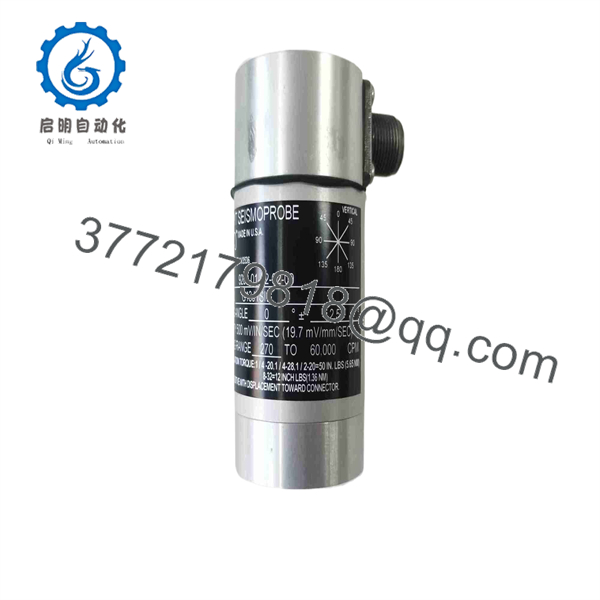
9200-01-02-02-00
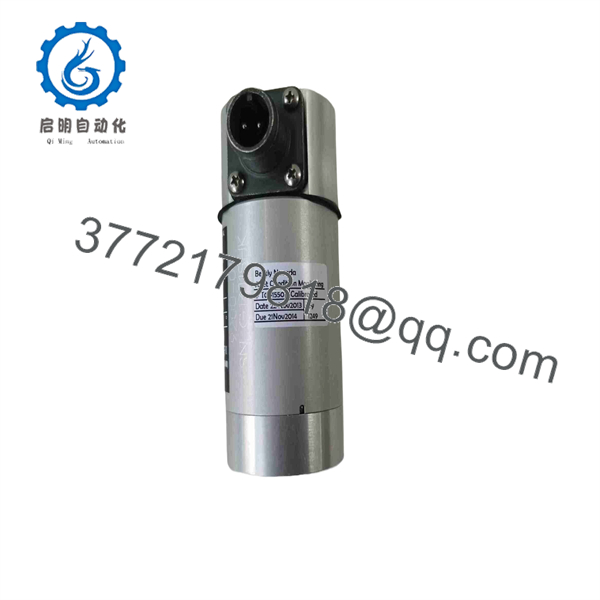
9200-01-02-02-00
Installation & Configuration Guide
Stage 1: Pre-Installation Preparation — About 10 Minutes
⚠️ Safety First: Place the machine in the approved maintenance state. Follow the plant’s LOTO procedure and OEM shutdown requirements before working around rotating equipment.
Tools Required:
- ESD protection
- Appropriate wrench/socket tools
- Multimeter
- Feeler gauge or approved probe-gap measurement method
- Wire labels
- Smartphone or camera
Data Backup:
- Record the complete probe part number.
- Photograph the existing probe installation.
- Record probe location and channel designation.
- Document existing cable routing and termination.
- Record the associated monitoring channel and alarm configuration.
Stage 2: Removing the Old Probe — About 5–10 Minutes
- Confirm the machine is stopped and mechanically safe.
- Disconnect the probe cable at the approved connection point.
- Label the channel before disconnecting anything.
- Remove the probe from its mounting location without damaging the threads.
- Inspect the mounting surface and probe target area.
- Check for contamination, mechanical damage, or evidence of probe contact.
⚠️ Important: Do not use the probe tip as a lever or apply excessive force to the sensing end.
Stage 3: Installing the New Probe — About 10 Minutes
- Verify 9200-01-02-02-00 against the removed unit.
- Confirm the probe’s mechanical dimensions and mounting arrangement.
- Inspect the sensing tip before installation.
- Install the probe according to the OEM-recommended mounting procedure.
- Set the probe gap using the approved procedure for the associated Bently Nevada system.
- Secure the probe and route the cable without excessive bending or mechanical strain.
- Reconnect the cable and verify termination.
Self-Checklist:
- Exact part number confirmed
- Probe tip undamaged
- Mounting threads clean
- Probe gap correctly established
- Cable routing reproduced
- Channel termination verified
- Mechanical connection secured
Stage 4: Power-On & Testing — About 10–15 Minutes
- Restore the monitoring system according to the approved procedure.
- Check the associated monitor/channel status.
- Confirm the probe produces a stable signal.
- Verify the static gap or displacement reading.
- Start the machine under the site’s normal commissioning procedure.
- Compare vibration readings against the established baseline.
- Verify alarm and trip thresholds before returning the channel to service.
⚠️ Troubleshooting Note: An abnormal reading immediately after replacement does not automatically mean the probe is defective. Check probe gap, target material, cable termination, signal-conditioning hardware, polarity/configuration, and channel setup first.
Frequently Asked Questions (FAQ)
Q1: What is the Bently Nevada 9200-01-02-02-00?
It is a Bently Nevada 9200 Series sensing component used for non-contact monitoring of rotating machinery. The exact application should be confirmed from the complete ordering code and existing installation.
Q2: Can I replace it with another 9200 Series probe?
Not automatically. The full part number determines the physical and electrical configuration. Match the complete ordering code and verify compatibility with the associated monitoring electronics.
Q3: Does the probe directly connect to a PLC input?
Do not assume that it does. Eddy-current proximity probes normally operate as part of a compatible signal-conditioning and monitoring chain. Verify the complete channel architecture before connecting it to PLC or DCS I/O.
Q4: What is the most important installation parameter?
Probe gap is critical. An incorrect gap can produce an incorrect bias voltage or measurement range and may result in unreliable vibration data. Follow the applicable OEM installation procedure rather than setting the gap by visual appearance.
Q5: Can I install the probe while the machine is running?
Do not do so unless the specific machine design and OEM procedure explicitly authorize the work. Probe installation near rotating shafts presents both personnel and equipment risks.
Q6: Is 9200-01-02-02-00 obsolete?
The information available here does not establish an authoritative lifecycle status for this exact configuration. For legacy equipment, verify OEM lifecycle information and maintain a tested spare if the probe is critical to the protection system.
Q7: What should I provide when requesting a replacement?
Provide the complete 9200-01-02-02-00 part number, photographs of the installed probe and connector, the associated monitoring-system model, and the machine/channel application. That information reduces the risk of receiving a physically similar but incompatible probe.