WhatsApp: +86 16626708626
 Email:
  Phone: +86 16626708626
Description
3. Key Technical Specifications
| Parameter | Specification Value |
| Manufacturer | Bently Nevada |
| Part Number | 9200-06-05-10-00 |
| Transducer Type | Moving-coil electrodynamic velocity sensor |
| Sensitivity | 500 mV/in/s (20 mV/mm/s) ±5% |
| Frequency Response | 10 Hz to 1,000 Hz (600 cpm to 60,000 cpm) ±3 dB |
| Transverse Sensitivity | Less than 10% of axial sensitivity |
| Maximum Amplitude | 0.08 in (2 mm) peak-to-peak displacement |
| Operating Temperature | −40°C to +100°C (−40°F to +212°F) |
| Mounting Orientation | Vertical or Horizontal (Configuration dependent) |
| Connector Type | 2-pin Mil-C-5015 hermetically sealed connector |
| Hazardous Area Approvals | CSA, ATEX / IECEx (Specific to option coding) |
4. Product Introduction & Supply Chain Strategy
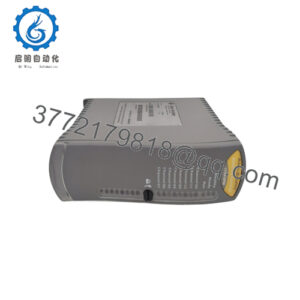
The Bently Nevada 9200-06-05-10-00 is a 2-wire moving-coil velocity transducer designed to measure absolute structural casing vibration on pumps, compressors, and induction motors. By outputting a voltage signal directly proportional to vibration velocity, it feeds critical dynamic vibration data directly into continuous monitoring systems like the Bently Nevada 3500 or 3300 racks.
This product is a Brand New Surplus unit. It is not used, not pulled from a decommissioned plant, and not refurbished. All modules undergo rigorous quality verification to ensure OEM-level reliability. Securing this module as New Surplus protects your operations from legacy system obsolescence without forcing a costly complete rack migration to 330500 series sensors. Refurbished velocity sensors often suffer from degraded internal springs, sticky moving coils, and worn damping fluid, leading to false trips or complete signal loss. Buying factory-fresh surplus guarantees OEM performance, minimizes total cost of ownership, and secures immediate buffer stock for critical assets.
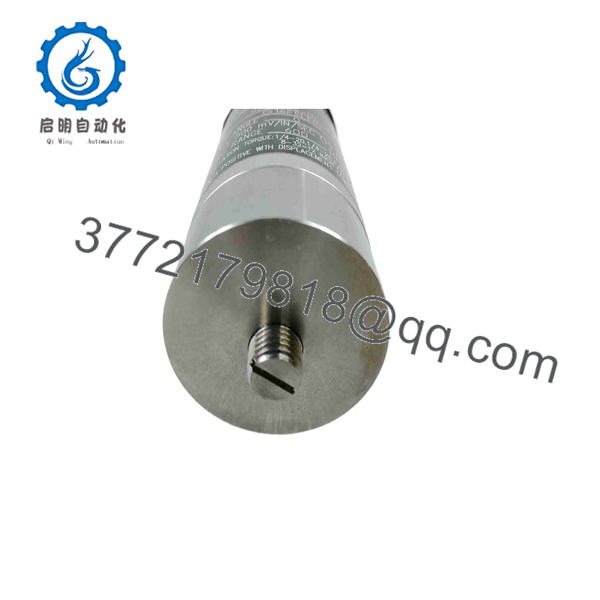
9200-06-05-10-00
5. Installation & Configuration Guide
1.Pre-Installation Preparation & Safety:Verify LOTO and examine existing sensor orientation.
Ensure all safety lockout/tagout procedures are completed on the target machine. Inspect the mounting location for surface cleanliness, flatness, and proper thread tapping. Check the existing part tag to verify that the orientation options match your mechanical installation (vertical vs. horizontal mounting). Wear a grounded ESD strap when handling signal conditioning interface cards.
2.Sensor Removal & Mechanical Surface Prep:Clean target area to preserve high-frequency transmission.
Disconnect the 2-pin MS cable connector from the faulty transducer. Unscrew the unit from its mounting stud or adapter block using a soft-jaw wrench on the hex base. Clean the surface threads using a solvent cleaner to remove grease, dirt, and paint overspray. Ensure a flat, flush metal-to-metal contact face for maximum vibration signal fidelity.
3.Mounting & Cable Connection:Torque to specification to avoid casing distortion.
Apply a thin layer of silicone grease to the mounting interface to improve acoustic coupling. Thread the 9200-06-05-10-00 transducer onto the mounting stud and torque to 30–40 in-lbs (3.4–4.5 N·m). Over-torquing can distort the internal housing and bind the coil assembly. Reattach the 2-pin MS connector, ensuring the bayonet ring locks securely in place.
4.Loop Verification & Signal Testing:Perform baseline voltage and signal checks.
Power up the monitoring system. Measure loop current and bias voltage at the monitor rack input terminals. Verify that the baseline vibration reading shows normal background noise levels without open-circuit or short-circuit fault alarms on the rack.
6. Firmware/Software Versions & Upgrade Notes
- Hardware Compatibility: The 9200-06-05-10-00 interfaces directly with Bently Nevada 3500/42M Velocity/Seismic Monitors, 3300 Series Velocity Monitors, and legacy 7200 series systems.
- Rack Channel Configuration: Configure the monitor rack channel type explicitly for “Velocity” with a sensitivity setting of 500 mV/in/s (or 20 mV/mm/s).
- Firmware Note: Ensure the 3500/42M channel module firmware is running version 2.10 or higher when configuring custom seismic transducer curves. Mismatched sensitivity configuration settings in the 3500 Rack Configuration Software will cause inaccurate vibration amplitude scaling and improper trip limits.
7. Frequently Asked Questions (FAQ)
Q: Is this Bently Nevada 9200-06-05-10-00 transducer truly new, or is it a rebuilt unit?
A: This unit is genuine New Surplus stock. It has never been installed on machinery, pulled from a plant, or rebuilt. It remains in its original factory condition, complete with pristine connector pins and internal calibration integrity.
Q: Why should I buy New Surplus instead of a cheaper refurbished unit?
A: Refurbished seismic transducers are high-risk components. Over time, internal springs sag, magnets lose field strength, and dampening fluid degrades. Cosmetic refurbishment cannot fix internal mechanical wear. A failing refurbished sensor can report inaccurate amplitudes, leading to missed high-vibration events or unwarranted plant shutdowns that cost tens of thousands of dollars per hour.
Q: Is the 9200 series transducer still actively manufactured by Bently Nevada?
A: The 9200 series is a legacy product line that has reached End-of-Life (EOL) status, superseded in newer installations by the 330500 Velomitor series. Sourcing New Surplus units is the most cost-effective method to maintain existing 3300 and 3500 racks without requiring re-engineering, rewiring, or purchasing piezoresistive velocity transmitters.
Q: Can I hot-swap this sensor while the monitoring system is live?
A: Yes, you can disconnect and reconnect the 2-pin field cable at the transducer while the monitor rack is powered on. However, ensure that the channel’s trip multiply/bypass function is engaged in the control system to prevent transient spikes from tripping the machine protection relays during plug-in.
Q: What warranty comes with this New Surplus transducer?
A: We back this 9200-06-05-10-00 transducer with a comprehensive 1-year replacement warranty, providing complete operational reliability for your critical machinery protection loops.