 WhatsApp: +86 16626708626
 Email:
 Phone: +86 16626708626
Description
3. Key Technical Specifications
| Parameter | Value / Description |
|---|---|
| Model | LB444 (LB 444) |
| Manufacturer | Berthold Technologies |
| Measurement Principle | Non-contact gamma radiation attenuation |
| Measured Media | Liquids, suspensions, pulps, bulk materials |
| Evaluation Unit Form Factor | 19″ module (3 HE / 21 TE), IP20 |
| Power Supply | 115/230 VAC ±10% or 24 VDC (18–32 VDC) |
| Power Consumption | Approx. 30 VA / 30 W |
| Analog Output | 0/4–20 mA (isolated, max. 500 Ω) |
| Digital Outputs | 2 × limit relays + 1 × collective fault relay |
| Interfaces | RS232 (parameter/PC), optional fieldbus |
| Operating Temperature | 0 to +50 °C (evaluation unit) |
| Typical Applications | Concentration, density, mass flow, solids content |
4. Product Introduction
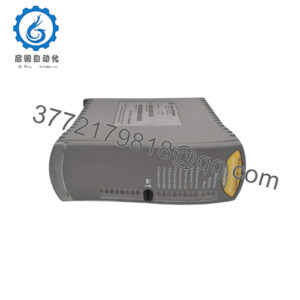
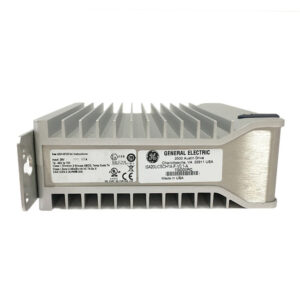
The Berthold LB444 is a proven radiometric density evaluation unit used for non-contact, continuous measurement of density and concentration in liquids, suspensions, pulps, and bulk materials. It works on the principle of gamma radiation attenuation and is installed externally on pipes or vessels without process interruption.
The system consists of a radioactive source in a shielded container, a scintillation detector, and the LB444 evaluation unit. The evaluation unit processes the detector pulse rate, applies calibration algorithms (including optional temperature compensation), and provides a standard 0/4–20 mA analog output plus relay contacts. More than 15,000 systems have been installed worldwide, demonstrating long-term reliability even under harsh process conditions.
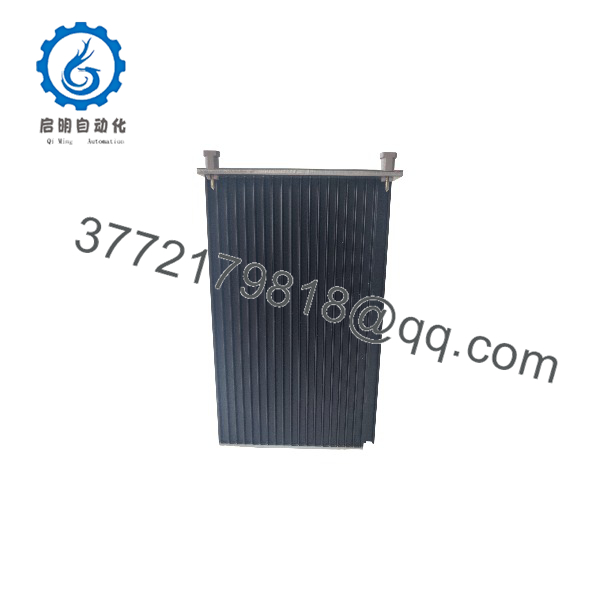
LB444
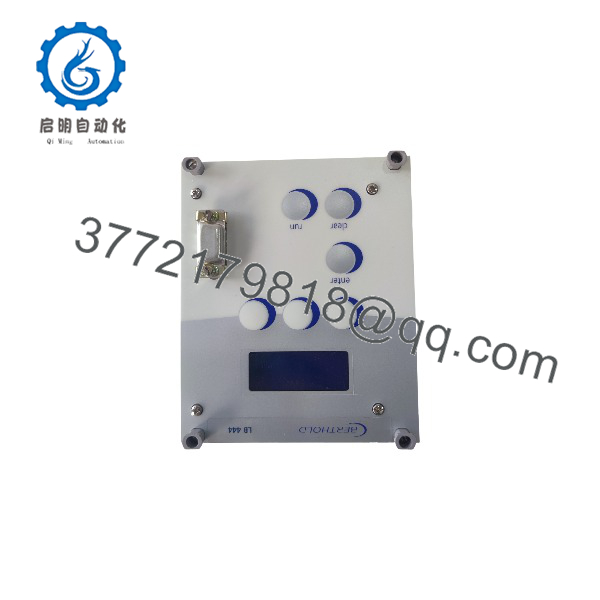
LB444
5. Troubleshooting Quick Reference
| Symptom | Possible Cause | Relevance to this Part | Quick Check Method | Recommendation |
|---|---|---|---|---|
| No or unstable reading | Detector signal loss or high voltage issue | ✅ High | Check detector pulse rate and HV status | Verify detector cable, HV, and source shutter |
| Reading drifts over time | Source decay or calibration shift | ✅ High | Compare with lab sample and check source age | Recalibrate or replace source if expired |
| Fault relay activated | Detector temperature or system error | ✅ High | Review error register on evaluation unit | Clear errors after correcting root cause |
| Incorrect density value | Wrong product calibration or TK off | ✅ High | Verify selected product and temperature compensation | Recalibrate with representative samples |
| No 4–20 mA output | Output loop open or configuration error | ✅ Medium | Measure loop current and check output settings | Verify wiring and current output configuration |
| System does not start | Power supply or module seating | ❌ Low | Check supply voltage and module seating | Confirm power and rack installation first |
Always follow radiation safety procedures and local regulations when working on radiometric systems. Only trained personnel should handle the source or detector.
6. Frequently Asked Questions (FAQ)
Q: What does the LB444 measure?
It measures density or concentration of liquids, suspensions, pulps, and bulk materials using non-contact gamma radiation attenuation.
Q: Is the measurement affected by pressure, temperature, or flow?
Pressure, viscosity, and flow rate have negligible effect. Temperature compensation is available via optional Pt100 input.
Q: Can the LB444 be installed without process shutdown?
Yes. The source, detector, and evaluation unit are mounted externally on existing pipes or vessels.
Q: What outputs does the evaluation unit provide?
Isolated 0/4–20 mA analog output, two configurable limit relays, and one collective fault relay. RS232 is available for parameter transfer.
Q: Is the LB444 still supported?
Yes. Berthold continues to support the LB444 platform. New, surplus, and refurbished evaluation units and detectors remain available.
Q: What should I check before replacing the evaluation unit?
Confirm power supply voltage, detector type, cable length, and current calibration parameters. Photograph the existing unit’s labels and terminal wiring for reference.
Install the evaluation unit in a suitable 19″ rack or housing, connect the detector and power correctly, and perform a full system check and calibration verification after power-up. This ensures accurate, reliable density measurement.