WhatsApp: +86 16626708626
 Email:
 Phone: +86 16626708626
Description
Key Technical Specifications
| Parameter | Value |
|---|---|
| Manufacturer | Bosch Rexroth AG (Indramat product line) |
| Material Number | R911311533 |
| Series / Type | MSK071, IndraDyn S synchronous servo motor |
| Frame Size / Length | 071 / length D (longest stack in frame) |
| Winding Code | 0450 |
| Rated Speed | approx. 4500 rpm (max speed up to 6000 rpm) |
| Standstill Torque (continuous) | 20 Nm (natural convection) |
| Peak Torque | 66 Nm |
| Encoder (code “M1”) | Optical multiturn absolute encoder, 128 signal periods, 240° rotatable connector |
| Holding Brake (code “UP1”) | Electrically releasing holding brake, 23 Nm |
| Shaft (code “UP1”) | Shaft with keyway (DIN 6885-1), shaft seal ring included |
| Cooling | Natural convection |
| Degree of Protection | IP65 |
| Insulation Class | F (per DIN EN 60034-1) |
| Temperature Monitoring | KTY thermal sensor in winding (drive-side evaluation) |
| Ambient Temperature | 0 to +40 °C |
| Motor Connectors | Rotatable power and encoder connectors, 240° orientation |
| Mounting | Flange per standard MSK 071 frame, run-out class “N” |
| Approx. Weight | approx. 15–20 kg (length D with brake — verify exact value on datasheet) |
⚠️ Verify precise electrical limits (rated/peak current, winding resistance, voltage constant, exact mass) against the official Rexroth datasheet for R911311533 before installation. Standstill torque assumes natural convection; sustained low-speed high-torque duty may require the fan-cooled variant.
Product Introduction
The Bosch Rexroth MSK071D-0450-NN-M1-UP1-NNNN (R911311533) is an IndraDyn S synchronous AC servo motor in the MSK 071 frame at length D — the long-stack version that fills the gap between mid-frame MSK motors and the 100-series. This is a torque axis motor: 20 Nm continuous and 66 Nm peak make it a fit for gantry drives, heavy handling axes, large rotary tables, and machining feed axes that cycle hard all shift.
The M1 encoder is an optical multiturn absolute unit with 128 signal periods, holding absolute position across power cycles without a re-home after every restart. The UP1 option pairs a 23 Nm electrically releasing holding brake with a keyway shaft per DIN 6885-1 — the configuration most commonly specified for geared axes and vertical lifts where positive shaft coupling matters. A KTY sensor in the winding gives the drive real thermal data instead of relying purely on the motor model. The motor targets Rexroth IndraDrive and legacy Indramat drive platforms; confirm the encoder interface (EnDat-class optical multiturn) against your drive’s supported feedback list before ordering, particularly on older EcoDrive hardware.
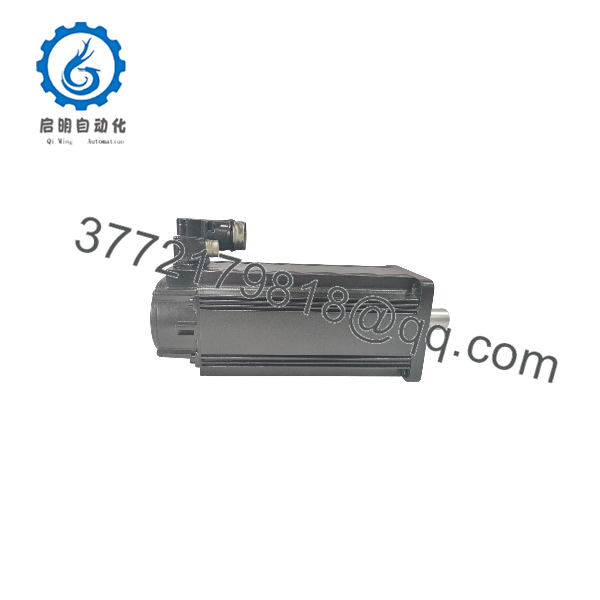
MSK071D-0450-NN-M1-UP1-NNNN
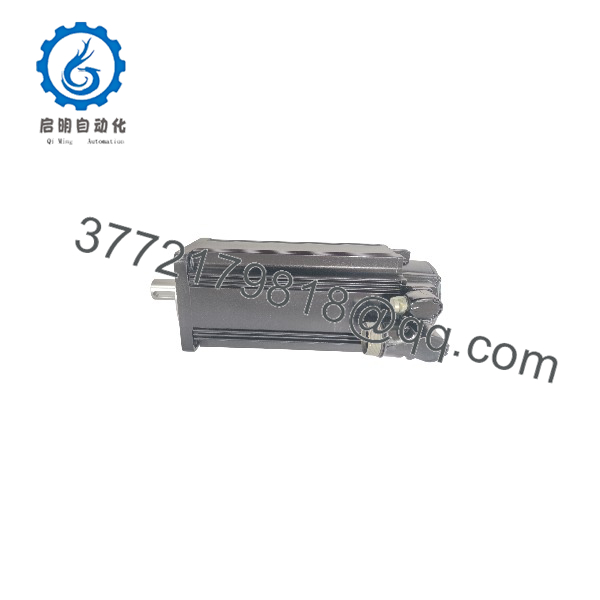
MSK071D-0450-NN-M1-UP1-NNNN
Installation & Configuration Guide
Total estimated time for a competent technician: 60–90 minutes, plus drive commissioning, homing, and mechanical alignment.
Stage 1: Pre-Installation Preparation (15 min)
⚠️ Safety First: Notify operations of planned axis downtime. Move the axis to a safe position. This is a 15–20 kg motor with a 23 Nm brake on a high-torque axis — mechanical securing of the load is non-negotiable. The brake is a functional holding device, not a personnel-safety brake, and it releases when power is removed. Lock out/tag out drive power, wait 5 minutes for DC bus discharge, and physically block any gravity-loaded axis before touching a single connector.
Tools Required:
- Grounded ESD wrist strap
- Hex key set, torque wrench (flange bolts and keyway coupling hardware)
- Lifting aid or second person — one-handing a length-D 071 motor into a flange is how pinched fingers and bent shafts happen
- Multimeter and 500 V insulation tester
- Label tape, dial indicator, smartphone for photos
Data Backup:
- Photograph the old nameplate, both connector orientations, and the coupling/keyway seating.
- Back up the drive’s motor parameter set and fault log via IndraWorks / DriveTop or the legacy HMI.
- Record the axis home offset and current position — the new multiturn encoder’s reference will differ slightly.
- Confirm the encoder cable matches the M1 optical multiturn interface, including the multiturn battery/backup path if your drive uses one.
Stage 2: Removing the Old Motor (15–20 min)
- Verify the load is mechanically blocked. Disconnect power and encoder connectors; label both cables at both ends.
- Support the motor weight before removing flange bolts. On keyed couplings, mark the coupling and shaft position before separating — a keyway reinstalled in a different clock position changes your home reference.
- Withdraw the motor straight back off the coupling and flange. Do not use the shaft as a lever point.
- Inspect the key, keyway, and coupling bore for wear. On 66 Nm-class motors, a pounded-out keyway on the old motor usually means torque spikes the coupling wasn’t sized for — check the mechanics before installing the replacement or you’ll be back here in a month.
⚠️ Note: Keep the old motor on the bench until the new one completes a full production cycle. MSK 071 comes in A through D lengths — compare the full nameplate, not just the frame size.
Stage 3: Installing the New Motor (20 min)
- Ground yourself. Same rule at every frame size: ESD to the encoder board kills more MSK motors than any field failure.
- Verify the nameplate matches exactly: MSK071D-0450-NN-M1-UP1-NNNN, material number R911311533. Length “D”, winding “0450”, encoder “M1”, and “UP1” (keyway + brake) all matter. A “C” length is shorter with lower torque; a UG1 variant is plain-shaft and will not accept your keyed coupling.
- Mount the motor; torque flange bolts per the MSK 071 mounting drawing. Dial-indicate the coupling — at this torque class, misalignment doesn’t just wear bearings, it hammers the keyway and works the coupling loose.
- Fit the key per DIN 6885-1 with correct seating — no shims, no filed-down “close enough” keys.
- Connect power and encoder cables; rotate housings for routing, hand-tight only.
- Brake wiring: the 23 Nm brake takes its own supply, switched by the drive’s brake control output. At this brake size, verify the supply can deliver the release current — an undersized 24 V output sags, the brake drags, and the drag heat goes straight into the motor.
Self-Checklist:
- Nameplate matches R911311533 exactly
- Coupling alignment dial-indicated
- Key seated correctly, coupling hardware torqued
- Encoder cable matches M1 multiturn interface
- Brake supply wired to drive-controlled output
- Both connectors seated and locked
Stage 4: Power-Up & Testing (20–30 min)
Pre-Power Check:
- Phase-to-phase resistance on U/V/W, balanced within a few percent.
- Insulation test phase-to-ground at 500 V DC, >10 MΩ. Fully disconnect the drive power stage before meggering.
- Verify the KTY sensor reads plausibly at ambient temperature through the drive — an open or shorted KTY produces a fault on enable, not on power-up.
- Check encoder shield clamping at both ends.
Power-On Steps:
- Control power to the drive first, before enabling power electronics.
- Power up and check for encoder communication faults. On this frame, also check the brake feedback channel if your drive monitors it.
- Confirm the drive reads the motor’s digital type plate. A motor-data mismatch fault means a variant difference — stop and compare nameplates.
- Brake test: enable, command brake release, listen for a clean clack. A buzz, a drag, or a motor that won’t turn at low-speed jog means brake supply problems — power down before investigating.
- Jog at low speed both directions. With a 20 Nm-class axis, run a few slow cycles under no load to seat the coupling and confirm no hunting or vibration.
- Torque-ramp test: increase load in steps toward normal duty. Watch the KTY temperature readout — a motor climbing past rated temperature at moderate load indicates the application was relying on more than natural convection gives, or the brake is dragging.
- Re-home the axis, run one reduced-speed cycle, then one full-speed cycle with someone watching the coupling.
⚠️ Troubleshooting Note: Encoder comms faults point to cable or connector; motor-data mismatch points to a wrong variant; a motor that reaches temperature limit early points to brake drag, undersized cooling duty, or a mechanical bind in the axis. On keyway shafts, rhythmic knocking at speed is a loose coupling nut — tighten and re-torque before it becomes a spun keyway.
Frequently Asked Questions (FAQ)
Q1: Can I hot-swap this motor with the drive powered up?
No, and on this frame size it borders on dangerous. Live-disconnecting the encoder can damage the encoder board and the drive’s feedback channel. More importantly, this motor carries a 23 Nm brake holding what is likely a heavy axis — when you kill brake power to disconnect, that axis moves. On a gantry or vertical lift, gravity does the rest. Full LOTO, 5-minute bus discharge, mechanical blocking of the load. The 30 minutes you save hot-swapping is nothing against the rebuild cost of a dropped gantry carriage.
Q2: Is the MSK071D still a current product, and is this unit genuinely new?
The MSK series remains active at Bosch Rexroth, but material numbers like R911311533 are increasingly supplied from surplus stock as production allocations shift toward the newer MSM and MST lines. Our stock is New Original / New Surplus: factory packaging, intact nameplate and digital parameter memory, verified against the OEM datasheet. Previously powered units are sold as tested refurb at a lower price, stated plainly. Test photos and the bench report are available on request.
Q3: What can I substitute if R911311533 is out of stock?
Closest equivalents within MSK 071 keep the “0450” winding and “M1” encoder: the UG1 variant if your mechanics accept a plain shaft (you’d change the coupling), or a “C” length only if your torque duty fits its lower standstill rating — check the numbers, don’t eyeball it. Different winding codes change the drive’s current and voltage-constant settings, and encoder-family swaps (H-class Hiperface variants) require full re-commissioning of the feedback channel. Send us your drive type and axis duty and we’ll tell you honestly whether a variant works or whether you need this exact material number.
Q4: Will I lose my program or position data when I swap the motor?
The drive program stays put. Position is the story: the M1 multiturn absolute encoder means the axis keeps absolute position through power cycles, but the new motor’s reference differs from the old one’s, so re-home once after the swap and record the new offset. If the axis loses absolute position after every power cycle post-swap, the multiturn backup path (battery or capacitor in the encoder circuit) is broken — fix that before condemning the motor. I’ve replaced two perfectly good motors on one machine before someone checked the backup battery circuit. Don’t be that guy.
Q5: What will the 23 Nm holding brake actually hold?
23 Nm of friction holding torque at the motor shaft with the drive disabled. Direct-drive, that’s 23 Nm static. Through a gearbox, multiply by ratio and efficiency — a 20:1 planetary at 90% gives roughly 414 Nm at the output, minus pad wear margin. It’s a functional brake: holding force decays over life, it is not safety-rated for personnel protection (that requires a safe-hold variant and an ISO 13849 assessment), and it should never be your only load retention during maintenance. That’s what mechanical blocks are for.
Q6: Why is your price below the Rexroth factory list price?
Surplus stock skips fresh-production lead time, distribution markup, and OEM support overhead. Same factory-built motor; the trade is that we carry the 1-year warranty ourselves. For a dead high-torque axis, tested stock shipping in days versus a multi-week factory lead time usually ends the conversation. On a full new machine build, OEM-channel warranty consolidation can still make sense — we’ll say so when it does.
Q7: Do you test the motor before it ships?
Every unit gets a live functional test on a Rexroth IndraDrive test bench: power-up, encoder communication and position readout, phase-to-phase resistance balance, 500 V insulation test (>10 MΩ), KTY sensor verification, brake release/engage at rated voltage, and a continuous run to thermal stability. Results go on a test report available on request. We won’t tell you any motor is “100% failure-proof” — no honest engineer would. What we will tell you: verified fully functional under load testing before it leaves our bench.