WhatsApp: +86 16626708626
 Email:
  Phone: +86 16626708626
Description
Key Technical Specifications
| Parameter | Value |
|---|---|
| Manufacturer | B&R Industrial Automation |
| Model / Material Number | 8LSA35.DA030S000-3 |
| Product Family | 8LS synchronous motors |
| Motor Type | Synchronous motor |
| Construction | Self-cooling, construction type A |
| Nominal Speed | 3,000 rpm |
| Maximum Speed | 9,000 rpm |
| Nominal Torque | 2.1 Nm |
| Stall Torque | 2.3 Nm |
| Maximum Torque | 9.2 Nm |
| Nominal Power | 660 W |
| Nominal Current | 1.4 A |
| Maximum Current | 6.8 A |
| Number of Pole Pairs | 4 |
| Torque Constant | 1.45 Nm/A |
| Stator Resistance | 12.22 Ω, two-phase |
| Stator Inductance | 63 mH, two-phase |
| Moment of Inertia | 0.9 kg·cm² |
| Motor Weight | 4.4 kg without brake |
| Encoder | DA 2.2 inductive, 32-line, single-turn EnDat |
| Connection | Single-cable solution |
| Connector Direction | Swivel, SCS |
| Shaft | Smooth shaft |
| Shaft Dimensions | 14 mm diameter × 30 mm length |
| Centering Diameter | 80 mm, j6 fit |
| Flange Square Dimension | 91.30 mm |
| Holding Brake | None |
| Recommended B&R ACOPOS | 8Vxxxx.xx…, type 1022 |
| Recommended ACOPOSmulti | 8BVIxxxx…, type 0014 |
| Recommended ACOPOS P3 | 8EIxxxx…, type 2X2X |
| Recommended Cable Cross Section | 0.75 mm² B&R motor cable |
| Certifications | CE, UKCA, UL/cURus E360421 |
B&R lists the 8LSA35.DA030S000-3 with 3,000 rpm nominal speed, 2.1 Nm nominal torque, 660 W nominal power, 9,000 rpm maximum speed, and a DA 2.2 inductive single-turn encoder.
The manufacturer also identifies compatible drive families including ACOPOS, ACOPOSmulti, and ACOPOS P3. Do not select the drive solely from the motor’s power rating; verify the complete motor/drive combination in the B&R engineering documentation.
Product Introduction
The B&R 8LSA35.DA030S000-3 is a 660 W synchronous servo motor in the 8LS family, intended for controlled rotary motion in B&R servo systems. It provides 3,000 rpm nominal speed, 2.1 Nm nominal torque, 9.2 Nm maximum torque, and a single-cable EnDat 2.2 inductive feedback interface.
Its practical advantage is the combination of a smooth shaft, self-cooling construction, and single-cable feedback/power connection. The motor is specified with an 80 mm j6 centering diameter and is matched by B&R to specific ACOPOS, ACOPOSmulti, and ACOPOS P3 drive configurations.
Installation & Configuration Guide
Stage 1: Pre-Installation Preparation — Approximately 5–10 Minutes
⚠️ Safety First: Stop the machine and place the axis in a verified safe state. Apply lockout/tagout to the relevant electrical and mechanical energy sources. Servo drives can retain hazardous DC-bus voltage after incoming power is removed. Follow the drive manufacturer’s discharge procedure rather than relying on a fixed five-minute waiting period.
Tools Required:
- ESD wrist strap
- Appropriate hex/socket tools
- Torque wrench suitable for the motor mounting hardware
- Multimeter
- Wire labels
- Smartphone or camera
- Mechanical alignment tools as required by the machine design
Data Backup:
- Record the existing motor material number.
- Photograph the motor nameplate and connector orientation.
- Record the installed B&R drive model.
- Save the current Automation Studio project and drive configuration.
- Record motor/encoder parameters before removing the motor.
- Photograph cable routing, connector orientation, and mechanical mounting.
- Verify the replacement is 8LSA35.DA030S000-3, not the visually similar 8LSA35.DA060 or DB-series variant.
There are no motor DIP switches to clone on this model. The important configuration items are the motor identification, feedback type, drive parameters, mechanical position, and cable connection.
Stage 2: Removing the Old Motor — Approximately 10 Minutes
- Confirm zero hazardous energy before touching the motor or connector.
- Remove guards or covers required to access the motor.
- Mark the motor cable and connector orientation.
- Disconnect the B&R motor cable without twisting or forcing the connector.
- Release the mechanical coupling, pulley, gearbox, or other driven connection.
- Support the motor before removing the mounting bolts.
- Remove the motor without placing side load on the shaft or encoder assembly.
- Inspect the mounting face, centering bore, shaft, coupling, and cable connector for damage.
- Check for contamination, oil ingress, loose fasteners, or abnormal bearing wear.
⚠️ Keep the old motor until commissioning is complete. Its nameplate, connector position, and mechanical dimensions provide valuable references if the replacement does not behave as expected.
Stage 3: Installing the New Motor — Approximately 10 Minutes
- Verify the complete material number: 8LSA35.DA030S000-3.
- Confirm the replacement has the same smooth shaft arrangement and no holding brake.
- Inspect the 80 mm centering diameter and mounting face before installation.
- Clean the mounting surfaces without introducing abrasive material into the bearing or shaft area.
- Carefully align the motor with the machine mounting face.
- Do not use the mounting bolts to pull a misaligned coupling into position.
- Install the mounting hardware and tighten it using the machine/OEM-specified torque.
- Align the coupling or transmission according to the machine manufacturer’s procedure.
- Connect the single-cable motor connection.
- Secure the cable so that connector and cable-carrier forces do not load the motor connector.
Mechanical Self-Checklist:
- Exact material number verified
- 80 mm centering fit verified
- Smooth shaft verified
- Coupling alignment checked
- Mounting hardware torqued
- Cable connector fully seated
- Cable routing free from excessive bending or mechanical strain
Stage 4: Drive Configuration & Commissioning — Approximately 10–20 Minutes
- Re-energize the control system only after the mechanical installation has been checked.
- Verify the B&R drive recognizes the connected motor/feedback system.
- Open the applicable B&R Automation Studio project.
- Confirm the configured motor matches 8LSA35.DA030S000-3.
- Verify the feedback configuration corresponds to the DA 2.2 inductive 32-line single-turn EnDat encoder.
- Check the configured motor current, torque, speed, and feedback parameters against the applicable B&R data.
- Verify the drive’s motor identification and commissioning status.
- Clear any encoder or motor-identification diagnostic only after correcting the underlying condition.
- Perform a low-speed jog with the machine unloaded or otherwise secured.
- Confirm correct direction of rotation.
- Check actual speed and feedback position.
- Gradually apply the mechanical load.
- Monitor motor current, following error, encoder status, and drive temperature.
- Run the axis through its normal operating range before returning the machine to production.
⚠️ Do not assume that a motor with the same frame size is a direct software replacement. B&R lists multiple 8LSA35 variants with different nominal speeds, feedback arrangements, and shaft configurations. For example, the is a 3,000 rpm single-turn configuration, while DA060 variants are 6,000 rpm versions.
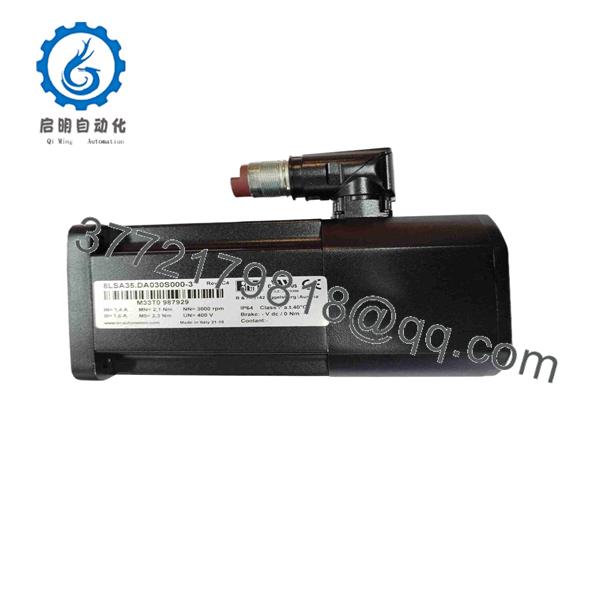
8LSA35.DA030S000-3
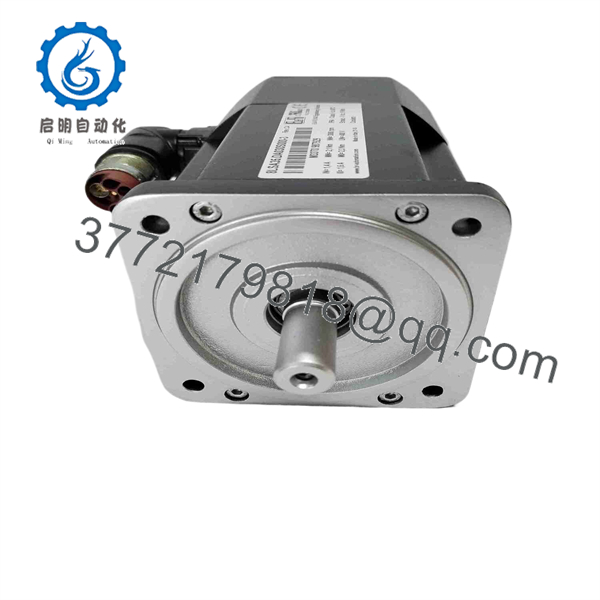
8LSA35.DA030S000-3
Technical Pitfall & Survival Guide
1. ❗ Wrong Motor Variant
The 8LSA35 family contains several visually similar motors. A 3,000 rpm motor and 6,000 rpm motor are not interchangeable simply because the frame appears identical.
Avoidance: Match the complete material number, including ..
2. ❗ Feedback Mismatch
The DA variant uses an inductive 32-line single-turn EnDat feedback arrangement. Installing a motor with another encoder configuration can prevent correct commissioning.
Avoidance: Verify the encoder designation before connecting the motor.
3. ❗ Shaft Configuration
This model uses a smooth shaft. Other 8LSA35 variants use keyed shafts.
Avoidance: Check the coupling before ordering. A keyed-shaft replacement is not automatically a mechanical substitute for a smooth-shaft version.
4. ❗ Cable Compatibility
This model uses a B&R single-cable solution. Do not assume that a conventional two-cable servo harness will plug into the motor.
Avoidance: Verify the complete motor cable and connector arrangement against the installed ACOPOS system.
5. ❗ Mechanical Alignment
Servo motors tolerate very little abuse from misaligned couplings. Excessive radial or axial loading can damage bearings and create following-error problems later.
Avoidance: Align the coupling mechanically before enabling the servo axis.
6. ❗ ESD and Connector Handling
The encoder electronics are part of the feedback system. Handle the connector and motor interface using appropriate ESD precautions.
Avoidance: Use a grounded wrist strap and avoid touching electrical contacts.
Keep these checks in mind and you’ll eliminate most of the avoidable rework associated with servo motor replacement.
Frequently Asked Questions (FAQ)
Can the B&R 8LSA35. be hot-swapped?
No. Treat the motor as a de-energized component. Remove drive power, isolate hazardous energy, and follow the machine’s lockout/tagout procedure before disconnecting the motor cable or mechanical connection. The drive’s DC bus must also be confirmed safe according to the applicable drive procedure.
Is 8LSA35. obsolete?
B&R currently maintains an official product page for this exact material number and publishes current technical information and documentation. A third-party reseller may label individual stock as discontinued or obsolete, so distinguish product lifecycle status from the condition or age of a particular unit.
What is the direct replacement for this motor?
Do not substitute another 8LSA35 variant without engineering verification. The 8LSA35 family includes 3,000 rpm and 6,000 rpm versions, different encoder arrangements, and different shaft configurations. The exact application should be checked against torque, speed, feedback, shaft, and drive requirements.
Will I lose my PLC or motion program when replacing the motor?
Replacing the motor itself does not normally erase the PLC or Automation Studio project. However, commissioning may require verification or restoration of drive and axis parameters. Save the existing Automation Studio project and record the current axis configuration before removing the motor.
Does this model have a holding brake?
No. B&R specifies a holding-brake torque of 0 Nm for this configuration. If the machine axis requires a brake for vertical-load holding or safe mechanical retention, this exact model should not be treated as a brake-equipped substitute.
What encoder does this motor use?
The 8LSA35. uses a DA 2.2 inductive, 32-line, single-turn EnDat encoder. This feedback configuration is an important part of the replacement check and should be matched in the drive configuration.
Is the motor supplied new, surplus, or refurbished?
The model number alone does not establish physical stock condition. A procurement order should explicitly state Factory Sealed, New Original / New Surplus, or Refurbished (tested). For refurbished units, request the serial number, inspection record, encoder test results, insulation test results, and load-test documentation before installation.
For any non-OEM stock, verify the exact serial number, nameplate, connector condition, and physical configuration against the B&R specification before committing the unit to a production machine.