WhatsApp: +86 16626708626
 Email:
  Phone: +86 16626708626
Description
Key Technical Specifications
| Parameter | Value |
|---|---|
| Motor Type | AC synchronous servo motor, self-cooled (natural convection), construction type A |
| Frame Size | 35 |
| Number of Pole Pairs | 4 |
| Rated Speed | 3,000 rpm |
| Rated Torque | 2.100 Nm |
| Rated Power | 660 W |
| Rated Current | 1.4 A |
| Stall Torque | 2.300 Nm |
| Stall Current | 1.6 A |
| Voltage Constant | 87.96 V/1,000 rpm |
| Stator Resistance | 12.22 Ω |
| Stator Inductance | 63 mH |
| Electrical Time Constant | 5.2 ms |
| Thermal Time Constant | 34 min |
| Moment of Inertia | 0.9 kg·cm² |
| Weight (without brake) | 4.4 kg |
| Feedback Device | 2-pole R0 resolver |
| Holding Brake | Present (D200 code denotes brake-equipped configuration) |
| Mounting | Flange mount, self-cooled construction type A |
Winding-level electrical data (torque, current, resistance, inductance) is confirmed against B&R’s published D200 winding specs at frame 35. Resolver type (R0), connector style, and brake holding torque figure are version- and variant-specific — verify the exact drawing for the “-0” version before final fitment or drive commissioning.
Product Introduction
The B&R 8LSA35.R0030D200-0 is a frame-35 synchronous servo motor from B&R’s 8LS series, delivering 2.1 Nm rated torque at 3,000 rpm for ACOPOS-driven axes that need more torque headroom than the smaller frame-25 motors in the line. It carries a holding brake (per the D200 code) and uses a 2-pole R0 resolver for position feedback.
This is a legacy “-0” version motor with an R0 resolver — not the R2 resolver B&R currently documents on new-catalog D200 motors. Winding electricals carry over cleanly between resolver variants of the same D200 code, but the resolver signal type and motor version affect drive commissioning. If you’re replacing a failed unit on an existing line, match both the resolver code and version suffix, not just the winding code.
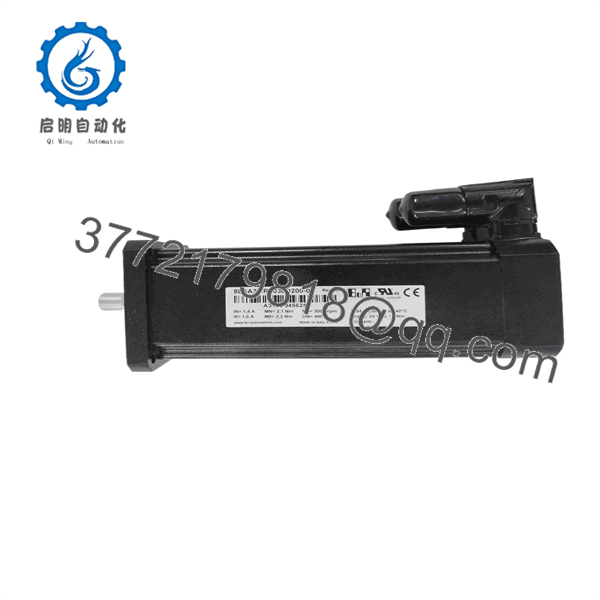
8LSA35.R0030D200-0
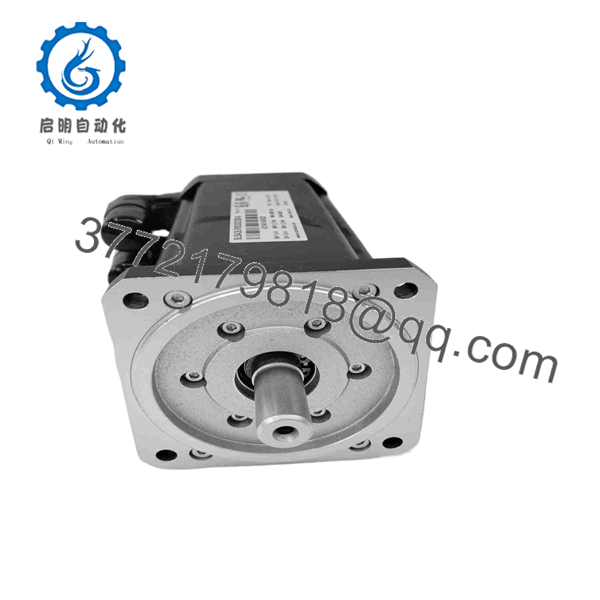
8LSA35.R0030D200-0
Troubleshooting Quick Reference
| Symptom | Possible Cause | Relevance to this Part | Quick Check Method | Recommendation |
|---|---|---|---|---|
| Brake won’t release on axis enable | Brake coil fault, wiring fault, or missing brake supply voltage | ❌ Low | Measure brake coil resistance and confirm 24 VDC supply is present at the brake terminals | Check brake wiring and supply before condemning the motor |
| Axis faults on power-up with resolver error | Resolver wiring fault, connector seating, or R0/R2 signal mismatch on the drive side | ✅ High (if replacing with a different resolver code) | Confirm the drive’s resolver interface is configured for R0, not R2 | Verify resolver type match before wiring in a replacement — this is a common trap when substituting motor versions |
| Drive throws overcurrent/overload fault | Mechanical bind or load exceeding the 2.1 Nm rated torque curve | ❌ Low | Disconnect the load and jog free — if clean unloaded, the fault is mechanical | Check the mechanical load path before replacing the motor |
| No rotation, resolver reads correctly, drive shows no fault | Winding open or stator fault | ✅ High | Measure phase-to-phase stator resistance and compare to 12.22 Ω reference | If resistance is open or grossly out of spec and wiring checks clean, the motor winding has failed |
| Motor runs hot under sustained load | Duty cycle exceeding the thermal time constant, or undersized for the application | ❌ Low | Compare actual RMS torque demand against the 2.1 Nm rated torque and 34-minute thermal time constant | Confirm the application’s torque/speed profile against the datasheet before condemning the motor |
If you’re troubleshooting at 3 AM: pull the ACOPOS fault log for the exact code, and check whether the brake is actually releasing before assuming a motor fault — a stuck brake looks a lot like a stalled motor on the drive’s torque feedback.
Frequently Asked Questions (FAQ)
Is R0 the same resolver as R2 on current D200 motors?
No — R0 and R2 are different resolver codes in B&R’s designation system. The winding-level specs (torque, current, resistance) match across resolver variants of the same code, but the resolver’s electrical signal characteristics and connector pinout differ. Don’t wire an R0 motor into a drive channel configured for R2 feedback without confirming compatibility first.
Will my ACOPOS drive recognize this motor without extra configuration?
It depends on your drive’s DT-file revision and whether it has the R0/version-0 motor entry loaded. Older motor versions sometimes require a specific DT upgrade file to be recognized correctly — confirm your ACOPOS firmware revision before powering up.
Does the holding brake retain its rated torque on a surplus unit?
Brake holding torque is a mechanical spec tied to the configuration, not something that degrades in storage under normal conditions. That said, we test brake engagement and release on every unit before it ships — ask for the test note if you want it documented.
Why is this priced below current B&R list pricing?
This is New Original / New Surplus stock of an earlier motor version with the R0 resolver — sourced through the secondary market rather than a current factory build. You’re getting genuine B&R hardware at a lower cost than ordering the current R2/-3 generation new, which matters if your machine was originally built around the R0 resolver interface.
Can I substitute a current R2/-3 motor instead of buying this exact part?
Only if you’re prepared to reconfigure the resolver wiring and confirm DT-file compatibility on your drive — it’s not a drop-in swap. If your machine was built around the R0/-0 configuration, sourcing the matching part is usually less work than requalifying a substitute.
What’s your testing process on this unit before it ships?
Inbound visual inspection for shaft and connector damage, a stator resistance check against the 12.22 Ω reference, and a brake engagement/release check. We don’t run every unit on a live ACOPOS bench test unless requested — tell us upfront if you need a powered functional test with documentation before it ships.