WhatsApp: +86 16626708626
 Email:
  Phone: +86 16626708626
Description
Key Technical Specifications
| Parameter | Value |
|---|---|
| Motor Type | AC synchronous servo motor, self-cooled (natural convection), construction type A |
| Frame Size | 55 |
| Number of Pole Pairs | 4 |
| Rated Speed | 3,000 rpm |
| Max Speed | 9,000 rpm |
| Rated Torque | 11.600 Nm |
| Stall Torque | 12.500 Nm |
| Max Torque | 41.40 Nm |
| Rated Current | 7.1 A |
| Stall Current | 7.7 A |
| Max Current | 33.0 A |
| Torque Constant | 1.630 Nm/A |
| Voltage Constant | 98.44 V/1,000 rpm |
| Stator Resistance | 1.127 Ω |
| Stator Inductance | 12.5 mH |
| Feedback Device | EB inductive 32-line multi-turn encoder (Speedtec/ytec connector family) |
| Holding Brake | Present — ~15 Nm holding torque (per D200 code pattern at this frame) |
| Mounting | Flange mount, centering diameter ~130 mm, j6 fit |
| Bus Voltage Class | 560 VDC |
Base electrical specs (torque, current, resistance, inductance) confirmed against B&R’s official D000-winding data for this frame/speed/encoder combination. Brake holding torque is inferred from the D200 code pattern seen elsewhere in this frame size and should be confirmed against the specific “-1” version drawing. Connector type and DT-file compatibility for the “-1” version are not confirmed — check against your drive before commissioning.
Product Introduction
The B&R 8LSA55.EB030D200-1 is a frame-55 synchronous servo motor from B&R’s 8LS series, delivering 11.6 Nm rated torque at 3,000 rpm with an integrated holding brake — the kind of motor you’ll find on a vertical or gravity-loaded axis where you need the brake to hold position on e-stop or power loss. It uses B&R’s EB inductive multi-turn encoder for absolute position feedback without a battery-backed system.
This is a “-1” version motor, two generations behind B&R’s current “-3” catalog parts. The core winding electricals hold steady across versions for the same winding code, but connector hardware and drive DT-file entries are version-specific. If you’re replacing a failed “-1” motor on an existing machine, match the version suffix — don’t substitute a “-3” without confirming the connector and DT-file line up.
Troubleshooting Quick Reference
| Symptom | Possible Cause | Relevance to this Part | Quick Check Method | Recommendation |
|---|---|---|---|---|
| Brake won’t release on axis enable | Brake coil fault, wiring fault, or missing brake supply voltage | ❌ Low | Measure brake coil resistance and confirm the brake release voltage is present at the terminals | Check brake wiring and supply before condemning the motor |
| Axis drops on e-stop despite brake being commanded to hold | Brake worn below holding torque spec, or mechanical overload beyond the ~15 Nm brake rating | ✅ High | Verify the actual static load torque on the axis against the brake’s rated holding torque | Confirm the application load doesn’t exceed the brake spec before assuming a motor defect |
| Axis faults on power-up with encoder error | Encoder wiring fault, connector seating, or version-specific connector mismatch | ✅ High | Confirm the drive’s encoder interface matches the EB inductive protocol and that the connector is the correct “-1” version type | Verify connector and protocol match before wiring in a replacement |
| Drive throws overcurrent/overload fault | Mechanical bind or load exceeding the 11.6 Nm rated torque curve | ❌ Low | Disconnect the load and jog free — if clean unloaded, the fault is mechanical | Check the mechanical load path before replacing the motor |
| No rotation, encoder reads correctly, drive shows no fault | Winding open or stator fault | ✅ High | Measure phase-to-phase stator resistance and compare to 1.127 Ω reference | If resistance is open or grossly out of spec and wiring checks clean, the motor winding has failed |
If you’re troubleshooting at 3 AM: check the brake release voltage first on any fault involving this motor — a brake that isn’t fully releasing looks exactly like a stalled motor on the drive’s torque feedback, and it’s the single most common false alarm on brake-equipped axes.
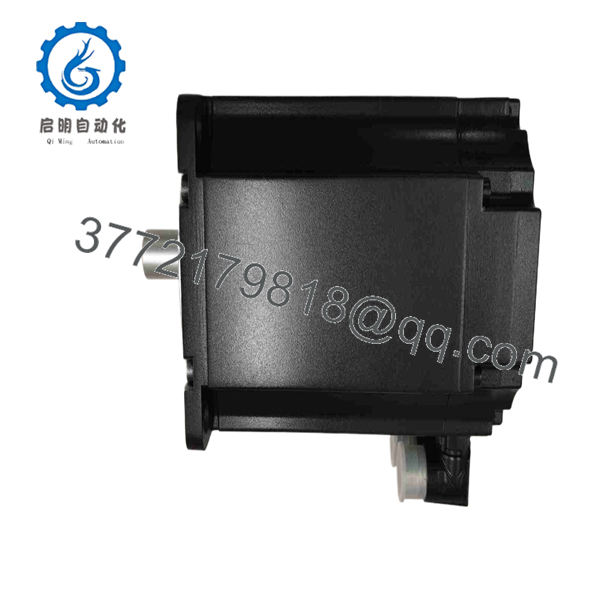
8LSA55.EB030D200-1
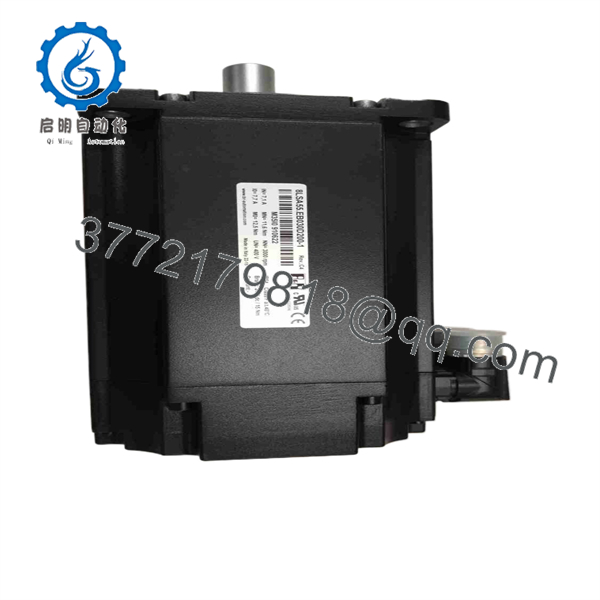
8LSA55.EB030D200-1
Frequently Asked Questions (FAQ)
Does the “-1” version brake hold the same torque as current “-3” motors?
The D200 code consistently adds a ~15 Nm holding brake at this frame size across the versions we’ve confirmed, but the exact brake assembly and its part-specific rating can differ between “-1” and “-3.” Confirm the holding torque figure against your specific unit’s drawing or nameplate before relying on it for a safety-critical vertical-axis application.
Will my ACOPOS drive recognize this motor without extra configuration?
It depends on your drive’s DT-file revision. Version “-1” motors may need an older DT file loaded, or your drive may not have that specific entry if it’s running current firmware only. Confirm compatibility before powering up — a mismatch typically throws a motor-ID fault rather than causing damage.
Can I substitute a current “-3” version motor instead?
Only if you confirm the connector type and DT-file entry match your existing drive configuration. The base electricals are consistent across versions for this winding code, but the physical connector and encoder electronics packaging have changed across three motor generations — don’t assume plug-and-play.
Why is this priced below current B&R list pricing?
This is New Original / New Surplus stock of an earlier motor version — sourced through the secondary market rather than a current factory build. You’re getting genuine B&R hardware at a lower cost than ordering the current “-3” generation new, which matters if your machine was originally built around the “-1” connector and brake configuration.
What’s your testing process on this unit before it ships?
Inbound visual inspection for shaft, connector, and brake housing damage, a stator resistance check against the 1.127 Ω reference, and a brake engage/release check under power. We don’t run every unit on a live ACOPOS bench test unless requested — tell us upfront if you need a powered functional test with documentation before it ships.
What if the brake holding torque doesn’t match what I need for my axis?
Tell us your application’s static holding load before you order — we can confirm the exact brake rating on this specific unit rather than you assuming it matches a generic 8LS-series figure.