WhatsApp: +86 16626708626
 Email:
  Phone: +86 16626708626
Description
Key Technical Specifications
| Parameter | Specification |
|---|---|
| Manufacturer | B&R Automation |
| Model | 8V1010.00-2 |
| Product family | ACOPOS 1010 |
| Drive type | AC servo drive |
| Motor continuous current | 1.0 A |
| Rated output power | 0.45 kW |
| Mains input | 3 × 400–480 VAC ±10% |
| Frequency | 50 / 60 Hz ±4% |
| Maximum installed load | 1.35 kVA |
| Inrush current | 2 A at 400 VAC |
| 24 VDC supply | 24 VDC +25% / −20% |
| Maximum 24 VDC consumption | 1.47 A + motor holding-brake current |
| DC bus capacitance | 165 µF |
| Integrated line filter | Yes, EN 61800-3 Category C3 |
| Integrated braking resistor | Yes |
| Electronic restart inhibit | Yes |
| Plug-in module slots | 3 |
| Operating temperature | 5 to 40 °C nominal; 55 °C maximum |
| Storage temperature | −25 to 55 °C |
| Transport temperature | −25 to 70 °C |
| Operating humidity | 5–85% RH |
| Maximum installation altitude | 2,000 m |
| Protection rating | IP20 |
| Pollution degree | 2 |
| Overvoltage category | II |
| Dimensions | 58.5 × 257 × 220 mm |
| Weight | 2.5 kg |
| Certifications | CE, UKCA, cULus E225616, KC |
| Functional safety | Yes |
B&R’s current product record specifies the 1.0 A / 0.45 kW rating, 3 × 400–480 VAC input, three plug-in module slots, integrated line filter, braking resistor, and electronic restart inhibit.
The ACOPOS platform uses interchangeable plug-in interface modules. Documented options for this drive family include POWERLINK, CAN, EnDat/sine-incremental encoder, HIPERFACE, and resolver interfaces. The correct module must be selected according to the motor feedback and machine communication architecture.
Product Introduction
The B&R 8V1010.00-2 is an ACOPOS 1010 servo drive rated for 3 × 400–480 VAC mains, 1.0 A continuous motor current, and 0.45 kW output power. It uses a modular architecture with three plug-in module positions and includes an integrated line filter, braking resistor, and electronic safe restart inhibit.
This configuration is intended for compact B&R motion-control systems where the drive, motor feedback interface, and automation network are configured as a matched system. Its IP20 enclosure and specified mounting orientations make cabinet installation mandatory rather than field installation.
Installation & Configuration Guide
Stage 1 — Pre-Installation
Estimated time: 30–60 minutes
- Place the machine in a controlled maintenance state and notify affected personnel.
- Apply LOTO to the incoming AC supply.
- Verify absence of hazardous voltage and allow the DC bus to discharge.
- Record the existing drive’s complete part number and hardware revision.
- Photograph all plug-in modules before removal.
- Back up the Automation Studio project, axis configuration, motor parameters, and network settings.
- Verify that the replacement is specifically 8V1010.00-2 rather than another ACOPOS 1010 variant.
⚠️ The drive contains hazardous mains and DC-bus voltages. Installation and servicing must be performed by qualified personnel following B&R safety instructions.
Stage 2 — Remove the Existing Drive
Estimated time: 30–60 minutes
- Confirm electrical isolation with appropriate test equipment.
- Label incoming mains, motor, control, and network wiring.
- Disconnect the 24 VDC supply.
- Disconnect the motor and feedback connections.
- Remove the communication/interface module connections as applicable.
- Remove the drive mounting hardware.
- Withdraw the drive without disturbing adjacent cabinet wiring.
Keep the removed unit available until the replacement has completed commissioning. Its plug-in modules and hardware revision may be needed for configuration verification.
Stage 3 — Install the 8V1010.00-2
Estimated time: 45–90 minutes
- Inspect the replacement for shipping damage and connector contamination.
- Verify the nameplate: 8V1010.00-2.
- Confirm that the required plug-in communication and feedback modules are installed.
- Install the drive in the approved cabinet orientation.
- Maintain the required clearance around ventilation openings.
- Connect the protective earth first according to the applicable B&R installation documentation.
- Connect the three-phase mains supply.
- Connect the motor power and feedback interfaces.
- Connect the 24 VDC control supply.
- Reconnect the fieldbus/network interface.
- Verify shielding and cabinet grounding.
B&R specifies that the drive may be mounted vertically or horizontally with the face upward, but standing horizontally is not permitted. The nominal installation altitude is 0–500 m, with 2,000 m listed as the maximum.
Stage 4 — Power-On and Testing
Estimated time: 30–90 minutes
- Confirm that the machine is mechanically safe before energization.
- Energize the control supply and check drive status.
- Verify the installed interface modules.
- Confirm communication with the B&R control system.
- Load or verify the correct Automation Studio hardware configuration.
- Confirm the motor model and feedback interface.
- Check axis enable, feedback position, and diagnostic status.
- Perform a low-speed jog with the machine unloaded where practical.
- Verify commanded and actual direction.
- Check following error and motor current.
- Test the braking function under controlled conditions.
- Run a representative production cycle and monitor drive temperature and diagnostics.
B&R lists Automation Studio hardware upgrades for the exact 8V1010.00-2, including a V6.0 hardware upgrade version dated April 2026. This is useful when integrating a legacy drive into a maintained Automation Studio environment.
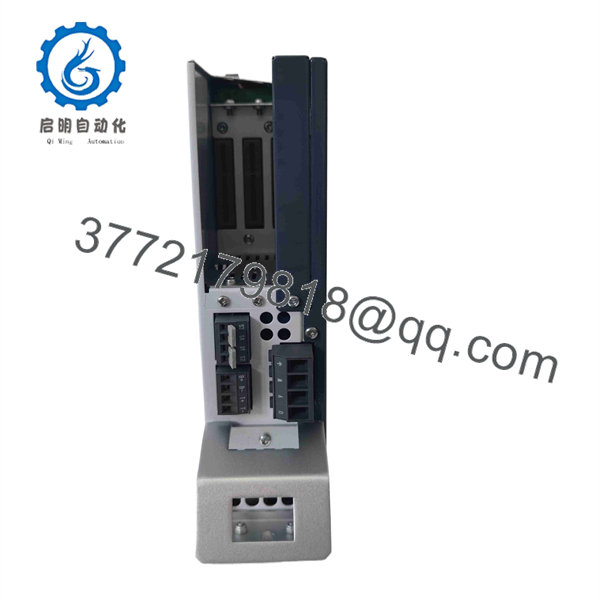
8V1010.00-2
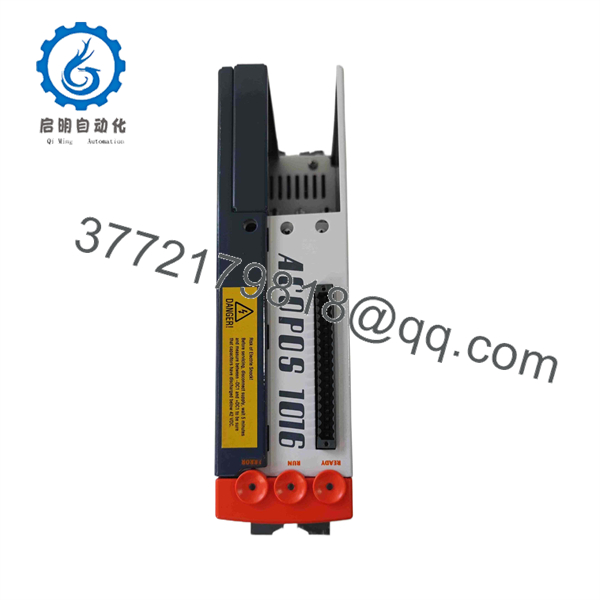
8V1010.00-2
FAQ
What is the B&R 8V1010.00-2?
It is an ACOPOS 1010 servo drive rated at 1.0 A continuous motor current and 0.45 kW output power for 3 × 400–480 VAC systems.
Does the 8V1010.00-2 include a braking resistor?
Yes. B&R specifies an integrated braking resistor. The drive also includes an integrated line filter and electronic safe restart inhibit.
Which feedback interfaces are supported?
The ACOPOS 1010 platform uses plug-in interface modules. Documented modules include EnDat/sine incremental encoder, HIPERFACE, and resolver interfaces, along with communication modules such as POWERLINK and CAN. The appropriate module must match the motor and control architecture.
Is 8V1010.00-2 interchangeable with 8V1016.00-2?
Not as a direct specification-equivalent replacement. The 8V1016.00-2 is a higher-current 1.6 A / 0.7 kW model. The motor, axis duty, drive configuration, wiring, and cabinet design should be reviewed before substitution.
Is the 8V1010.00-2 discontinued?
A current independent industrial inventory record classifies the ACOPOS 1010 8V1010.00-2 as discontinued, although B&R still provides product documentation and current Automation Studio hardware-upgrade resources for the exact model.
Can the existing PLC program be retained?
Usually, an identical replacement drive can retain the machine’s existing control architecture, but the Automation Studio hardware configuration, firmware compatibility, plug-in modules, motor data, feedback configuration, and axis parameters must be verified before commissioning.
What should procurement verify before ordering?
Confirm the complete part number 8V1010.00-2, hardware revision, installed plug-in modules, condition, serial/traceability information, and whether the replacement has been function-tested. For a legacy ACOPOS drive, matching the interface modules and machine configuration is as important as matching the drive base unit.