WhatsApp: +86 16626708626
 Email:
  Phone: +86 16626708626
Description
Key Technical Specifications
| Parameter | Specification |
| Manufacturer | Compressor Controls Corporation (CCC) / Honeywell |
| Model / Part Number | IOC-555-D / 17-550555-001 |
| Module Type | Simplex Input / Output Processing Card |
| Input Voltage | 24 V DC (±10% nominal tolerance) |
| Power Consumption | < 15 W (Typical backplane draw) |
| Analog Inputs / Outputs | Configurable 4–20 mA, 0–10 V DC channels |
| Digital Inputs / Outputs | Optically isolated DI / Solid-state DO channels |
| Operating Temperature | −40°C to +70°C (−40°F to +158°F) |
| Storage Temperature | −40°C to +85°C (−40°F to +185°F) |
| Humidity Rating | 5% to 95% non-condensing |
| Mounting Configuration | Dedicated CCC chassis / backplane card cage slot |
| System Compatibility | CCC Series 5 and Vanguard turbomachinery architecture |
Product Introduction & Supply Chain Strategy
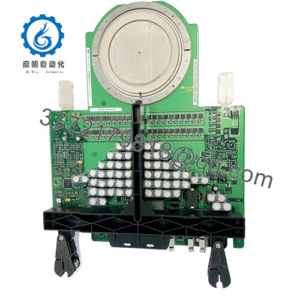
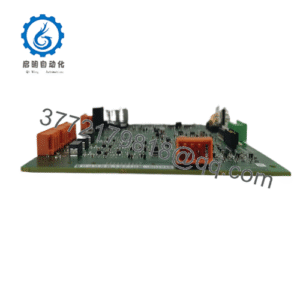
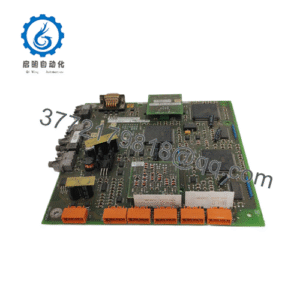
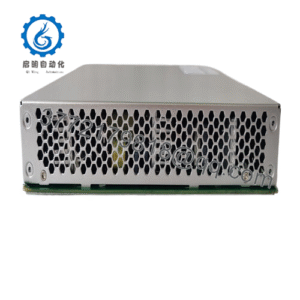
The Compressor Controls Corporation (CCC) IOC-555-D (P/N: 17-550555-001) is a high-reliability simplex input/output processing module engineered for critical turbomachinery control applications. Operating within CCC Vanguard and Series 5 system architectures, the card executes high-speed signal conditioning, analog and digital data acquisition, and real-time field device interfacing for anti-surge control, steam turbine governing, and process compressor automation. Its ruggedized circuitry ensures continuous, low-latency communication between field instrumentation and the primary processing rack in high-risk chemical, petrochemical, and power generation environments.
Maintaining New Surplus stock of the CCC IOC-555-D is a critical strategic imperative for plants running legacy turbomachinery controls. Because an unexpected I/O card failure on an anti-surge valve or turbine governor triggers an immediate emergency shutdown (ESD), stock-out risks carry severe financial exposure. Sourcing genuine New Surplus units guarantees complete OEM-grade component longevity, avoiding the internal silicon degradation and degraded relay contacts inherent in secondary market refurbishments. Holding 1–2 verified units on-site minimizes Total Cost of Ownership (TCO) by providing instant mean-time-to-repair (MTTR) protection against catastrophic unplanned downtime.
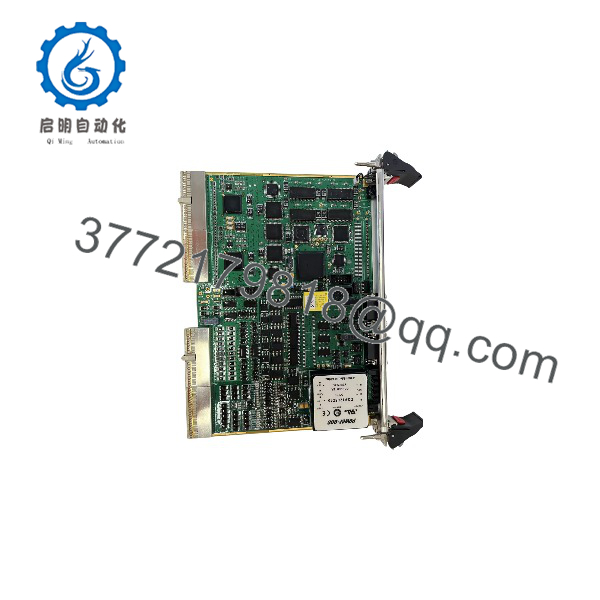
IOC-555-D
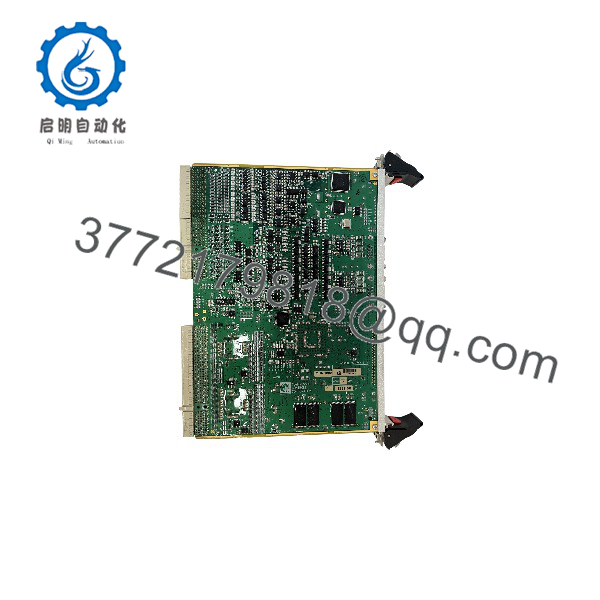
IOC-555-D
Installation & Configuration Guide
Stage 1: Pre-Installation (Prep & Safety)
- Initiate strict Lock-Out/Tag-Out (LOTO) protocols on the control cabinet and target turbomachinery subsystem.
- Put on a grounded ESD wrist strap connected to cabinet earth ground before handling the replacement card.
- Photograph the existing card installation, noting exact rack slot positioning, backplane latching mechanisms, and DIP switch/jumper positions on the board edge.
Stage 2: Removal
- Unfasten top and bottom retaining thumbscrews on the front faceplate of the active IOC-555-D card.
- Carefully disengage card-edge retention levers to detach the module from the high-density backplane connector.
- Slide the module straight out of the rack guide rails in a continuous motion to prevent pin twisting or static discharge against neighboring cards. Place the pulled card immediately into an ESD protective shield bag.
Stage 3: Installation (Clone & Seat)
- Remove the New Surplus IOC-555-D from its sealed anti-static bag and inspect backplane edge-connector pins for alignment or debris.
- Verify that all DIP switches and jumper configurations on the new module precisely match the configuration photographed from the original card.
- Align the card with the card cage guide rails and slide it firmly into the slot until the backplane connector fully seats. Secure top and bottom faceplate screws to 0.6 N·m (5.3 in-lbs).
Stage 4: Power-On & Testing
- Restore 24 V DC system power to the rack.
- Observe front panel diagnostic LEDs: Verify the power LED displays solid green and status indicators transition from initialization POST to normal RUN mode without triggering FAULT lights.
- Perform loop checks on connected analog (4–20 mA) and digital I/O channels through the CCC engineering workstation to confirm signal accuracy before starting process equipment.
Firmware/Software Versions & Upgrade Notes
- Recommended Firmware Baseline: Firmware release V3.x or higher, depending on the specific CCC chassis backplane revision and system software release (e.g., TrainTools environment).
- Backplane & System Compatibility: The IOC-555-D (17-550555-001) requires matching firmware family revisions across all redundant or paired I/O processor slots. Mixing firmware revisions between I/O processing cards on the same bus can cause bus synchronization faults or dropped communication frames.
- Firmware Swap Risks: Direct hardware replacement does not require flashing unless replacing a legacy rev board with a higher revision code. Downgrading or upgrading firmware in the field during a live hardware swap carries a risk of parameter table corruption; always back up system logic files to the engineering workstation prior to insertion.
Frequently Asked Questions (FAQ)
Q: How can you confirm this module is truly “New Surplus” rather than a cleaned-up, used part?
Every unit we supply originates directly from excess OEM inventory, canceled plant projects, or strategic capital spare reserves. Cards arrive in original anti-static packaging, displaying pristine gold backplane connector contacts with zero insertion wear, zero solder rework, and factory serial numbers that match original shipping documentation.
Q: Why is New Surplus priced higher than refurbished cards on the market, but lower than OEM list?
Refurbished cards are harvested from decommissioned plants and carry hidden thermal stress, degraded capacitors, and short lifespans. OEM direct orders often require high emergency expediting fees and long factory lead times. Our New Surplus inventory bridges this gap: you get 100% factory-new reliability and full operational lifespan at a clear discount off OEM pricing, delivered immediately from stock.
Q: Is the CCC hot-swappable in a live control system?
While the hardware interface is designed for backplane insertion, removing or inserting an I/O card while the rack is energized must only be performed if the specific CCC system architecture and safety procedures explicitly permit hot-swapping for that rack slot. Uncontrolled hot-swapping can trigger unexpected trip signals on critical anti-surge valves. Always bypass field control outputs prior to extraction.
Q: Does the retain internal logic or DIP switch settings when powered off?
The relies on hardware jumpers/DIP switches for physical slot/address identification, while process parameters are pushed from the main CPU module upon rack boot. Physical DIP switch settings must be manually mirrored onto the new board prior to installation to ensure proper channel mapping.
Q: What warranty coverage applies to this module?
We provide a comprehensive 1-Year / 12-Month replacement warranty on all New Surplus CCC cards. If the module exhibits any functional or communication defect under normal operating conditions within the warranty period, we issue an immediate advance replacement from our verified stock.