WhatsApp: +86 16626708626
 Email:
  Phone: +86 16626708626
Description
Key Technical Specifications
| Parameter | Value |
| Manufacturer | DEIF A/S (Denmark) |
| Type Designation | FAS-2R Full-Auto Synchronising Relay |
| Measuring Voltage (V_N) | 100V AC, 230V AC, 400V AC, or 440V AC (\pm20\%) |
| Frequency (f_N) | 50 Hz / 60 Hz selectable |
| Max Voltage Difference (\Delta V) | Adjustable 2% to 10% V_N |
| Max Frequency Difference (\Delta f) | Adjustable 0.1 Hz to 0.4 Hz |
| Controller Frequency Setpoint (f_C) | Typical 0.20 Hz |
| Proportional Band (X_P) | Adjustable 0.5 Hz to 1.5 Hz |
| Relay Pulse Length (T_N) | Adjustable pulse duration for governor speed matching |
| Output Contacts | Relay contacts for Raise Speed, Lower Speed, & Breaker Close |
| Auxiliary Supply | 24V DC or 110/220V AC (depending on sub-type) |
| Mounting & Enclosure | 35 mm DIN Rail or Switchboard Door Mount, IP40/IP41 front panel |
Product Introduction & Application Role
The DEIF FAS-2R is a fully automatic synchronising relay engineered for generator paralleling in marine vessels, offshore platforms, and land-based diesel generator plants. During generator startup or bus transfer routines, the FAS-2R measures the voltage, frequency, and phase difference between the incoming generator (GEN) and the live busbar (BUS). It outputs corrective control pulses to the engine governor to adjust speed, issuing a breaker closure command at the precise moment of phase alignment (\Delta \phi \approx 0^\circ).
Using refurbished or unverified auto-synchronisers poses a high risk to electrical distribution equipment. If an aged relay fires out-of-phase due to component drift or degraded phase-detector circuits, the resulting mechanical shock and electrical cross-currents can snap generator shaft couplings, strip gear teeth, or trip the main breaker on reverse power. Installing factory-tested or fully inspected New Surplus DEIF FAS-2R modules ensures instant, phase-locked synchronisation and safeguards heavy rotating equipment.
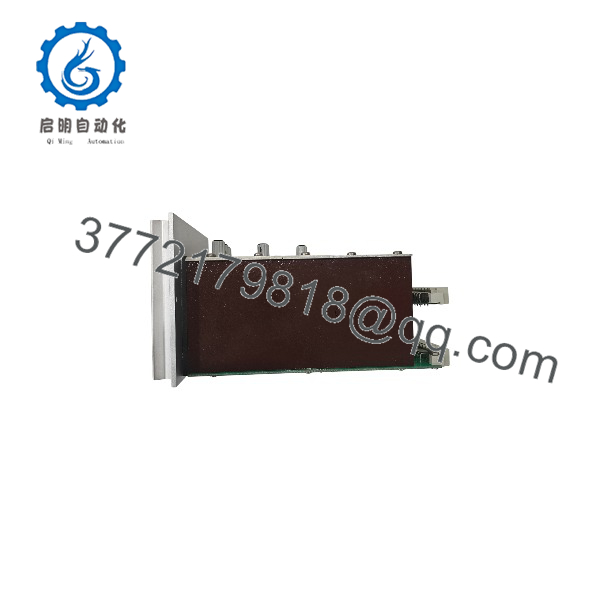
FAS-2R
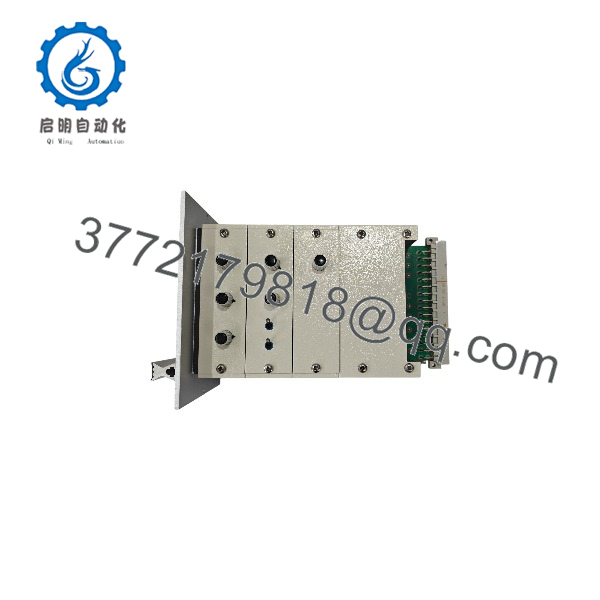
FAS-2R
Installation & Commissioning Guide
1.Stage 1: Pre-Installation Check:Safety Isolation & Wiring Verification.
Isolate generator voltage sensing transformers (PTs) and auxiliary DC supply. Confirm phase sequence (L1-L2-L3) across both the Busbar PT and Generator PT using a phase rotation meter to ensure matching phase order before wiring into the FAS-2R.
2.Stage 2: Installation & Wiring:Mechanical Mounting.
Snap the FAS-2R module onto the 35 mm DIN rail inside the switchboard or secure it via panel clips. Connect the incoming generator voltage sensing lines, busbar sensing lines, governor speed raise/lower control signals, and the circuit breaker trip/close interlock loop per the unit’s wiring schematic.
3.Stage 3: Setpoint Adjustment:Parameter Potentiometer Setup.
Set maximum allowable voltage difference (\Delta V, typically 5–10%). Set maximum frequency difference (\Delta f, typically 0.2–0.4 Hz). Adjust the proportional band (X_P) and pulse duration (T_N) to match the response speed of your electronic or mechanical engine governor.
4.Stage 4: Live Synchronization Test:Commissioning & Breaker Timing Test.
With the main breaker racked out to the “TEST” position, start the generator and initiate auto-synchronisation. Monitor the synchroscope LED array on the panel. Confirm the speed raise/lower relays pulse smoothly to bring the engine into target slip frequency, and verify the close relay fires precisely at 12 o’clock (0° phase angle).
Engineering & Setup Notes
- Phase Rotation Matching: The will refuse to issue a close command if phase rotation direction (e.g., A-B-C vs. A-C-B) between the busbar and incoming machine differs, preventing catastrophic phase short-circuits.
- Circuit Breaker Closing Time: The features an advance time calculation that accounts for the physical closing time of the circuit breaker contacts (typically 50 ms to 120 ms) to achieve contact closure exactly at zero phase shift.
- Governor Integration: Relay output pulses connect directly to digital speed raise/lower inputs on Woodward, Cummins, DEIF AGC, or Heinzmann engine speed controllers.
Frequently Asked Questions (FAQ)
What is the difference between static and dynamic synchronisation on the ?
Static synchronisation matches both frequency and phase before closing, which can take longer on slow-governing engines. Dynamic synchronisation permits a slight frequency slip (\Delta f) so the generator phase angle continuously passes through zero, allowing the relay to execute a faster close command as the phases align.
Can the DEIF handle both 50 Hz and 60 Hz power systems?
Yes. The nominal operating frequency (50 Hz or 60 Hz) is selectable via terminal jumpers or DIP switches depending on the exact hardware revision.
What happens if the generator voltage does not match the busbar voltage?
If the voltage difference (\Delta V) exceeds the configured setpoint threshold (e.g., >10%), the inhibits the breaker closing signal until the Automatic Voltage Regulator (AVR) adjusts generator voltage within the acceptable window.
Can I replace a legacy with a modern DEIF AGC series controller?
Yes. Modern controllers like the DEIF AGC 150 or AGC 4 Mk II combine auto-synchronising, load sharing, and engine protection into one digital platform. However, replacing an with another unit allows a direct drop-in replacement without panel re-engineering.