WhatsApp: +86 16626708626
 Email:
 Phone: +86 16626708626
Description
Core Product Summary
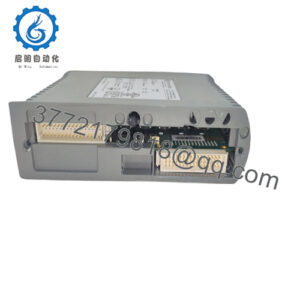
The ELAU PMC-2 is a digital positioning motor controller that integrates the positioning intelligence and the digital servo motor controller in a single unit. Where a classic servo positioning installation required a separate positioning control and a separate motor controller, the PMC-2 combines both functions in one case, forming a complete solution for positioning and synchronization tasks.
The controller drives ELAU’s high-dynamic brushless AC servo motors of the SB series (SB-056 through SB-205, where the numeric suffix denotes the motor flange dimension). It is programmed through the EPAS-3 software tool using ECL-3, the multitasking member of the ECL-ELAU Control Language family already proven in the SX-1, SX-2, and SX-3 positioning controls. All I/Os of both the positioning level and the motor controller level are guided internally by optocouplers, and the controller can be operated with resolver or SINCOS encoder feedback — the controller and SB motor are factory-matched by ELAU, so on-site measuring-in of the feedback system is not required.
Key Technical Specifications
| Parameter | Value |
|---|---|
| Manufacturer | ELAU AG (brand later part of Schneider Electric) |
| Product | PMC-2 digital positioning motor controller |
| Instruction manual article number | 17130054-001 |
| Control functions | Positioning and synchronization (positioning level + motor controller integrated in one unit) |
| Feedback systems | Resolver or SINCOS encoder (factory-set with the matched motor) |
| Motor compatibility | ELAU SB series brushless AC servo motors, SB-056…205 (numeric suffix = flange dimension) |
| Programming | EPAS-3 tool; ECL-3 (ECL-ELAU Control Language, multitasking) |
| ECL execution | Machine code of the microprocessor; multitasking (e.g., one program part for positioning jobs, a second for monitoring functions) |
| I/O isolation | All positioning-level and motor-controller I/Os guided by optocouplers |
| Analogue input | Analogue set-value input accepting ±10 V range voltages |
| Memory module | Memory module enables unit exchange without a PC |
| Controller current ratings (per installation data) | 4 A, 5 A, 8 A, 16 A, 25 A types |
| Bus coupling | DPS-1 module couples the PMC-2 to PROFIBUS-DP; optional IBS-2 module (INTERBUS, SUPI 3) |
| DC-circuit feature | DC circuits of several PMC-2 units are parallel-switchable (power compensation) |
Detailed Product Overview
The defining architectural idea of the PMC-2 is consolidation. A conventional servo positioning axis is built from two boxes: a positioning controller that handles path planning, coordination, and machine logic, and a separate motor controller (servo amplifier) that closes the motor’s current, velocity, and position loops. The PMC-2 places both functions in one case, sharing one programming interface for the positioning level (POS) and the motor controller (MC). The practical consequences are fewer components, one configuration environment, and single-point diagnostics for the axis.
Control software. Application logic is written in ECL-3, the multitasking member of the ECL-ELAU Control Language. ECL was carried forward from ELAU’s earlier SX-1, SX-2, and SX-3 positioning controls, so engineers trained on those systems find a familiar structure. Programs are filed in the machine code of the microprocessor, which gives high processing speed; the language mixes single instructions with half-textual elements to keep programs readable. Multitasking allows clean separation of concerns — for example, one ECL program part handles the positioning jobs while a second concentrates on monitoring functions.
Servo system. ELAU supplied the PMC-2 as part of a system: the high-dynamic brushless AC servo motors SB-056 through SB-205 are matched to the controller, and controller-motor pairs are factory-set. The feedback interface supports resolver or SINCOS encoder operation, and because both the PMC-2 and the SB motor leave the factory configured as a set, measuring-in the feedback system at the machine is not necessary. The controller/motor combination should be verified against the type plates using the “Combinations PMC-2 and SB-motors” table before commissioning.
Electrical design. The positioning and motor-control I/Os are opto-isolated internally, which simplifies integration into machine electrical cabinets by separating the controller’s signal world from field wiring. An analogue set-value input accepts voltages in the ±10 V range for direct torque or velocity commanding from an external source. For multi-axis machines, the DC circuits of several PMC-2 units can be connected in parallel for power compensation, letting braking energy from one axis feed motoring axes instead of being dissipated.
Communication options. On the fieldbus side, the DPS-1 module couples the PMC-2 to PROFIBUS-DP; note that the PMC-2 does not support PCP services, so DP-mode operation is the supported profile. The optional IBS-2 module provides INTERBUS connection using SUPI 3. The bus wiring uses a connector with an integrated limit resistor that must be switched active at the first and last bus participant, with the shield fixed at both ends.
Maintenance concept. The unit-exchange concept is built in: the application program and parameters are held on a memory module, so a failed controller can be replaced without a PC — the memory module carries the personality to the replacement unit. Repair, spare parts, and unit-exchange procedures are covered in the manufacturer’s documentation.
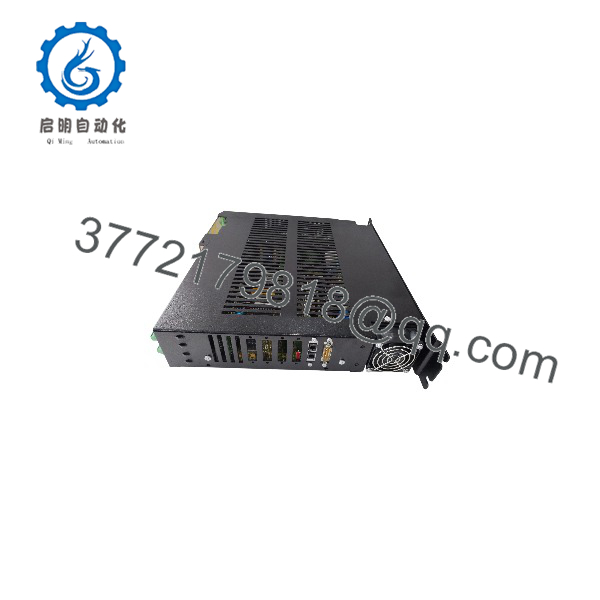
PMC-2
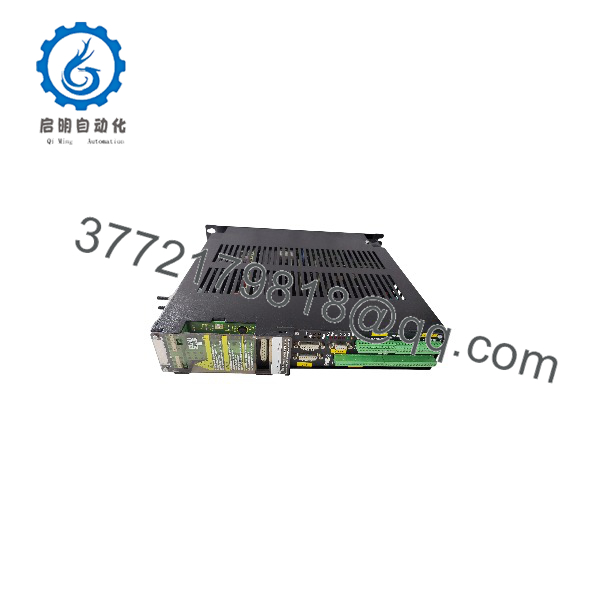
PMC-2
System Compatibility & Integration Requirements
| Item / Dependency | Verified Compatibility or Requirement | Practical Note |
|---|---|---|
| Servo motors | ELAU SB brushless servo motors, SB-056…205 | Verify controller/motor pairing via type plates and the combinations table |
| Feedback | Resolver or SINCOS encoder | Factory-set with the matched motor; no on-site measuring-in |
| Programming tool | EPAS-3 with ECL-3 | One interface covers both POS and MC functions |
| PROFIBUS | Via DPS-1 coupling module | PCP services not supported |
| INTERBUS | Via optional IBS-2 module | SUPI 3; limit resistor active at first/last participant |
| I/O isolation | Opto-isolated positioning and motor I/Os | Simplifies cabinet integration |
| Multi-axis energy | DC circuits of multiple PMC-2 units parallel-switchable | Power compensation between axes |
| Replacement | Memory module enables unit exchange without a PC | Preserve the memory module with the machine documentation |
| Commissioning | Manufacturer recommends commissioning support; verify emergency-stop chain, limit switches, brake function | Follow the first-commissioning procedure in order |
Dimensions, Mounting & Connection Notes
| Item | Value |
|---|---|
| Mounting | Cabinet installation with separately laid, shielded cables |
| Separately shielded cables | Motor cable, resolver cable, encoder cable, serial interface |
| Shield termination | Connected unilaterally to the PMC-2 via the connector plug casing (fieldbus: fixed on both ends) |
| Mains cable cross-section (per current rating, VDE 0113 type C) | 4 A / 5 A / 8 A types: 1.5 mm²; 16 A type: 2.5 mm²; 25 A type: 4 mm² |
| Earth conductor to the ZEP | 10 mm² for all current types |
| General admissible cross-sections | 1.5 mm² up to 15 A; 2.5 mm² up to 21 A; 4 mm² up to 28 A |
When original ELAU cables are not used, the listed cross-sections must be observed, and the four cable classes above must be laid separately and shielded to preserve signal integrity.
FAQ
What is the ELAU PMC-2?
A digital positioning motor controller that integrates the positioning control and the digital servo motor controller in one unit, providing a complete solution for positioning and synchronization tasks.
Which motors does it drive?
ELAU’s high-dynamic brushless AC servo motors of the SB series, SB-056 through SB-205; the numeric suffix identifies the motor flange dimension. Controller and motor are factory-matched as a set.
How is the PMC-2 programmed?
Through the EPAS-3 software tool, using ECL-3 — the multitasking variant of the ECL-ELAU Control Language inherited from the SX-1/SX-2/SX-3 positioning controls. Programs execute as microprocessor machine code for high processing speed.
Does the feedback system need calibration at installation?
No. The PMC-2 and its matched SB servo motor are factory-set by ELAU, so measuring-in the resolver or SINCOS encoder at the machine is not necessary.
Can the PMC-2 connect to fieldbus systems?
Yes. The DPS-1 module couples it to PROFIBUS-DP (PCP services are not supported), and the optional IBS-2 module provides an INTERBUS connection using SUPI 3.
What does “power compensation” mean for multi-axis machines?
The DC circuits of several PMC-2 controllers can be connected in parallel, so braking energy from one axis can be reused by motoring axes.
How is a failed controller replaced?
The application data is held on a memory module, allowing unit exchange without a PC — the replacement controller receives its configuration from the module.
What wiring rules apply?
Motor, resolver, encoder, and serial interface cables must be laid separately and shielded, with the shield connected unilaterally to the controller through the connector plug casing. Mains cable cross-sections depend on the controller’s current rating, per the installation data above.