WhatsApp: +86 16626708626
 Email:
 Phone: +86 16626708626
Description
Core Product Summary
The ELAU SM-070/60/020/P1/45/S1/B1 (SM-07060020P145S1B1) is a synchronous AC servo motor from the SM-70 family of the ELAU PacDrive SM motor series, the motion range of ELAU that is now part of Schneider Electric’s automation offering. It is a permanent-field synchronous machine with low rotor inertia, built for highly dynamic positioning tasks, and it forms the rotary drive element of a PacDrive servo axis operated through a matching PacDrive motor controller.
This variant combines the longer-stack 2.0 Nm, 6000 rpm version of the 70 mm flange motor with two features that matter at the machine level: a shaft with feather groove (keyed to DIN 6885) for positive torque transmission, and a spring-applied holding brake energized at 24 VDC for position retention when power is removed. Feedback is provided by a SinCos single-turn encoder with an electronic nameplate that the drive reads automatically during commissioning, and power and feedback are routed through a connection box.
Key Technical Specifications
| Parameter | Value |
|---|---|
| Product type | Permanent-field synchronous AC servo motor with holding brake |
| Series / family | ELAU PacDrive SM-70 (SM servo motor series) |
| Flange size | 70 mm |
| Rated torque | 2.0 Nm |
| Rated speed | 6000 rpm |
| Rated power | 0.7 kW |
| Shaft version | P1 — shaft with feather groove (key) per DIN 6885 |
| Holding brake | Integrated, 24 VDC, approx. 12 W |
| Feedback system | SinCos encoder, single-turn, with electronic nameplate |
| Power and feedback connections | Via connection box |
| Insulation class | F |
| Protection class | IP64 (shaft side) / IP65 (surface and connection box) |
| Mounting positions | IM B5, IM V1, IM V3 (flange mounting) |
| Order number reference | 19202604-004 |
Engineering Selection Highlights
- Keyed shaft (P1): unlike the smooth P0 version, this variant transmits torque through a feather groove machined to DIN 6885, so keyed couplings, pulleys, and gear hubs can be used directly — verify the keyway dimensions against the driven component before ordering.
- Integrated holding brake (B1): the 24 VDC brake holds the axis when power is removed, making this the correct SM-70 variant for vertical axes and applications where position must be retained during standstill; the drive cabinet must provide a 24 VDC control supply for the brake.
- 2.0 Nm / 6000 rpm class: this is the higher-torque stack length of the 70 mm family, doubling the continuous torque of the 1.0 Nm version at the same rated speed; confirm the axis torque demand against the motor’s torque-speed curve at the operating point.
- SinCos single-turn feedback (S1): the electronic nameplate lets the PacDrive motor controller adopt the motor data automatically during commissioning; the drive configuration must match single-turn feedback rather than resolver or multiturn variants.
- Exact-configuration identification: every element of the model string encodes a selection-relevant property (flange, speed, torque, shaft, winding class, feedback, brake), so a candidate replacement can be verified by nameplate comparison without re-measuring motor data.
- Connection box wiring: power, feedback, and brake are led through the motor connection box, so installation planning must include the brake control line in addition to motor and encoder cables.
System Compatibility & Integration Requirements
| Item / Dependency | Verified Compatibility or Requirement | Practical Note |
|---|---|---|
| Motion system | PacDrive servo/motion system (ELAU) | Operates as the motor of a PacDrive servo axis |
| Servo electronics | PacDrive motor controller / servo drive | Commutation and positioning are handled by the drive; the motor does not connect directly to the supply network |
| Feedback interface | SinCos single-turn encoder with electronic nameplate | Drive reads motor data automatically during commissioning |
| Brake control | 24 VDC supply for the holding brake | A brake control line must be routed to the motor connection box |
| Shaft coupling | Keyed connection per DIN 6885 | Hubs with matching feather groove; clamping-only couplings for smooth shafts are not required but also fit |
| Power and feedback cabling | Routed via motor connection box | Separate motor power and encoder feedback cables required |
| Mounting | Flange mounting, IM B5 / IM V1 / IM V3 | Vertical and wall mounting positions supported |
Dimensions, Mounting & Connection Notes
- The motor uses a 70 mm flange and is mounted in the standard flange positions IM B5 (horizontal), IM V1, and IM V3 (vertical orientations).
- The shaft end carries a feather groove machined to DIN 6885; the power transmission element must have a matching keyway.
- The shaft-side protection is IP64; surface and connection box are IP65.
- Power, encoder feedback, and brake connections are all terminated in the motor connection box.
- The holding brake is powered at 24 VDC and must be controlled by the drive or machine safety circuit so that it releases only when the axis is ready to move.
Detailed Product Overview
Within the SM-70 motor family, the SM-070/60/020/P1/45/S1/B1 occupies the higher-torque position: the same 70 mm flange and 6000 rpm winding class as the 1.0 Nm model, but with a longer magnetic stack that doubles the continuous torque to 2.0 Nm and raises rated power to 0.7 kW. For an engineer sizing or replacing an axis, this means a compact footprint with meaningfully more turning capability, while the drive-side configuration and feedback system stay within the same PacDrive framework.
Two design decisions define this variant’s role in a machine. First, the keyed shaft: the feather groove to DIN 6885 provides a positive mechanical connection, which is the conventional choice where pulleys, gear hubs, or couplings must be mounted with a key. Second, the holding brake: the spring-applied, 24 VDC-released brake locks the shaft when de-energized, so the axis keeps its position whenever the drive is disabled — during normal stops, machine shutdown, or an emergency stop. This combination is what distinguishes the motor from the unbraked, smooth-shaft SM-70 variants, and either difference alone would change the mechanical or control interface of the axis.
Commissioning follows the PacDrive pattern: the SinCos single-turn encoder carries an electronic nameplate with the motor’s electrical data, which the motor controller reads out automatically, and rotor-position-dependent commutation is generated by the drive. Because feedback is single-turn, the axis behaves as a single-revolution absolute system with reference to the motor shaft; multi-revolution absolute position handling is a property of the multiturn (M1) variants, not this one. Selection of this exact string should therefore match both the drive configuration and the machine’s referencing scheme.
For maintenance and procurement, the practical checks are the same as for the rest of the SM series: confirm the full model string on the nameplate, including the P1 shaft code and the B1 brake code, provide the 24 VDC brake supply, and plan wiring through the connection box for motor power, feedback, and brake control. A unit matching the complete designation can be installed as a like-for-like replacement without re-engineering the coupling, the brake control, or the drive’s motor data.
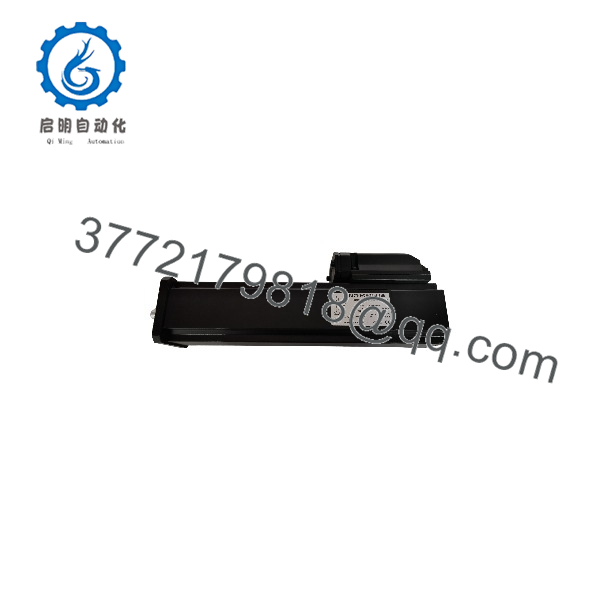
SM-070/60/020/P1/45/S1/B1
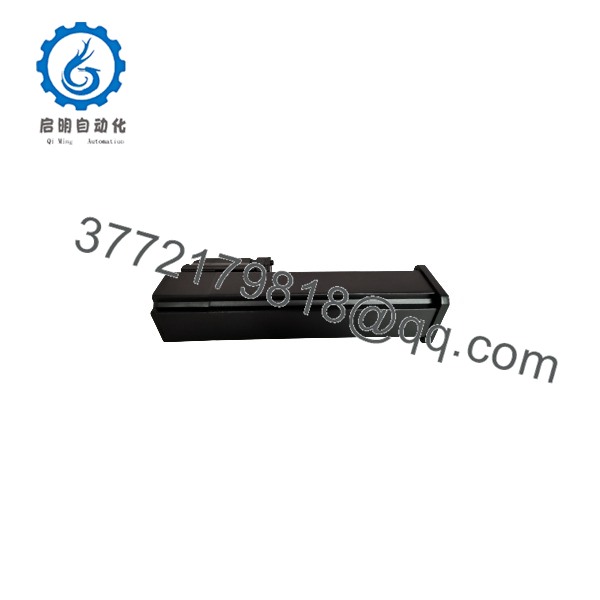
SM-070/60/020/P1/45/S1/B1
Applications & System Role
In a PacDrive machine, this motor is the rotary actuator of a servo axis: the PacDrive controller executes the motion program, the motor controller converts it into a sinusoidal three-phase current system, and this motor turns it into precise rotary motion with position and velocity fed back through its SinCos encoder. The brake extends the axis’s role to include safe standstill: when the drive is disabled, the spring-applied brake holds the load in place without control effort.
Its configuration points to axes with gravity or position-holding requirements: vertical lifting stages, gantry axes, tilting or indexing mechanisms, and other positioning elements in machines built on PacDrive motion platforms where the load must not drift when the axis is de-energized. Compared with the braked smooth-shaft variant, the keyed shaft suits drives that must transfer peak torque positively — for example pulleys or gear couplings subject to heavy dynamic loads.
FAQ
What is the ELAU SM-07060020P145S1B1?
It is an SM-70 series synchronous AC servo motor from the ELAU PacDrive SM range, configured with a keyed shaft and an integrated holding brake.
What are its key ratings?
It is rated at 2.0 Nm continuous torque and 6000 rpm, with 0.7 kW rated power on a 70 mm flange.
What does the model code tell me?
It defines a 70 mm flange (070), 6000 rpm rated speed (60), 2.0 Nm rated torque (020), a shaft with feather groove to DIN 6885 (P1), SinCos single-turn feedback (S1), and a holding brake (B1).
Does it have a holding brake?
Yes. The B1 suffix denotes an integrated spring-applied holding brake that is released with 24 VDC and holds the axis when de-energized.
What shaft does it have?
A keyed shaft with a feather groove machined to DIN 6885, intended for positive-fit torque transmission with keyed hubs.
Which feedback system does it use?
A SinCos single-turn encoder with an electronic nameplate, which the PacDrive motor controller reads automatically during commissioning.
Which drive does it need?
It operates as the motor of a PacDrive servo axis driven by a matching PacDrive motor controller; it is not connected directly to the supply network.
Is it the same motor as the SM-07060010P045S1B0?
No. That model is the 1.0 Nm smooth-shaft version without brake; this one has double the rated torque plus a keyed shaft and a holding brake, which changes the mechanical interface, the brake wiring, and the axis’s position-holding behavior.