 WhatsApp: +86 16626708626
 Email:
  Phone: +86 16626708626
Description
3. Key Technical Specifications
- Input Voltage: 24 VDC nominal
- Operating Temperature: -40°C to +70°C
- Power Consumption: ~5 W (typical module class)
- Physical Form Factor: Rack-mounted Ovation I/O module
- Weight: ~0.4 kg
- Dimensions: ~5.7 × 12.1 × 15.9 cm
- Communication: Ovation I/O backplane bus (system proprietary)
- I/O Capability: Mixed analog + digital channel support (configuration dependent)
- System Role: Field device interface between controller and process sensors/actuators
- Redundancy Support: Available in paired I/O architectures (system dependent)
4. Product Introduction
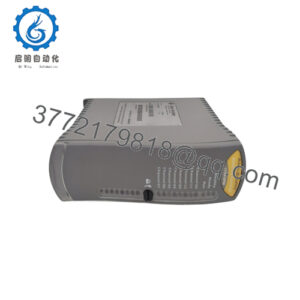
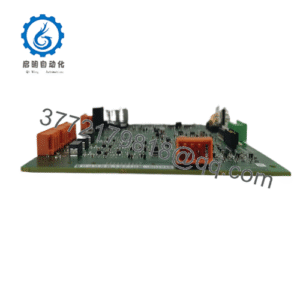
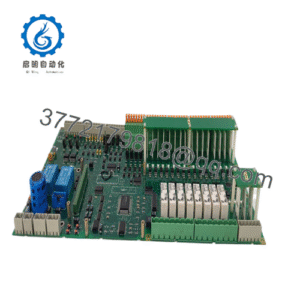
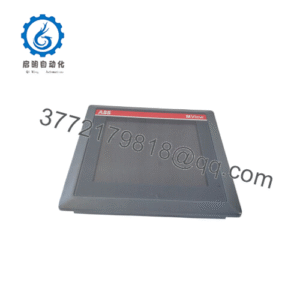
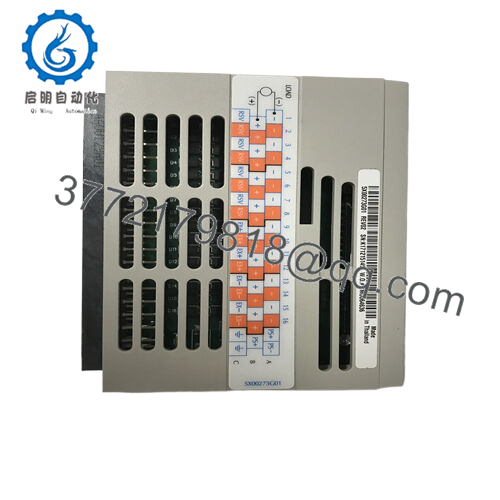
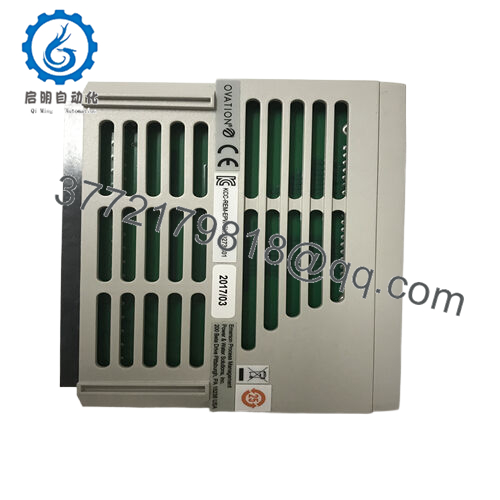
The EMERSON 5X00226G01 is an Ovation Distributed Control System I/O interface module used to connect field instrumentation to central control processors. It serves as a communication and signal conditioning layer between industrial sensors, actuators, and the Ovation control architecture.
This module is typically deployed in power generation, oil & gas, and large-scale process industries where high availability and deterministic control loops are required. It is not a standalone controller, but a critical node in a larger DCS network.

- 5X00226G01
5. Installation & Configuration Guide
Stage 1: Pre-Installation Preparation
⚠️ Safety First: Fully isolate DCS cabinet power. Apply LOTO procedures and verify 0 V on both 24 VDC supply and backplane rails. Wait 5–10 minutes for capacitor discharge.
Tools Required: ESD wrist strap, insulated screwdriver, multimeter, terminal labels, and camera for configuration capture.
Data Backup:
- Export Ovation controller configuration
- Record I/O channel mapping and node addressing
- Photograph terminal wiring and redundancy jumpers
Stage 2: Removing the Old Module
- Identify module slot in Ovation I/O cabinet
- Disconnect field wiring (label every channel)
- Disconnect backplane or ribbon interface carefully
- Release locking mechanism or retention latch
- Pull module straight out of rack
- Inspect connector pins for oxidation or heat damage
⚠️ Note: Ovation backplane alignment is precision-tolerant; do not force extraction.
Stage 3: Installing the New Module
- Confirm exact match: 5X00226G01
- Apply ESD grounding protection
- Insert module into correct I/O slot
- Engage locking mechanism fully
- Reconnect field wiring according to channel map
- Verify redundancy keying (if applicable)
Self-Checklist:
- Module seated flush in rack
- Channel wiring verified
- Redundancy configuration matched
- Grounding connection secure
Stage 4: Power-On & Testing
- Restore 24 VDC cabinet power only
- Observe module LEDs (STATUS / COMM / FAULT)
- Verify controller detects I/O node
- Run channel diagnostics (AI/AO/DI/DO check)
- Confirm communication stability on Ovation bus
- Perform loop check with field devices
⚠️ Troubleshooting Note:
- No module recognition → wrong slot or addressing mismatch
- COMM fault → backplane bus interruption or termination issue
- Channel error → wiring polarity or scaling configuration issue
Estimated commissioning time: 25–45 minutes depending on redundancy setup
6. Frequently Asked Questions (FAQ)
Is the 5X00226G01 hot-swappable?
In most Ovation configurations, yes—but only if the cabinet is configured for redundant I/O and hot-swap is enabled. Otherwise, power-down is required to avoid bus faults.
Is this a PLC module?
No. It is a DCS I/O interface module used inside Emerson Ovation systems, not a standalone PLC CPU or controller.
What happens if this module fails?
You typically lose all I/O channels handled by that node. In redundant configurations, the backup module takes over automatically.
Can it work outside Ovation systems?
No. It is tightly integrated with the Ovation backplane and controller architecture.
What is the most common failure mode?
Field experience shows:
- Backplane communication loss
- Terminal corrosion or loose field wiring
- Internal power regulation drift after long thermal cycling
- Redundancy sync failure between paired modules
Is this still manufactured?
No. It is generally available through surplus channels and industrial legacy support suppliers.
Does replacing it require reprogramming?
Usually no logic changes are required, but I/O mapping and node addressing must be verified in the Ovation configuration database.