WhatsApp: +86 16626708626
 Email:
  Phone: +86 16626708626
Description
Key Technical Specifications
| Parameter | Specification |
|---|---|
| Manufacturer | Emerson |
| Model | CE4005S2B4 |
| System | DeltaV |
| I/O Family | M-Series Traditional I/O |
| Product Type | Standard I/O Termination Block |
| Configuration | Simplex |
| Associated I/O Type | Analog Output |
| Channel Count | 16 channels |
| Series | Series 2 Plus |
| Output Signal | 4–20 mA |
| HART | Supported |
| Function | Analog output signal termination/interface |
| Mounting/Application | DeltaV M-Series I/O subsystem |
| Related Redundant Model | CE4035S2B4 |
| Related 8-Channel Model | CE4005S2B1 |
| System Role | Field wiring termination between field circuits and DeltaV I/O |
| Replacement Consideration | Verify terminal arrangement, I/O card family, and system revision |
Historical import records independently describe CE4005S2B4 as a 16-channel Series 2 Plus, 4–20 mA HART I/O termination associated with the DeltaV automatic process control system.
Important Identification Note
Do not confuse CE4005S2B4 with CE4035S2B4. Emerson’s documentation identifies CE4005S2B4 as the standard/simplex termination block, while CE4035S2B4 is associated with the redundant analog-output configuration.
Likewise, supplier databases sometimes incorrectly describe CE4005S2B4 as an analog-output card itself. The Emerson archived data sheet gives the more precise classification: Standard I/O Termination Block, Simplex.
Product Introduction
The Emerson CE4005S2B4 is a DeltaV M-Series Traditional I/O Standard I/O Termination Block used with a 16-channel Series 2 Plus analog-output configuration. The documented signal arrangement is 4–20 mA with HART support. Emerson’s archived product data specifically identifies as the simplex standard termination block rather than the analog output electronics themselves.
For replacement work, confirm whether the existing assembly requires the simplex or the redundant CE4035S2B4 configuration. Also verify the connected DeltaV I/O card, terminal wiring, channel assignment, and HART requirements before removing the installed hardware.
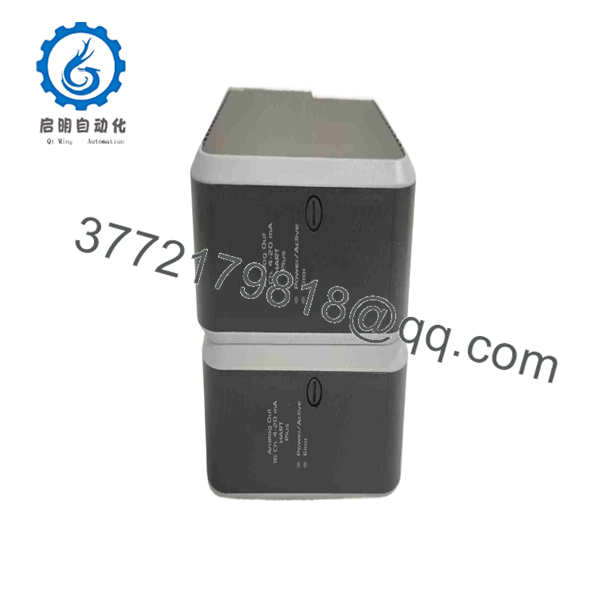
CE4005S2B4
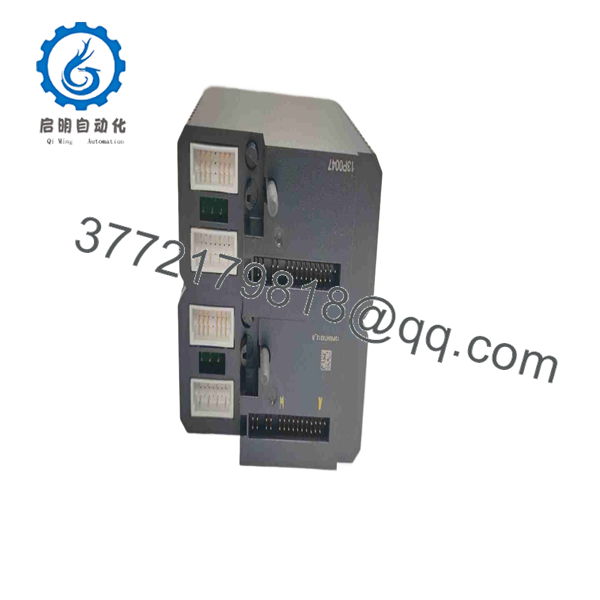
CE4005S2B4
Installation & Configuration Guide
Stage 1 — Pre-Installation Preparation
Approximate time: 15–20 minutes
- Follow the plant’s electrical isolation and lockout/tagout procedure.
- Identify the existing termination block by its complete part number.
- Confirm that the installed hardware is and not CE4035S2B4.
- Photograph the complete terminal assembly and field wiring.
- Record each channel’s field-device connection and DeltaV channel assignment.
- Confirm the associated analog-output card and its I/O carrier arrangement.
- If HART devices are connected, document the current HART channel assignments and maintenance configuration.
⚠️ Do not remove the terminal block based only on the appearance of the hardware. DeltaV M-Series termination blocks can be associated with different I/O configurations.
Stage 2 — Removing the Existing Termination Block
Approximate time: 15–25 minutes
- Verify that the associated I/O subsystem has been placed in the appropriate maintenance state.
- Label every field conductor before disconnecting it.
- Photograph terminal numbers and jumper arrangements where applicable.
- Disconnect field wiring using the site’s approved electrical procedure.
- Release the termination block from its mounting arrangement.
- Inspect terminal contacts, wiring, and adjacent I/O hardware for damage or corrosion.
- Compare the removed part number with the replacement before installation.
⚠️ Do not assume that identical wire colors indicate identical channel assignments. Use terminal numbers and the DeltaV engineering documentation as the controlling reference.
Stage 3 — Installing
Approximate time: 15–25 minutes
- Verify the replacement label reads .
- Confirm that the application is the documented simplex termination configuration.
- Install the termination block in the correct M-Series assembly position.
- Reconnect field wiring according to the recorded terminal schedule.
- Check polarity for each 4–20 mA output circuit.
- Verify shield and grounding arrangements against the plant wiring standard.
- Confirm that HART-enabled channels are connected to the intended field devices.
- Torque terminal connections according to the applicable DeltaV hardware documentation and plant electrical standard.
- Perform a point-to-point wiring check before energizing the I/O subsystem.
Stage 4 — Power-On & Testing
Approximate time: 30–45 minutes
- Complete a final terminal and wiring inspection.
- Restore power according to the site’s DeltaV startup procedure.
- Check the associated I/O card and controller diagnostics.
- Verify that the expected analog-output channels are healthy.
- Command a controlled output value from the DeltaV system.
- Measure the corresponding field-loop current with calibrated test equipment.
- Verify expected 4–20 mA scaling at representative output values.
- For HART applications, confirm that the expected field device can communicate through the configured channel.
- Return the control loop to automatic operation only after the output has been verified.
⚠️ If the DeltaV system reports an I/O or channel fault after replacement, first check terminal position, card/termination compatibility, field wiring, channel assignment, and redundant-versus-simplex configuration.
FAQ
What is Emerson ?
is an Emerson DeltaV M-Series Traditional I/O Standard I/O Termination Block. Emerson’s archived documentation specifically classifies it as a Standard I/O Termination Block, Simplex.
Is an analog output card?
Not according to Emerson’s archived M-Series documentation. is the termination block associated with the analog-output configuration. Some aftermarket listings incorrectly call the part an analog-output card, so the manufacturer’s classification should be used for engineering identification.
How many channels does support?
The documented configuration is a 16-channel analog-output termination arrangement using 4–20 mA with HART. Historical import records also identify as a 16-channel Series 2 Plus 4–20 mA HART I/O termination.
What is the difference between and CE4035S2B4?
The key distinction is the termination configuration. Emerson’s product data sheet identifies as the standard/simplex termination block, while is listed under the redundant analog-output termination configuration.
Is a complete analog-output module?
No. Treat it as a termination/interface component, not as a standalone analog-output controller. The associated DeltaV analog-output electronics, carrier, controller configuration, and field wiring must all be considered when replacing it.
Can be hot-swapped?
Do not assume hot-swap capability from the part number alone. Follow the specific DeltaV M-Series installation procedure and the plant’s approved maintenance procedure. Before removing a termination component, determine whether the connected field circuits and associated I/O card require an approved online-maintenance sequence.
What should be checked before ordering a replacement?
Verify at minimum:
- complete part number
- DeltaV M-Series I/O family
- Simplex versus redundant architecture
- 16-channel analog-output configuration
- 4–20 mA/HART requirement
- Associated I/O card
- Terminal arrangement and field wiring
- Hardware revision or assembly revision where applicable
- Physical condition of the replacement unit
For an exact replacement, the installed part number plus the associated DeltaV I/O card part number should be checked together rather than treating as a generic analog-output module.