WhatsApp: +86 16626708626
 Email:
  Phone: +86 16626708626
Description
Key Technical Specifications
| Parameter | Value |
|---|---|
| Manufacturer | Emerson EPRO |
| Model | CON021 |
| Product Type | Eddy Current Signal Converter |
| Application | Radial/axial shaft displacement, position, eccentricity, speed/key |
| Compatible Probe Families | PR6422, PR6423, PR6424, PR6425, PR6426, PR6453 |
| Frequency Range (-3 dB) | 0 to 20,000 Hz |
| Rise Time | <15 µs |
| Operating Temperature | −30 to +100 °C |
| Shock/Vibration | 5 g at 60 Hz, 25 °C |
| Protection Class | IP20 |
| Supply Voltage | −23 to −32 V DC |
| Output Range | −4 to −20 V |
| Alternative Supply Range | −21 to −32 V DC |
| Alternative Output Range | −2 to −18 V |
| Weight | Approximately 120 g |
| Housing Material | LMgSi 0.5 F22 |
| Mounting | 4 × M5 × 20 screws |
| Probe Connection | Self-locking LEMO plug |
| Supply/Output Connection | Screw terminal, max. 1.5 mm² conductor |
These values come from a CON021 specification sheet dated August 2017 and a matching product listing that reproduces the electrical and environmental specifications.
Important: The CON021 is not a conventional PLC I/O module. It is a signal-conditioning unit for EPRO eddy-current measurement systems. Several reseller pages incorrectly categorize it as a generic “industrial control module.” The manufacturer-style specification identifies its actual role as a sensor signal converter.
Product Introduction
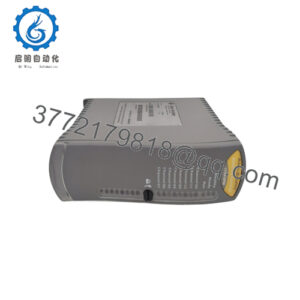
The Emerson EPRO CON021 is an eddy-current signal converter used with PR642x-series proximity probes for machinery monitoring. It processes probe signals for measurements including radial and axial shaft displacement, position, eccentricity, and speed/key on turbines, compressors, pumps, and fans.
The converter provides a 0–20 kHz frequency response and less than 15 µs rise time. Its −23 to −32 V DC supply and −4 to −20 V output configuration must be matched to the installed monitoring system. Confirm the exact CON021 variant before substitution because extended-range and other variants exist.
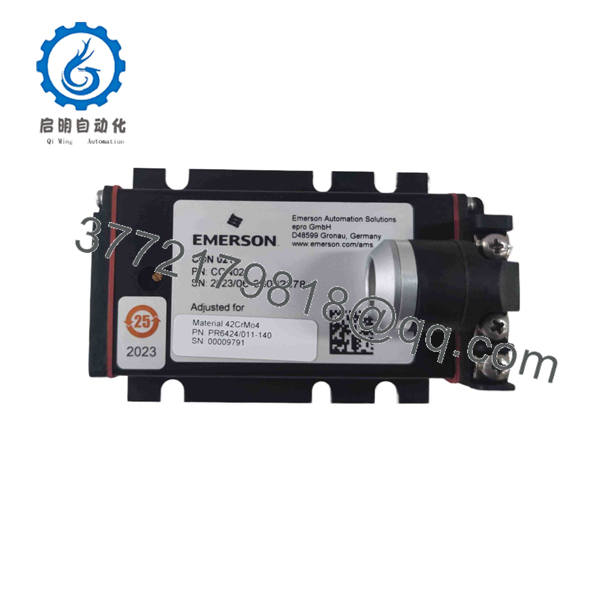
CON021
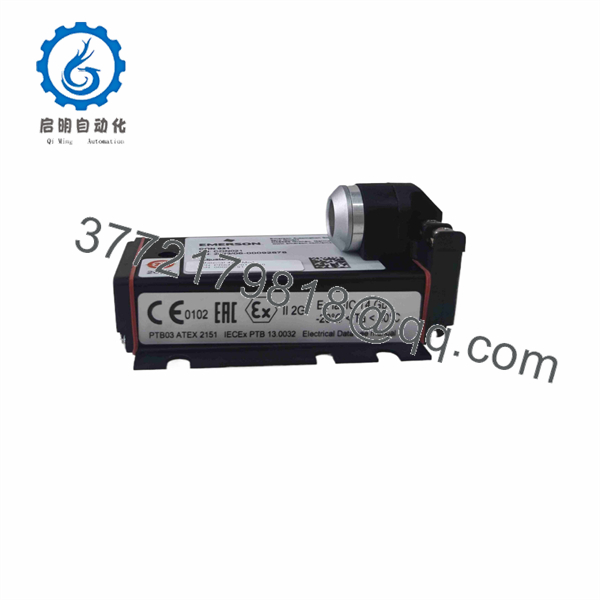
CON021
Installation & Configuration Guide
Stage 1: Pre-Installation Preparation — Approximately 5–10 Minutes
⚠️ Safety First: This equipment can be connected to machinery protection and vibration-monitoring circuits. Put the monitored machine into the approved maintenance state. Follow site LOTO procedures before disconnecting the converter or probe circuit.
Tools Required:
- ESD wrist strap
- Digital multimeter
- Small screwdriver suitable for the terminal block
- Wire labels
- Smartphone for photographs
- Approved machinery-monitoring documentation
Data Backup:
- Record the complete CON021 marking.
- Photograph the converter and terminal wiring.
- Record the connected PR642x probe part number.
- Record the monitoring rack/channel assignment.
- Document the existing output wiring.
- Record supply voltage at the converter.
- Photograph cable shielding and grounding arrangements.
❗ Do not treat every marking as electrically identical. The documented specification includes different supply/output configurations, and extended-range versions use additional suffixes. Verify the exact version installed on the machine.
Stage 2: Removing the Old Converter — Approximately 5 Minutes
- Place the monitored equipment in the approved maintenance condition.
- Isolate the relevant power supply.
- Verify the converter supply voltage is absent.
- Photograph the terminal arrangement.
- Label every conductor.
- Disconnect the supply and output wiring.
- Disconnect the LEMO probe connector carefully.
- Remove the four mounting screws.
- Lift the converter away from the mounting surface.
- Inspect the probe connector and cable for damage or contamination.
⚠️ Do not pull on the probe cable itself. The LEMO connector and its mating interface should be handled at the connector body.
Stage 3: Installing the New Converter — Approximately 5 Minutes
- Connect the grounded ESD strap.
- Confirm the replacement is and verify its complete suffix/variant.
- Check the probe family against the existing installation.
- Mount the converter using the specified mounting arrangement.
- Connect the probe through the self-locking LEMO interface.
- Reconnect supply and output conductors exactly as documented.
- Verify polarity before energizing.
- Check that shield connections match the original installation.
- Confirm that no conductor is loose or shorted.
Self-Checklist:
- variant verified
- PR642x probe compatibility confirmed
- Supply polarity checked
- Output wiring matched
- LEMO connector fully seated
- Shielding restored
- Mounting screws secured
- No exposed conductor
Stage 4: Power-On & Testing — Approximately 10 Minutes
- Measure the DC supply at the converter before connection.
- Confirm the voltage falls within the applicable specification.
- Energize the converter.
- Verify the connected monitoring system recognizes the measurement channel.
- Check the converter output at the monitoring rack.
- Compare the output with the known shaft position or machine condition.
- Check zero/reference calibration where applicable.
- Start the machine only under the approved commissioning procedure.
- Compare vibration/displacement readings against the previous baseline.
- Verify alarm and trip thresholds before returning the monitoring channel to service.
⚠️ Do not adjust machine-protection alarm limits simply because the replacement produces a different reading. First establish whether the discrepancy comes from probe gap, probe type, wiring polarity, converter variant, or calibration.
Common fault checks:
- No output: Check supply polarity, terminal wiring, probe connection, and probe compatibility.
- Incorrect displacement: Check probe gap and calibration before replacing the converter again.
- Unstable reading: Inspect the probe cable, shielding, grounding, and connector.
- Output outside expected range: Verify the supply/output variant.
- Noisy signal: Check cable routing and shielding, especially near variable-frequency drives and high-current conductors.
- Channel mismatch: Confirm that the monitoring rack channel configuration matches the replacement converter’s output range.
Frequently Asked Questions (FAQ)
What is the Emerson EPRO ?
The is an Eddy Current Signal Converter, not a general-purpose PLC module. It interfaces with EPRO PR642x-series eddy-current probes and provides the conditioned signal used for machinery measurements such as shaft displacement, position, eccentricity, and speed/key.
Which probes are compatible with ?
The published specification identifies PR6422, PR6423, PR6424, PR6425, PR6426, and PR6453 probe families. The exact probe and converter combination should still be checked against the application because range and calibration characteristics vary between probe types.
What is the output range?
The documented standard configuration specifies a −23 to −32 V DC supply with a −4 to −20 V output. Another documented configuration uses a −21 to −32 V supply with a −2 to −18 V output. Therefore, verify the exact converter variant rather than assuming one output range.
Can I replace with any PR642x converter?
No. The probe family, measurement range, supply voltage, output range, and monitoring-system input configuration must all match. Some variants are specifically associated with extended-range applications, so the complete part number matters.
What is the operating temperature of ?
The published specification gives an operating range of −30 to +100 °C (−22 to +212 °F) and IP20 protection. The converter is therefore intended for an appropriate protected installation rather than direct exposure to water or process contaminants.
Is obsolete?
The is associated with the established EPRO PR642x eddy-current measurement family. I would not determine its current OEM lifecycle status from the short model number alone. For an installed system, the practical question is whether the exact converter variant and its matching PR642x probe remain available and compatible with the existing monitoring channel.
Why is the output negative voltage?
That is part of the documented electrical interface. The standard specification lists a negative DC supply and negative output range. This is why polarity must be checked carefully before replacement; connecting the converter based on assumptions from a conventional positive-voltage PLC I/O module is a preventable installation error.
What should I provide when ordering a replacement?
Provide the complete part/variant marking, existing PR642x probe number, photographs of the converter terminals, and the monitoring rack/channel information. If possible, also provide the existing supply and output measurements. That information is more useful for compatibility verification than “” alone.