 WhatsApp: +86 16626708626
 Email:
 Phone: +86 16626708626
Description
Core Product Summary (Brand / Model / Key Attributes)
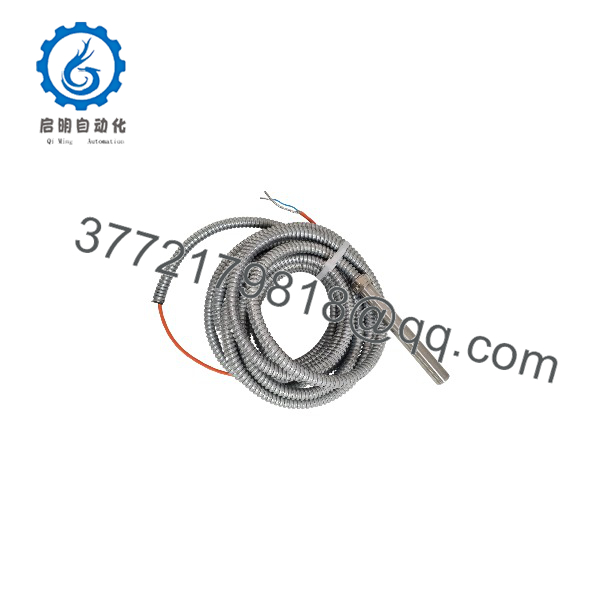
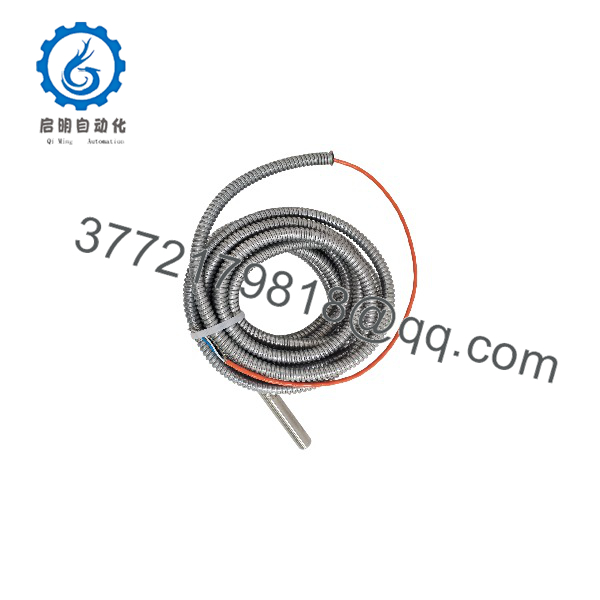
The Emerson Epro PR9376/010-011 is a heavy-duty, contactless speed and phase reference (keypulse/phase marker) sensor designed for industrial rotating machinery protection and diagnostic monitoring systems. Operating without physical contact, this sensor measures rotational speed (RPM) and detects once-per-revolution phase reference triggers on steam turbines, gas turbines, turbo-compressors, large pumps, and industrial generators.
Engineered to operate in high-temperature, high-vibration turbomachinery environments, the PR9376/010-011 detects passing gear teeth, keyways, notch triggers, or bolt heads on rotating shafts. The probe provides high switching frequency response, high signal resolution, and resistance to hot lubricating oil and steam, outputting clean pulses directly to machinery monitoring systems such as the Emerson Epro MMS6000 and AMS 6500 platforms.
Key Technical Specifications
| Parameter | Specification |
| Manufacturer & Brand | Emerson / Epro |
| Product Series | PR9376 Series Speed & Phase Reference Sensors |
| Model / Order Code | PR9376/010-011 |
| Measurement Function | Rotational speed (RPM) measurement and phase trigger (keypulse) detection |
| Sensing Principle | Non-contact inductive / electromagnetic pulse detection |
| Target Objects | Ferromagnetic gear teeth, keyways, slots, bolt heads, and phase marker notches |
| Output Type | Frequency/pulse output signal proportional to shaft rotational speed |
| Operating Temperature | High-temperature design suitable for close-proximity turbine casing installation |
| Enclosure Rating | Rugged, oil-tight, pressure-sealed metallic housing (IP66 / IP67) |
Detailed Product Overview
The Emerson Epro PR9376/010-011 serves a dual role in industrial machinery supervision: providing real-time rotational speed data for overspeed/underspeed protection and supplying precise once-per-turn timing pulses (keypulse) required for vector vibration analysis. Phase reference signals generated by the probe allow diagnostic monitoring software to correlate vibration phase angles with physical shaft position, enabling precise identification of rotor unbalance, shaft cracks, and dynamic resonance points.
Designed for installation through bearing pedestals, gearboxes, or machine casings, the probe housing withstands severe mechanical vibration and continuous exposure to hot synthetic lubricants. The sensor maintains consistent pulse edge definition across wide speed ranges—from low-speed turning gear operation up to high-speed utility turbine rotation—without mechanical wear or contact degradation.
Dimensions, Mounting & Connection Notes
- Body Style: Threaded metallic cylindrical probe body designed for precise gap adjustment.
- Mounting Setup: Position probe perpendicularly to the target gear tooth or keyway track; secure using locknuts to prevent position drift from machine vibration.
- Air Gap Adjustment: Set the static mechanical air gap during installation according to target dimensions and verify pulse height using an oscilloscope or monitor diagnostic software.
- Cable Routing: Route shielded signal cabling away from high-voltage power leads and variable frequency drive (VFD) cables to prevent electromagnetic noise coupling into pulse trains.
Engineering Selection Highlights
- Dual Functionality: Measures continuous rotational speed (RPM) and generates precise once-per-revolution phase marker pulses for vibration vector diagnostics.
- Non-Contact Pulse Detection: Eliminates mechanical wear by sensing passing ferromagnetic keyways, gear teeth, or bolt targets across a fixed air gap.
- High Temperature & Oil Resistance: Built to withstand elevated ambient temperatures inside bearing housings and exposed to turbine lube oil mist.
- Clear Signal Definition: Delivers sharp voltage transitions and fast pulse response necessary for accurate digital speed counting and overspeed logic.
- Protection System Integration: Directly compatible with Emerson Epro MMS6000 speed and phase monitoring modules (such as MMS6312) and AMS 6500 diagnostic hardware.
System Compatibility & Integration Requirements
| Item / Dependency | Verified Compatibility or Requirement | Practical Note |
| Monitoring Racks | Emerson Epro MMS6000 series (e.g., MMS6312 speed module) or AMS 6500 | Channel card input must be configured for frequency/speed pulse signal inputs. |
| Target Geometry | Ferromagnetic tooth profile, keyway, or machined surface notch | Ensure adequate target width and depth to produce clean voltage transitions across the air gap. |
| Power Supply | Supplied directly by the connected monitoring module or external DC supply | Verify correct excitation voltage settings on the speed transmitter channel. |
| Mounting Hardware | Threaded sleeve and locknuts for rigid mechanical positioning | Set static air gap according to manufacturer target size guidelines to avoid missing pulses or mechanical clipping. |
FAQ
What is the primary function of the Emerson Epro PR9376/010-011?
The PR9376/010-011 is a non-contact speed and phase reference sensor used to measure shaft RPM and detect once-per-revolution keypulse signals on rotating machinery.
Why is a phase reference (keypulse) signal necessary?
A keypulse signal provides a timing baseline that allows vibration monitoring systems to measure the phase angle of vibration peaks relative to shaft position, which is essential for rotor balancing and fault diagnosis.
What target materials can the sensor detect?
The sensor detects ferromagnetic metallic targets, including gear teeth, machined shaft slots, keyways, and bolt heads.
Does the PR9376/010-011 make physical contact with the shaft?
No. It operates as a non-contact sensor across a small mechanical air gap, eliminating physical friction and mechanical wear.
Verification & Troubleshooting Notes
- Air Gap Optimization: If speed readings drop out or report erratic spikes at specific RPM thresholds, recheck the static air gap between the probe tip and the passing target.
- Target Surface Inspection: Ensure the target notch or gear tooth is free of metallic debris, heavy sludge buildup, or mechanical damage that could disrupt signal triggers.
- Shielding & Noise Check: Verify that the cable shield is grounded at the monitoring cabinet end only. Inadequate shielding can introduce false electrical noise pulses into digital speed channels.