WhatsApp: +86 16626708626
 Email:
  Phone: +86 16626708626
Description
Key Technical Specifications
| Parameter | Value |
|---|---|
| Manufacturer | Emerson |
| Model | HD22005-3 |
| Product Family | HD Series |
| Product Type | High-frequency switching rectifier / battery charger module |
| AC Input | 323–475 V AC, three-phase, three-wire |
| Input Frequency | 45–65 Hz |
| Maximum AC Input Current | 4 A |
| Nominal DC Output | 220 V DC |
| Adjustable DC Output Range | 176–320 V DC |
| Rated Output Current | 5 A |
| Maximum Output Current | 5.5 A |
| Constant-Current Range | 10–110% |
| Voltage Stabilization Accuracy | ≤ ±0.5% |
| Current Stabilization Accuracy | ≤ ±1% |
| Ripple Coefficient | ≤ 0.1% |
| Power Factor | ≥ 0.94 |
| Efficiency | ≥ 90% |
| Communication | RS-485, Modbus RTU |
| Parallel Current Imbalance | ≤ ±5% at 50–100% rated load |
| Soft-Start Time | 3–8 seconds |
| Operating Temperature | −10 to +40 °C; verify exact revision |
| Storage Temperature | −25 to +55 °C |
| Relative Humidity | ≤ 95% |
| Insulation Resistance | >10 MΩ at 1,000 V DC |
| Dielectric Strength | 2,000 V RMS AC, 50 Hz, 1 minute |
| Cooling | Natural convection plus forced air |
| Dimensions | Approximately 413 × 110 × 257 mm |
| Weight | Approximately 6 kg |
| Protection | Short circuit, overvoltage, undervoltage, phase loss, and overtemperature |
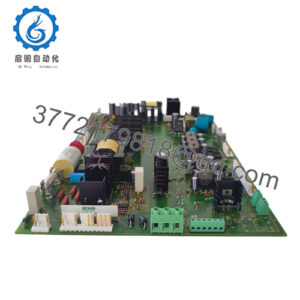
Published product data identifies the Emerson HD22005-3 as a three-phase, high-frequency switching charger providing a 220 V DC output at 5 A. The unit is intended for substation DC panels, industrial control-room DC systems, and battery-bank charging.
Do not confuse HD22005-3 with HD22005-3A. Emerson-related purchasing guidance warns that the suffix difference can affect mounting holes and installation method, even when the electrical specifications appear similar.
Product Introduction
Emerson HD22005-3 is a 220 V DC, 5 A high-frequency switching rectifier module for three-phase industrial DC power systems. It accepts 323–475 V AC and provides adjustable 176–320 V DC output for battery charging and connected DC loads.
The module supports RS-485 Modbus RTU, parallel current sharing, three-stage charging, and protection against input and output faults. Verify the cabinet backplane, mounting arrangement, output polarity, communication address, and exact “-3” suffix before replacing an installed module.
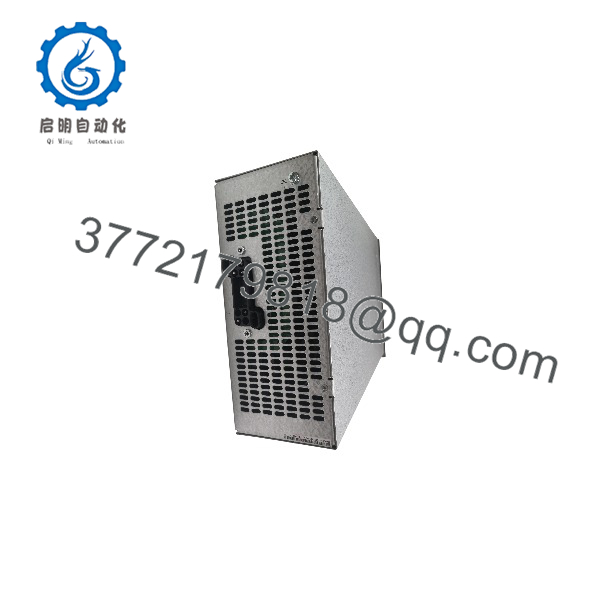
HD22005-3
Troubleshooting Quick Reference
| Symptom | Possible Cause | Relevance to This Part | Quick Check Method | Recommendation |
|---|---|---|---|---|
| Module does not start | Missing phase, input fuse failure, or control-power fault | ✅ High | Measure all three input phases within 323–475 V AC and check the module status display | Correct incoming power before replacing the rectifier |
| DC output is zero | Output short circuit, protection shutdown, or incorrect system enable | ✅ High | Measure the DC bus with an approved meter and inspect the load-side fuse and cabling | Isolate the load and test the module under controlled conditions |
| Output voltage is too high | Faulty regulation, incorrect setting, or sensing-wire problem | ✅ High | Measure output at the module terminals and compare with the configured setpoint | Remove the module from service if regulation exceeds the system limit |
| Output voltage is too low | Excessive load, incorrect battery setting, or failing power stage | ✅ High | Measure DC output under no-load and loaded conditions; compare current with the 5 A rating | Check load demand and battery condition before replacement |
| AC input alarm | Phase loss, voltage outside range, or input wiring fault | ✅ High | Measure phase-to-phase voltage at the module input while energized under approved procedures | Repair the input circuit and verify phase balance |
| Module overheats | Blocked airflow, failed fan, high ambient temperature, or overload | ✅ High | Inspect air passages and fan operation; measure enclosure temperature | Restore airflow and reduce load before replacing the module |
| Output current will not increase | Constant-current limit active or battery voltage too low | ✅ Possible | Read the front-panel values and compare demand with the configured current limit | Check charging settings and battery-bank condition |
| Parallel modules share unevenly | RS-485/current-share wiring fault or mismatched module revision | ✅ High | Compare module current readings and inspect the parallel communication wiring | Verify module configuration and compatible revisions |
| Modbus communication fails | Incorrect address, baud rate, cable polarity, or RS-485 termination | ✅ High | Check A/B polarity, address, baud rate, shield, and termination resistor | Correct the RS-485 network before replacing the charger |
| Repeated overvoltage shutdown | Output sensing fault or failed control loop | ✅ High | Compare local display voltage with an independent calibrated meter | Remove from service and test the regulator; do not bypass protection |
| Module trips after battery connection | Reverse polarity, shorted battery string, or excessive inrush | ✅ High | Confirm battery polarity and measure the battery-bank voltage before connection | Correct polarity and isolate damaged battery strings |
| Replacement will not fit | HD22005-3A or another revision installed in the cabinet | ✅ High | Compare mounting holes, connector positions, label, and complete model suffix | Order the exact suffix; do not modify the cabinet without engineering approval |
Critical warning: This module works with hazardous three-phase AC and high-energy DC battery systems. Use the site’s lockout procedure and verify the DC bus is discharged before removal. If the fault remains, provide the module label, alarm code, input measurements, output measurements, battery-bank voltage, cabinet photos, and RS-485 settings to technical support.
Frequently Asked Questions (FAQ)
What is Emerson HD22005-3?
It is a three-phase, high-frequency switching rectifier module for 220 V DC industrial power systems. Its published rating is 5 A, with an adjustable DC output range of approximately 176–320 V.
What is the difference between HD22005-3 and HD22005-3A?
Do not assume they are interchangeable. Emerson-related purchasing guidance states that the “A” revision can have different mounting holes and installation requirements, even where the electrical specifications are similar. Match the complete suffix to the existing cabinet and system documentation.
Can be used in parallel?
Published product data identifies parallel current sharing and an average current imbalance of no more than ±5% under the stated operating range. Confirm compatible firmware, configuration, current-share wiring, and cabinet requirements before paralleling modules.
Does the module support Modbus RTU?
Yes. The listed communication interface is RS-485 with Modbus RTU. Verify node address, baud rate, parity, termination, and A/B polarity against the installed DC system configuration.
Is hot-swappable?
Some listings describe the HD-series module as supporting online replacement, but do not rely on that claim without the cabinet manual and system design confirmation. A live DC bus can remain hazardous even when the module is removed. Follow the approved Emerson or system-integrator procedure.
What should I check before ordering a replacement?
Confirm the complete model suffix, input voltage, output voltage class, rated current, mounting dimensions, connector arrangement, communication settings, and cabinet backplane. Specifically check whether the installed unit is or HD22005-3A.
Is this module new or refurbished?
The model number does not establish condition. List the actual status as New Original, New Surplus, or Refurbished (tested). A meaningful refurbishment report should include input-voltage testing, regulated output testing, current-limit operation, RS-485 communication, fan operation, protection trips, insulation testing, and loaded run time.