WhatsApp: +86 16626708626
 Email:
 Phone: +86 16626708626
Description
Key Technical Specifications
| Parameter | Value |
|---|---|
| Manufacturer | Emerson / Damcos |
| Model | MAS2600 |
| Order code | G10-05-01P |
| Transducer type | Gauge pressure transmitter |
| Measuring range | 0-3.5 mH2O gauge |
| Output signal | 4-20 mA DC, 2-wire loop-powered |
| Output configuration | P = programmable output range |
| Power supply | 17-33 VDC loop supply |
| Transducer housing | Titanium with titanium diaphragm |
| Sensor element | Silicon micro-strain-gauge pressure sensor |
| Amplifier housing | Sea-water-resistant polyester, IP56 |
| Transducer protection | IP68 submersible |
| Temperature sensor | None; suffix position indicates no built-in Pt100 |
| Mounting | DN 40 PN 16 flange |
| Cable | 6-core vented cable; standard cable rated -20 to +80 °C |
| Accuracy | ±0.25% F.S. at 20 °C |
| Total error band | ±0.4% F.S. from 0 to +50 °C; ±2.0% F.S. from -20 to +80 °C |
| Overload capability | At least 4 times transducer range without calibration change |
| Burst pressure | 6 times transducer range |
| Hazardous-area rating | Ex ia IIC T4 compliant |
| Marine approvals | DNV, GL, LRS, BV, RINA, KR, and ABS type approvals listed by Emerson |
Product Introduction
The Emerson MAS2600 G10-05-01P is a marine tank-contents transmitter for level measurement in ballast, fuel oil, service, fresh-water, and compatible non-titanium-hostile liquid tanks. Its fully welded titanium transducer and titanium diaphragm provide corrosion resistance for seawater, hydrocarbons, and many chemicals.
This configuration uses a 0-3.5 mH2O gauge range, DN 40 flange mounting, and a programmable 2-wire 4-20 mA amplifier. The P suffix means the amplifier output can be configured within the transducer range, allowing the transmitter to match the vessel’s tank-monitoring system without changing the sensing element.
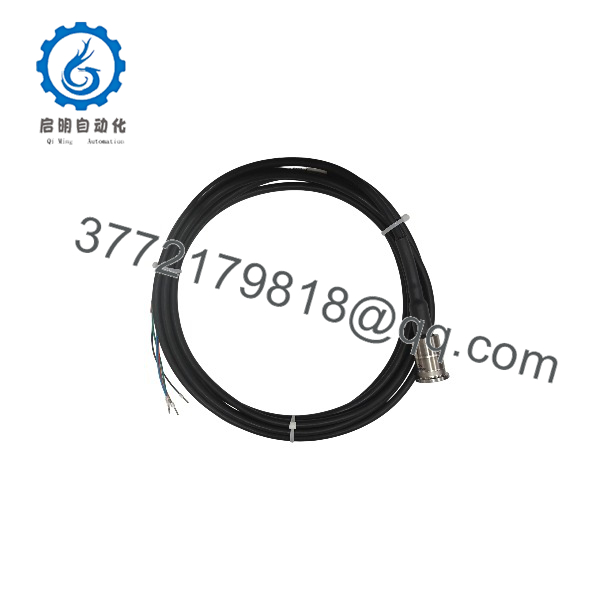
MAS2600 G10-05-01P
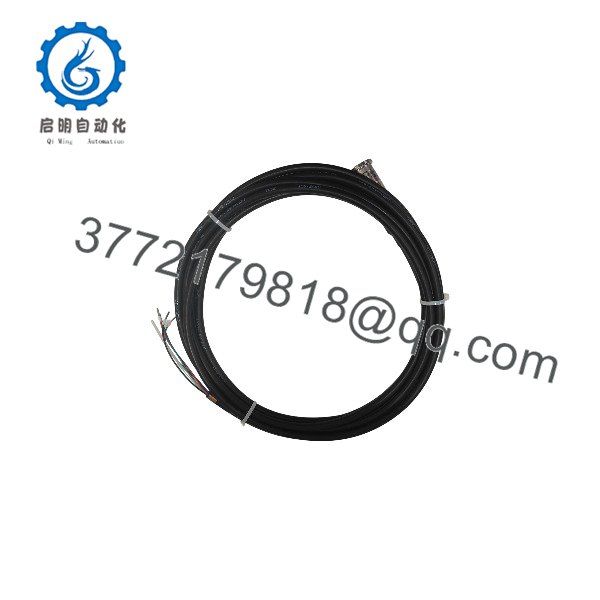
MAS2600 G10-05-01P
Troubleshooting Quick Reference
| Symptom | Possible Cause | Relevance to this Part | Quick Check Method | Recommendation |
|---|---|---|---|---|
| No 4-20 mA signal | Open loop, blown fuse, incorrect polarity, or amplifier fault | ✅ High | Measure loop current with a multimeter in series; verify 17-33 VDC across the loop | Check loop power, wiring, and barrier before replacing the transmitter |
| Output fixed near 4 mA | Transducer vented cable blocked, sensor fault, or tank nearly empty | ✅ Medium | Compare indicated level with a manual sounding or known tank level | Clear or inspect the vented cable path; verify actual tank level first |
| Output fixed near 20 mA | Overpressure, cable damage, amplifier fault, or saturated sensor | ✅ High | Disconnect safely and measure transducer resistance/loop response; inspect cable for kinks or water ingress | Do not assume high level; inspect the cable and amplifier before recalibration |
| Level reading drifts | Vent tube restriction, temperature effect, loose amplifier connection, or calibration error | ✅ Medium | Compare readings at known levels and inspect the vented cable for moisture or blockage | Recalibrate only after the vent path and cable are confirmed sound |
| Reading jumps or becomes unstable | Water in junction box, loose terminals, EMI, or damaged 6-core cable | ✅ High | Inspect amplifier enclosure seals, terminals, and cable entry glands | Dry, reseal, and re-terminate as required; replace damaged cable |
| Reading does not match tank level | Incorrect programmed span, wrong tank geometry configuration, or density change | ❌ Medium | Apply a known pressure with a calibrated test kit and compare the 4-20 mA output | Recalibrate zero/span using the proper MAS2600 calibration equipment |
| Transmitter leaks at flange | Damaged gasket, loose bolts, or flange-face damage | ❌ Low | Inspect flange bolts, gasket compression, and sealing faces | Re-torque or replace gasket; do not tighten arbitrarily on a pressurized tank |
| Corrosion at amplifier or cable gland | Seal failure or salt-water ingress | ✅ High | Inspect polyester housing, glands, and cable for white/green corrosion | Replace compromised seals or cable; do not energize a water-ingressed unit |
❗ Marine safety warning: Do not open the amplifier enclosure or disturb intrinsic-safe barriers while the tank system is energized or classified as hazardous. Follow the vessel’s permit-to-work and Ex inspection procedures.
If the transmitter still cannot be verified, send photos of the nameplate, amplifier, cable glands, and the tank-monitoring system’s diagnostic/alarm log before ordering a replacement.
Frequently Asked Questions
What does the G10-05-01P order code mean?
It identifies a gauge (G) MAS2600 with a 0-3.5 mH2O range (1), no built-in Pt100 temperature sensor (0), DN 40 flange mounting (5), standard cable/box configuration, and a programmable output range (P). The official Emerson/Damcos ordering document defines these code positions.
Is the MAS2600 suitable for seawater ballast tanks?
Yes. It is specifically designed for marine tank-level measurement, including ballast, oil, service, and fresh-water tanks, provided the media is not hostile to titanium.
What output does it provide?
It provides a 2-wire, loop-powered 4-20 mA DC signal. The P version allows the output range to be programmed within the transducer’s range.
What power supply does it need?
The loop requires 17-33 VDC. Calculate the available loop resistance using Rloop max=(Uloop−17 V)/32 mAR_{loop\,max} = (U_{loop} – 17\,V) / 32\,mA.
Can I replace only the amplifier?
Sometimes, but only if the transducer and vented cable are verified healthy. The MAS2600 consists of a transducer and amplifier connected by a six-core vented cable; diagnose each section before changing components.
Is it intrinsically safe?
The MAS2600 is listed as Ex ia IIC T4 compliant and approved for use with standard transmitter zener barriers. Confirm the specific certification, barrier model, and installation drawing for the hazardous area.
Why is this model obsolete?
Emerson lists the MAS2600 pressure sensor as obsolete, while the product documentation remains available for existing installations. Replacement options should be checked for mechanical fit, range, cable length, hazardous-area approval, and compatibility with the vessel’s tank-monitoring system.