 WhatsApp: +86 16626708626
 Email:
 Phone: +86 16626708626
Description
3. Key Technical Specifications
- Channels: Two independent measurement channels
- Sensor inputs: Electrodynamic vibration transducers (EPRO PR 9268/20…/30 and PR 9268/60…/70 series)
- Measured parameters: Absolute bearing vibration (velocity rms or peak-to-peak amplitude)
- Measuring ranges (selectable via DIP switches):
– Velocity: 0…5 / 10 / 25 / 50 / 100 mm/s rms
– Amplitude: 0…25 / 50 / 100 / 125 / 250 / 500 µm peak - Frequency range: 5/10…1000 Hz (per DIN 45670)
- Linearity error: 0.25 %
- Output signals: Two independent 0/4…20 mA current outputs (or one output proportional to the maximum of both channels)
- Power supply: Two redundant 24 V DC inputs
- Self-test: Electronic circuits and transducers
- Limit supervision: Integrated
- Mounting: Direct machine mounting or control-cabinet installation
- Operating temperature: Typically –20 °C to +65 °C
- Standards: Corresponds to VDI 2056 and related common machinery protection standards
- Note: Not designed for hazardous-area use. Exact sensitivity matching and DIP-switch settings must be verified against the installed sensors and the original system documentation.
4. Product Introduction
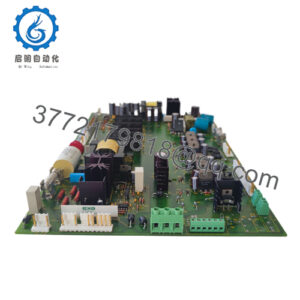
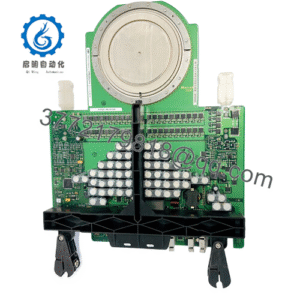
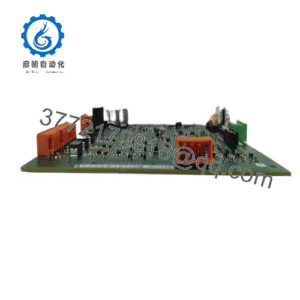
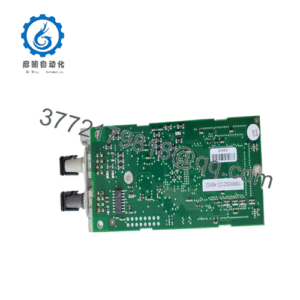
The EPRO MMS3120/022-000 is a dual-channel bearing vibration transmitter belonging to the MMS 3000 series. It converts signals from electrodynamic velocity transducers into standardized 0/4…20 mA outputs proportional to vibration velocity or peak-to-peak amplitude.
The module is intended for continuous monitoring and protection of turbomachinery, fans, compressors, gearboxes, and pumps. With redundant 24 V DC supplies, integrated self-test functions, and direct machine-mount capability, it provides a practical solution for both large distributed systems and smaller decentralized installations.
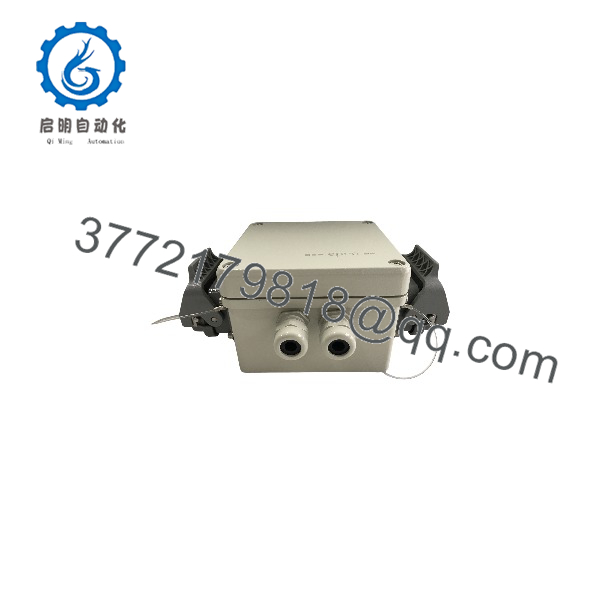
MMS3120/022-000
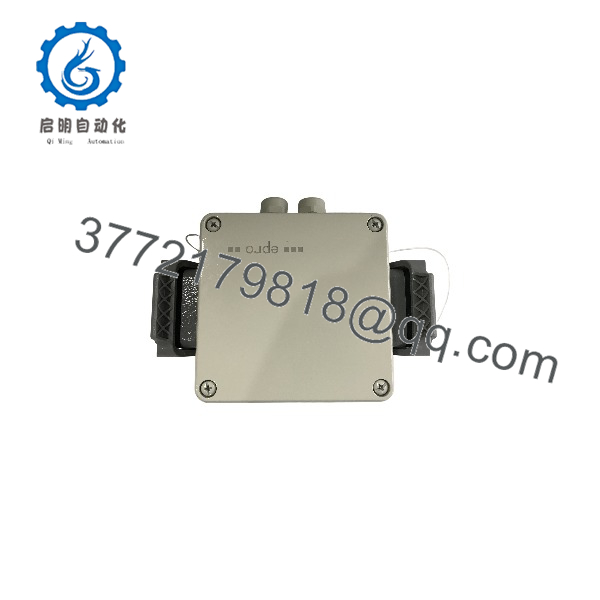
MMS3120/022-000
5. Troubleshooting Quick Reference
| Symptom | Possible Cause | Relevance to this Part | Quick Check Method | Recommendation |
|---|---|---|---|---|
| No output current (0 mA) | Sensor fault or self-test failure | ✅ High | Check OK contact / status output and sensor cable continuity | Verify sensor and wiring; replace transmitter if self-test still fails |
| Incorrect vibration reading | Wrong measuring range or sensor sensitivity setting | ✅ High | Confirm DIP-switch positions match sensor sensitivity (22 / 28.5 / 30 mV/mm/s) | Correct range and sensitivity settings |
| One channel reads zero or full scale | Open/shorted sensor or failed input channel | ✅ High | Swap sensors between channels; measure sensor output with oscilloscope/multimeter | Isolate to sensor or channel; replace accordingly |
| Unstable or noisy output | Ground loop or poor shielding | ✅ Medium | Inspect single-point grounding of sensor cable shield | Improve grounding and cable routing |
| Module does not power up | Loss of both 24 V supplies | ✅ Medium | Measure voltage at both redundant supply terminals | Restore at least one healthy 24 V supply |
| Limit alarms trigger incorrectly | Incorrect limit settings or range selection | ✅ Medium | Review configured limits versus actual measuring range | Reconfigure limits to match application |
If the issue cannot be resolved, photograph the module, DIP-switch settings, wiring, and any status indicators, then contact technical support with the full model string.
6. Frequently Asked Questions (FAQ)
Q: What type of sensors does the MMS3120/022-000 accept?
A: It is designed for electrodynamic velocity transducers, specifically the EPRO PR 9268/20…/30 and PR 9268/60…/70 series. Confirm exact sensor sensitivity before setting the measuring range.
Q: Can the two channels operate independently?
A: Yes. Each channel can be configured and evaluated separately, or the module can be set to output a single signal proportional to the maximum of the two channels.
Q: Does the transmitter require a special power supply?
A: It accepts two redundant 24 V DC supplies. Operation continues as long as at least one supply is healthy.
Q: Is this module suitable for hazardous areas?
A: No. The standard MMS3120/022-000 is not certified for use in hazardous (Ex) areas.
Q: How is the measuring range selected?
A: Measuring ranges and input sensitivities are selected via DIP switches on the module. Always match the setting to the installed sensor sensitivity and required full-scale value.
Q: What is the difference between this and an MMS 6000 series module?
A: The MMS3120 belongs to the MMS 3000 transmitter family, which is a more compact, field-mountable transmitter concept. MMS 6000 modules are typically rack-based system cards.
Q: What condition and warranty do you offer?
A: We supply New Original / New Surplus stock. Units are inspected for basic functionality. Standard coverage is a 1-year warranty against defects. Provide the complete model MMS3120/022-000 (and any additional part number such as 9100-03047-01 if present) when ordering or requesting support.