WhatsApp: +86 16626708626
 Email:
 Phone: +86 16626708626
Description
Core Product Summary
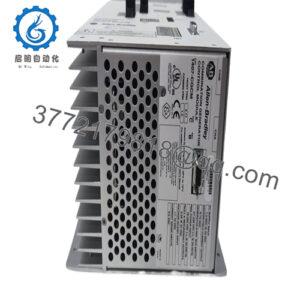
The EPRO PR6426/000-010 with CON021 is a matched eddy current measuring chain from Emerson’s EPRO range, built around the 32 mm large-target sensor of the displacement family. It is designed for extremely critical turbomachinery — steam, gas, compressor and hydro machinery, blowers and fans — where it measures static and dynamic shaft displacement without contacting the rotor: axial and radial shaft position, differential expansion, eccentricity, thrust, valve position and air gaps. Its 2 V/mm sensitivity over a wide span makes it the family’s choice for large-range expansion and position duties rather than small-amplitude radial vibration.
Unlike the threaded probes of the family, this variant mounts via a fixed 80 × 40 mm mounting plate rather than a sleeve thread, and it is supplied with an unarmored 5 m cable, an adapter plug separating the probe-side cable from the extension, and a Lemo connector at the end. Driven by the CON021 converter, the chain’s linearity stays within ±1.5%, and it meets DIN 45670, ISO 10817-1 and API 670, with Eex ib IIC T6/T4 approval for explosive areas.
Key Technical Specifications
| Parameter | Value |
|---|---|
| System composition | 32 mm eddy current sensor PR6426/000-010 + CON021 signal converter |
| Probe configuration | No sleeve thread; 80 × 40 mm mounting plate, unarmored cable, adapter plug, 5 m total cable, Lemo end |
| Sensitivity | 2 V/mm (50.8 mV/mil) |
| Linearity | Within ±1.5% |
| Mounting method | Mounting plate (80 × 40 mm), not a threaded sleeve |
| Target material (standard) | 42CrMo4 ferromagnetic steel |
| Converter supply voltage | ‘-23 V to -32 V (output -4 V to -20 V) or -21 V to -32 V (output -2 V to -18 V) |
| Converter frequency response (-3 dB) | 0 to 20,000 Hz |
| Converter rise time | < 15 µs |
| Converter operating temperature | ‘-30 °C to +100 °C |
| Converter protection class | IP20 |
| Standards | DIN 45670, ISO 10817-1, API 670 |
| Hazardous-area rating | Eex ib IIC T6/T4 |
| Probe-to-converter connection | Lemo connector; adapter plug in the cable run |
Detailed Product Overview
The PR6426 is the largest standard eddy current displacement probe in the EPRO family, and everything about this order code follows from that. A 32 mm tip projects a wide electromagnetic field that needs a correspondingly large conductive target, so the sensor is specified for large rotor surfaces — turbine shafts, rotor expansions and casing-relative movements — where the measurement span, not small-amplitude resolution, drives the selection. With a 2 V/mm sensitivity and linearity within ±1.5%, the chain trades the fine 8 V/mm resolution of the 8 mm probes for a working range suited to differential expansion and large positional excursions; typical duties include differential expansion on turbine trains, thrust position on large rotors, valve position and air-gap measurement.
The mounting method is the defining mechanical difference of this family. Where the smaller probes screw into M10x1 or M18x1.5 holders, the PR6426 is fixed through an 80 × 40 mm mounting plate: the probe body is bolted to a machined surface on the casing or a bracket, and the tip position is set by the plate fit rather than by a thread. For an engineer planning a replacement, this means the installation footprint must match the plate pattern — a threaded holder prepared for a smaller probe cannot be adapted on site, and conversely the plate gives a rigid, low-hysteresis mounting appropriate for large-gap position measurement.
The order code also fixes the electrical configuration. The 5 m cable is supplied with an adapter plug that separates the probe-side cable from the extension section, and the Lemo connector at the end mates with the converter input. As with the whole family, the sensitivity and linearity figures apply to the complete probe–cable–converter chain: the cable length is part of the calibration and must not be shortened or extended, and the CON021 converter that completes this chain is selected with the matching measuring range for the 32 mm sensor. The converter requires a negative supply from the monitoring rack — either -23 to -32 V for the -4 to -20 V output range or -21 to -32 V for the -2 to -18 V range — and its 20 kHz bandwidth with sub-15 µs rise time preserves dynamic content even though this sensor’s duties are dominated by slower, larger movements.
The chain meets DIN 45670, ISO 10817-1 and API 670, the standards typically referenced in turbine supervisory instrumentation specifications, and it carries the Eex ib IIC T6/T4 intrinsic-safety rating for installation in explosive areas, subject to the converter and barrier arrangement following the approval conditions. Accuracy remains target-dependent: the calibration basis is 42CrMo4 steel, and other alloys or magnetized shaft surfaces shift the effective sensitivity, so material-specific recalibration of the converter chain is required when the target differs.
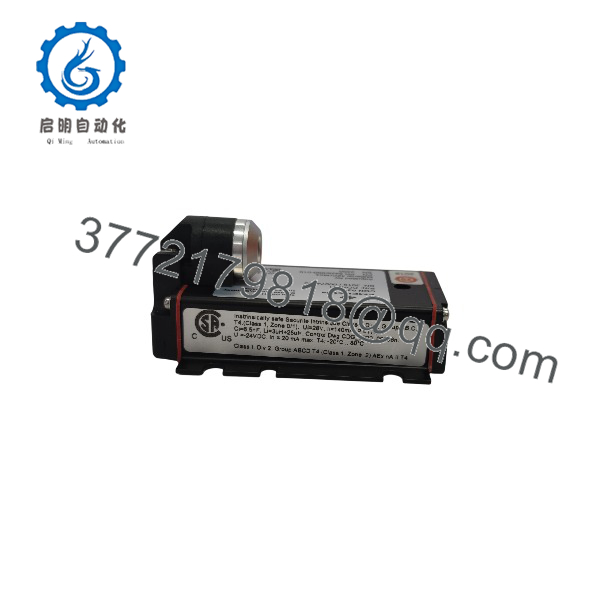
PR6426/000-010+CON021
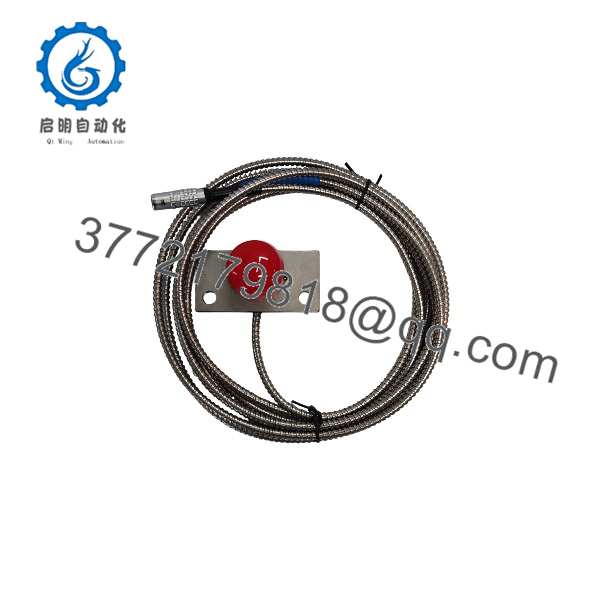
PR6426/000-010+CON021
Dimensions, Mounting & Connection Notes
- The probe has no sleeve thread; it is installed via an 80 × 40 mm mounting plate fixed to a machined surface or bracket on the machine casing.
- The cable is unarmored over its 5 m length, with an adapter plug in the run and a Lemo connector at the end.
- The probe is installed facing the conductive target surface, with the working gap set inside the linear range and verified against the converter’s gap voltage during commissioning.
- The CON021 converter is IP20 and must be panel-mounted in a protected cabinet.
- Cable length tolerance should be preserved; the sensitivity applies to the complete matched chain.
System Compatibility & Integration Requirements
| Item / Dependency | Verified Compatibility or Requirement | Practical Note |
|---|---|---|
| Sensor–converter pairing | PR6426/000-010 probe with CON021 eddy current signal converter (range-matched version for the 32 mm sensor) | Complete transducer system requires converter and cable selected as a matched chain |
| Converter supply | ‘-23 V to -32 V (output -4 V to -20 V) or -21 V to -32 V (output -2 V to -18 V) | Supplied by the monitoring system |
| Probe connection | Lemo connector at the 5 m cable end mates with the converter input | Cable length is part of the chain calibration; do not modify |
| Adapter plug | Provided in the cable run | Separates the probe-side cable from the extension section |
| Mounting method | 80 × 40 mm mounting plate; no sleeve thread | Installation footprint must match the plate pattern; threaded holders cannot be adapted |
| Measured target | 42CrMo4 steel calibration basis | Other target materials require converter recalibration |
| Standards compliance | DIN 45670, ISO 10817-1, API 670 | Relevant for TSI specification conformity |
| Hazardous area | Rated for explosive areas, Eex ib IIC T6/T4 | Installation must follow the intrinsic-safety conditions |
| Monitoring system | Output feeds EPRO MMS series monitoring modules | Output range must match the monitor input channel configuration |
FAQ
What is the EPRO PR6426/000-010+CON021?
It is a complete eddy current measuring chain from Emerson’s EPRO range: a 32 mm large-target displacement sensor with a mounting-plate body, a 5 m cable with adapter plug and Lemo termination, paired with the CON021 signal converter.
What is it used for?
It measures static and dynamic shaft displacement on large critical turbomachinery — axial and radial shaft position, differential expansion, eccentricity, thrust, valve position and air gaps.
How is this probe mounted?
Unlike the threaded probes of the family, it has no sleeve thread and is fixed through an 80 × 40 mm mounting plate, so the installation surface must match the plate pattern.
What are its key specifications?
Sensitivity 2 V/mm (50.8 mV/mil) with linearity within ±1.5%, DIN 45670 / ISO 10817-1 / API 670 compliance, and an Eex ib IIC T6/T4 rating for explosive areas.
What power supply does the CON021 require?
The converter operates from -23 V to -32 V with a -4 V to -20 V output, or from -21 V to -32 V with a -2 V to -18 V output, supplied by the connected monitoring system.
Can the 5 m cable be shortened or extended?
No. The stated sensitivity applies to the complete matched probe–cable–converter chain, so the 5 m cable length must be preserved; modifying the cable changes the system calibration.
Which target material is the calibration based on?
The standard calibration basis is 42CrMo4 steel; shafts of other alloys or magnetized surfaces require recalibration of the converter chain.