WhatsApp: +86 16626708626
 Email:
  Phone: +86 16626708626
Description
3. Key Technical Specifications
| Parameter | Value |
|---|---|
| Model Designation | AiSV 80/80 (or AiSV 80/80-B) |
| Axes | Dual (L-axis / M-axis) |
| Rated Output Current | 22.5 A (L) / 22.5 A (M) |
| Input Voltage | 283–339 VDC |
| Rated Input Current | 39 A at 283 V |
| Maximum Output Voltage | 240 VAC |
| Output Frequency Range | 0–550 Hz |
| Input Frequency | 50/60 Hz (via power supply) |
| Cooling | Forced air (internal + external fan options) |
| Ambient Operating Temp | 0 °C to 55 °C |
| Module Width | Approx. 60 mm |
| Weight | Approx. 4–5 kg (9–11 lbs) |
| Typical Manual Reference | B-65412 / B-65515 |
4. Product Introduction
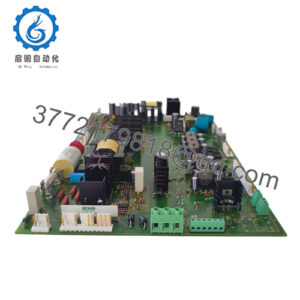
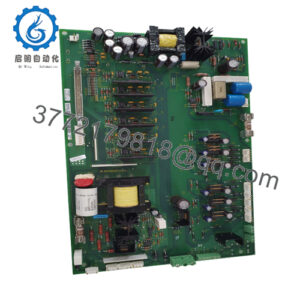
The FANUC A06B-6240-H209 is a dual-axis Alpha iSV servo amplifier module (AiSV 80/80). It accepts 283–339 VDC from the system power supply and delivers 22.5 A continuous current on each of the L and M axes. The module drives compatible Alpha i series servo motors on CNC feed axes or auxiliary axes.
It is commonly used with Fanuc 0i, 30i-B, and 31i-B series controls, as well as certain R-30iB robot controllers for extra axes. Both non-B and -B hardware versions exist; they are not always interchangeable because of firmware and control software differences. Confirm the exact variant on the existing unit (including any -B marking on the DC cover) before ordering.
5. Troubleshooting Quick Reference
| Symptom | Possible Cause | Relevance to this Part | Quick Check Method | Recommendation |
|---|---|---|---|---|
| No LED display | Missing DC link or control power | ✅ High | Measure 283–339 VDC at input terminals | Verify power supply (αiPS) output and fuses |
| SV0444 Internal Fan Failure | Failed cooling fan | ✅ High | Listen for fan operation; check fan current draw | Replace internal fan (A90L-0001-0580#B typical) |
| SV0435 Low DC Link Voltage | Power supply or connection issue | ✅ High | Measure DC bus voltage under load | Check αiPS module and DC link cabling |
| Overcurrent on one axis only | Motor or cable fault on that axis | ✅ High | Swap L/M motor cables if possible; megger motor | Isolate the affected axis; test with known-good motor |
| SV0602 Heat Sink Overheat | Blocked airflow or failed fan | ✅ High | Clean heat sink; verify external fan operation | Restore cooling path before resetting |
| Axis following error after swap | Firmware / variant mismatch (-B vs non-B) | ✅ High | Compare part number and DC cover marking | Match exact hardware revision to original unit |
If alarms continue after these checks, record the exact alarm codes, photograph the nameplate and LED status, and provide the CNC model and motor part numbers for further diagnosis.
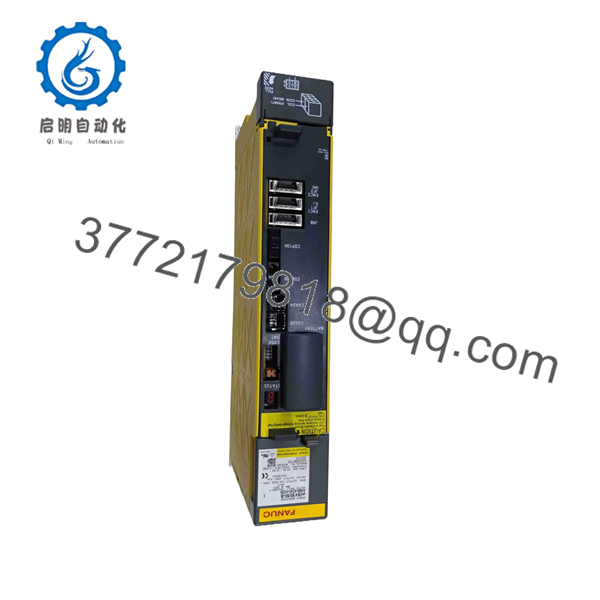
A06B-6240-H209
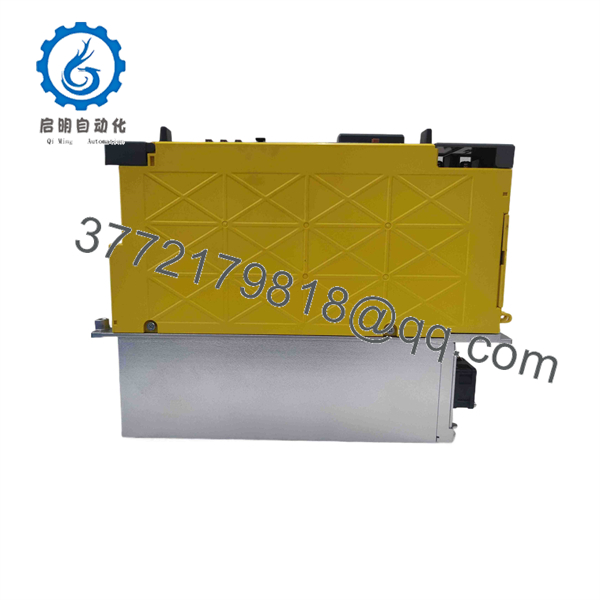
A06B-6240-H209
6. Frequently Asked Questions (FAQ)
Q: What is the difference between AiSV 80/80 and AiSV 80/80-B?
A: The -B version appeared later and includes hardware/firmware changes for compatibility with newer controls (30i-B, 0i-F Plus, etc.). Non-B and -B modules are generally not interchangeable. Always match the exact marking on the original unit, including any -B designation on the DC cover.
Q: Which motors can this amplifier drive?
A: It is rated for motors in the αiS 8/4000, 12/4000, αiF 12/3000, 22/3000 and similar current class. Confirm the continuous and peak current of each motor stays within the 22.5 A continuous rating per axis.
Q: Can I use this module on an older non-i series control?
A: No. This is an Alpha i / Alpha i-B generation amplifier. It requires a compatible i-series CNC (0i, 30i-B, 31i-B, etc.) and the matching power supply module.
Q: Does the amplifier need parameter setup after installation?
A: Yes. After physical installation and wiring, the CNC must recognize the amplifier and the connected motors. Load the correct servo parameters and perform a reduced-speed axis test. Mismatched parameters are a frequent cause of alarms on first power-up.
Q: What are the most common failure points on these modules?
A: Cooling fans (internal and external), DC-link capacitors, and occasional IPM or driver board issues. Units that run hot or sit unused for long periods often show fan or capacitor degradation. Proper load testing catches these before shipment.
Q: Is core exchange usually required?
A: Many suppliers require a core return on this part number. Confirm the core condition requirements (complete, economically repairable, no major physical damage) before ordering.
Q: What should I photograph before removing the old amplifier?
A: Nameplate (including any -B marking), all connector orientations, DIP or switch settings if present, and the DC cover. This information prevents ordering the wrong hardware revision and speeds up correct installation.