WhatsApp: +86 16626708626
 Email:
  Phone: +86 16626708626
Description
3. Key Technical Specifications
| Parameter | Value |
|---|---|
| Input Power | 180–242 VAC, 3-phase, 50/60 Hz |
| Max. Power Output | 80 W |
| In-Rush Current | 38.6 A |
| Power Consumption (Idle) | 18 W |
| Power Consumption (In Cycle) | 31 W |
| Compatible Motor Types | RM1, RM2 (and related press motors) |
| Control CPU | 32-bit RISC |
| Data Communication | RS-485 (2 ports) |
| Parameter / Firmware Storage | Flash ROM |
| Weight | Approx. 1.8 kg |
| Mounting | Panel / screw mount (#8-32) |
| Recommended Power Filter | TDK ZRWT2210-ME |
| Duty Cycle Guideline | Typically ≤ 60 % |
4. Product Introduction
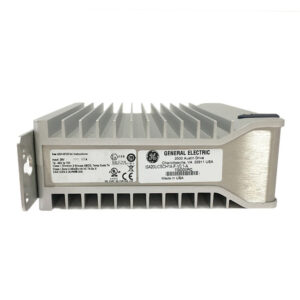
The FEC SAN3-40S is a servo amplifier unit from the enFORCE DSP1500 Digital Servo Press family. It supplies controlled power and closed-loop motion control for the associated press motors in precision pressing and bonding applications.
Engineers select the SAN3-40S when a compact, dedicated servo drive is required for low-to-medium force servo presses. The unit accepts 180–242 VAC three-phase power, communicates via RS-485, and stores parameters in flash memory. As a discontinued configuration within the SAN3 series, remaining New Surplus stock continues to support existing enFORCE press systems that rely on this exact power and interface rating.
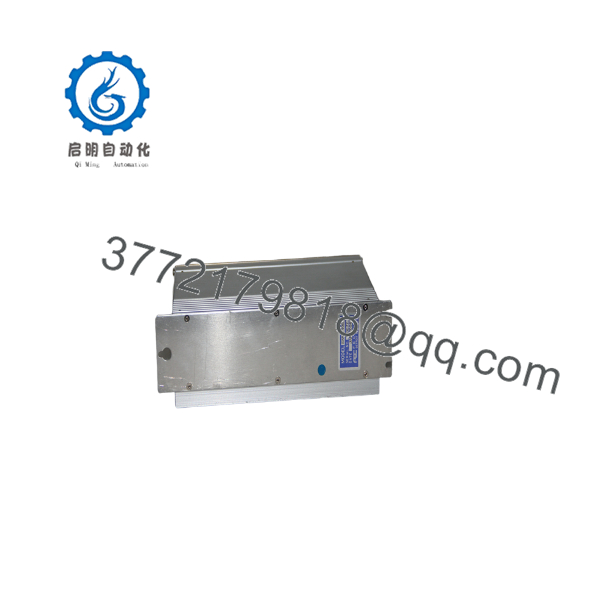
SAN3-40S
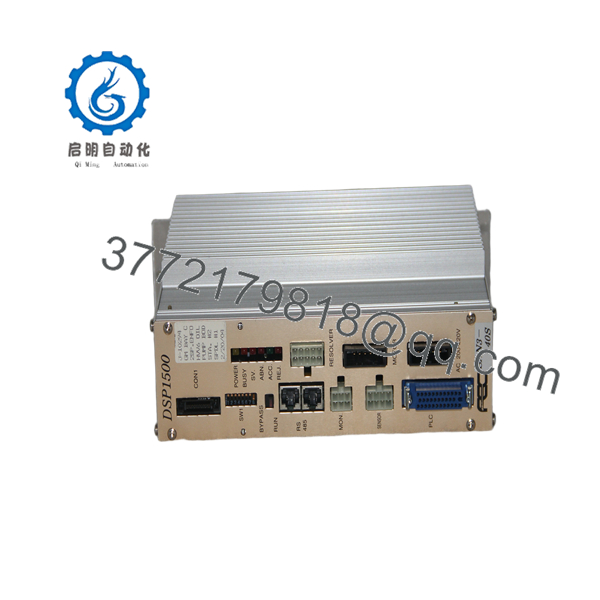
SAN3-40S
5. Installation & Configuration Guide
Stage 1: Pre-Installation Preparation (≈10 min)
⚠️ Safety First: Disconnect and lock out all three-phase power. Wait at least 5 minutes (1 minute minimum recommended) after power-down before handling to allow residual energy to dissipate.
Tools Required: ESD wrist strap, torque screwdriver, multimeter, appropriate AMP mating connectors, power filter if required, smartphone for photos of existing wiring and settings.
Data Backup: Record current firmware version, press parameters, and RS-485 settings from the user console software. Photograph motor, power, and I/O connections.
Stage 2: Removing the Old Unit (≈10 min)
- Confirm power is fully isolated.
- Label and disconnect the three-phase input power (U/V/W/FG), motor power/resolver cables, and any RS-485 or I/O cables.
- Remove the mounting screws and carefully withdraw the SAN unit.
- Inspect the mounting surface, connectors, and heat-sink area for damage or debris.
⚠️ Keep the old unit available until the replacement has completed a successful press cycle.
Stage 3: Installing the New Unit (≈15 min)
- Verify the exact model marking SAN3-40S.
- Mount the unit using the specified #8-32 screws. Ensure adequate clearance for the heat-sink protrusion.
- Connect the three-phase input power using the correct AMP housing and contacts (observe U/V/W/FG color code). Install the recommended line filter if the supply is noisy or non-isolated.
- Reconnect motor power, resolver/feedback, and communication cables exactly as photographed.
Self-Checklist: [ ] Model confirmed [ ] Power polarity and phasing correct [ ] Filter installed if required [ ] All connectors fully seated [ ] Grounding intact.
Stage 4: Power-On & Testing (≈15–20 min)
Pre-Power Check: Verify correct three-phase voltage and absence of shorts. Confirm motor and feedback connections.
- Apply power. Observe the unit initialize without fault LEDs.
- Connect the DSP User Console software via RS-485 and verify communication.
- Confirm firmware version and download any saved parameters if required.
- Perform a low-force dry-cycle or teach mode test in a safe environment.
- Run a short production cycle under normal load while monitoring current, temperature, and press results.
⚠️ Troubleshooting Note: Repeated rapid power cycles can trip the in-rush protection—always allow the recommended delay. Communication failures are most often caused by RS-485 wiring or address conflicts. Never enable the press with incorrect motor phasing.
6. Frequently Asked Questions (FAQ)
Q: Can the SAN3-40S be hot-swapped under power?
No. Always isolate three-phase power and allow residual energy to dissipate before disconnecting or connecting any cables. Working on a live unit can damage the power stage or create a shock hazard.
Q: Is this model obsolete, and is the stock genuinely new?
Yes, the SAN3-40S is a discontinued configuration within the FEC enFORCE DSP1500 family. Available units are New Original (new surplus) stock that has been functionally verified. Quantities are limited.
Q: What is the direct replacement if SAN3-40S stock is exhausted?
Later SAN4-series units or equivalent FEC servo press amplifiers may serve as functional replacements. Confirm power rating, connector pinout, firmware compatibility, and mechanical dimensions before substitution.
Q: Will I lose press parameters when I replace the unit?
Parameters and firmware are stored in the unit’s flash ROM. Always back up the configuration with the DSP User Console software before removal. After installation, restore the saved file or re-teach critical positions.
Q: Why is the price lower than original FEC list price?
These are New Surplus units from secondary-market inventory. They provide the same form, fit, and function as original production amplifiers and are fully tested, but they are no longer current-production catalog items.
Q: What motors are compatible with the ?
The unit is rated for the lower-power RM-series press motors (typically RM1 and RM2 class). Verify the specific motor wattage and current requirements against the 80 W maximum output before installation.
Q: Is a line filter required?
A filter is strongly recommended when the incoming power is noisy or the transformer is not isolated. FEC specifies the TDK ZRWT2210-ME for the .