WhatsApp: +86 16626708626
 Email:
  Phone: +86 16626708626
Description
Key Technical Specifications
| Parameter | Value |
|---|---|
| Manufacturer | Fireye |
| Model | 85UVF1-1CEX |
| Series | Phoenix 85 Series |
| Product Type | Integrated UV Flame Scanner |
| Flame Detection | Ultraviolet (UV) |
| Internal Scanner | 85UVF1-1 |
| Housing | Explosion-proof / flameproof aluminum housing |
| Hazardous Area | Ex db IIC T6 |
| Dust Protection | Ex tb IIIC T85°C |
| ATEX Certification | DEMKO 15 ATEX 1624X |
| IECEx Certification | IECEx UL 15.0149X |
| CE | Yes |
| Environmental Protection | IP66 |
| Mounting | Flange-mounted; flange ordered separately |
| Replacement Scanner | 60-2780-1 |
| Application | Industrial burner flame supervision |
| Typical Equipment | Boilers, furnaces, process heaters |
| Safety Classification | Suitable for installations up to SIL 3, subject to system design |
| Lifecycle | Legacy / current secondary-market availability |
Fireye’s technical documentation lists 85UVF1-1CEX as an explosion-proof scanner using the 85UVF1-1 UV scanner, with ATEX/IECEx certification and IP66 protection. The CEX housing is certified for hazardous gas and dust environments.
The manufacturer’s documentation also identifies the 60-2780-1 as the replacement scanner for the 85UVF1-1CEX. This is useful when diagnosing whether the complete explosion-proof housing or only the internal scanner requires replacement.
Important specification warning: Secondary-market listings disagree about the electrical supply and some output specifications. I would not use reseller figures such as 24 VDC or 220 VAC as the engineering basis without checking the actual scanner nameplate and the applicable Fireye CU-114 documentation. The CEX designation primarily identifies the explosion-proof housing configuration.
Product Introduction
The Fireye 85UVF1-1CEX is an integrated Phoenix Series ultraviolet flame scanner for industrial combustion systems. It uses UV sensing to detect flame and is housed in an explosion-proof enclosure certified for hazardous-area applications. Fireye documentation lists ATEX and IECEx approvals, IP66 protection, and Ex db IIC T6 / Ex tb IIIC T85°C classifications.
The CEX version is intended where the scanner must be installed directly in a hazardous combustion area. The internal 85UVF1-1 scanner can also be sourced separately as 60-2780-1, so troubleshooting should distinguish an optical/scanner failure from a housing, wiring, or installation problem.
Installation & Configuration Guide
Stage 1: Pre-Installation Preparation
Estimated time: 20–30 minutes
⚠️ Safety First: This device forms part of a combustion safety system. Shut down the burner, isolate fuel sources, and follow the plant’s LOTO and burner-management procedures before removing the scanner.
Tools Required:
- ESD strap where appropriate
- CAT-rated multimeter
- Insulated screwdrivers
- Appropriate spanners/wrenches
- Wire labels
- Smartphone/camera
- Fireye CU-114 documentation
- Replacement mounting hardware if required
Data Backup:
- Record the complete 85UVF1-1CEX part number.
- Photograph the scanner orientation.
- Record the sighting angle relative to the burner.
- Photograph field wiring.
- Record the associated burner-management controller.
- Document scanner-to-flame distance.
- Record any existing flame-signal measurements.
- Verify the installed mounting flange.
⚠️ Do not change scanner alignment during a routine replacement unless the installation procedure requires it. Flame scanner sighting is part of the combustion safety function.
Stage 2: Removing the Old Scanner
Estimated time: 15–25 minutes
- Shut down the burner and isolate fuel according to the approved procedure.
- Apply electrical LOTO.
- Verify the scanner circuit is de-energized.
- Allow hot combustion equipment to cool to a safe working temperature.
- Photograph the scanner orientation.
- Label all field conductors.
- Disconnect the scanner wiring.
- Remove the scanner from the sighting assembly.
- Protect the optical window from contamination.
- Inspect the sight pipe for soot, slag, ash, or deposits.
⚠️ Do not look directly into an operating burner while aligning or testing the scanner. Use the approved sighting and commissioning procedure.
Stage 3: Installing the Replacement
Estimated time: 20–30 minutes
- Verify the replacement marking: 85UVF1-1CEX.
- Confirm the hazardous-area certification matches the installation.
- Inspect the quartz optical window.
- Verify the correct mounting flange.
- Install the scanner in the existing sighting arrangement.
- Reproduce the original orientation.
- Secure the housing mechanically.
- Reconnect wiring according to the approved Fireye schematic.
- Verify cable entries and hazardous-area sealing.
- Confirm the scanner is correctly aimed at the flame envelope.
Self-Checklist:
- 85UVF1-1CEX verified
- Ex certification verified
- Correct flange installed
- Optical window clean
- Original sighting angle restored
- Wiring verified
- Cable entry sealed
- Housing secured
Stage 4: Power-On & Testing
Estimated time: 30–60 minutes
- Complete the burner-management-system pre-start checks.
- Restore scanner power.
- Verify scanner status.
- Initiate the approved ignition sequence.
- Confirm flame detection occurs at the expected point in the sequence.
- Verify the flame signal remains stable during normal firing.
- Perform the approved flame-failure test.
- Confirm the BMS removes the appropriate fuel permissive when flame is lost.
- Verify fault indications.
- Confirm scanner operation at minimum and normal burner load.
- Record final flame-signal measurements.
- Return the burner to service only after the complete flame-safeguard loop passes its prescribed test.
⚠️ Never bypass the flame relay or defeat the burner-management interlock simply to prove that the scanner works. Flame-safeguard testing must follow the site’s approved combustion-safety procedure.
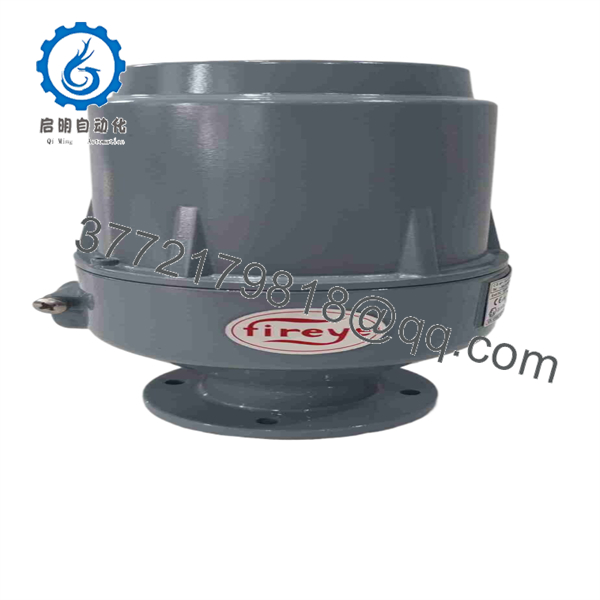
85UVF1-1CEX
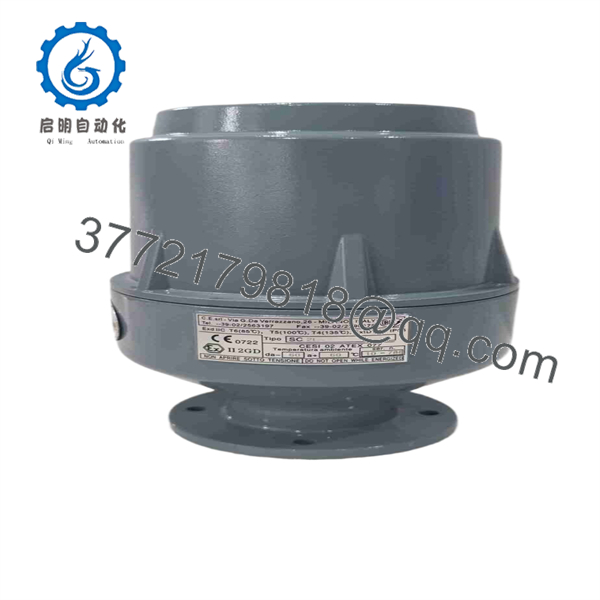
85UVF1-1CEX
Frequently Asked Questions (FAQ)
What is Fireye 85UVF1-1CEX?
It is a Phoenix Series integrated ultraviolet flame scanner installed in an explosion-proof housing. The CEX configuration is intended for hazardous-area combustion applications and carries ATEX/IECEx-related approvals.
What type of flame does it detect?
The scanner uses ultraviolet radiation from the flame for flame detection. It is designed for burner flame supervision rather than general-purpose optical monitoring.
What is the difference between 85UVF1-1CEX and 85UVF1-1QD?
The 85UVF1-1CEX uses the explosion-proof CEX housing, while the 85UVF1-1QD is a different housing/connection configuration. Fireye’s documentation lists them as separate scanner models with different approval configurations.
Is 85UVF1-1CEX ATEX certified?
Yes. Fireye documentation lists the CEX version under ATEX DEMKO 15 ATEX 1624X and identifies the hazardous-area classification Ex II 2G Ex db IIC T6 and Ex II 2D Ex tb IIIC T85°C. IECEx certification is also documented.
Does the scanner include the mounting flange?
No. Fireye’s product documentation specifically states that the mounting flange is ordered separately. Verify the existing flange before placing a replacement order.
What is the replacement scanner inside the 85UVF1-1CEX?
The documented replacement scanner is 60-2780-1. If the explosion-proof housing, wiring, and mounting arrangement are still serviceable, this can be relevant when determining whether the complete 85UVF1-1CEX assembly needs replacement.
Is the 85UVF1-1CEX suitable for SIL applications?
Fireye’s technical documentation states that the Phoenix 85 Series scanners are suitable for installations up to and including SIL 3, based on the cited FMEDA assessment. That does not mean a burner system automatically achieves SIL 3 by installing this scanner; the complete safety-related system must satisfy the applicable functional-safety requirements.
What condition should procurement specify?
For a combustion-safety component, specify the exact part number 85UVF1-1CEX, hazardous-area certification, housing condition, optical-window condition, and functional-test status. For surplus equipment, request photographs of the nameplate and certification markings before purchase.