WhatsApp: +86 16626708626
 Email:
  Phone: +86 16626708626
Description
3. Key Technical Specifications
| Parameter | Value |
|---|---|
| Part Number | H3710-200-01 / H3710-200-1 |
| Function | Wide-angle optical receiver |
| Compatible Transmitter | H3701 series LED emitter |
| Sensing Principle | Silicon photocells measuring light intensity from transmitter LED array |
| Typical Resolution | 0.1 in LED spacing on transmitter side |
| Output | Digital measurement to H3740 interface (analog or width output) |
| Mounting | Industrial gasketed / sealed housing |
| Environmental Tolerance | Mild shock and vibration resistant |
| Application | Edge guiding, center guiding, or material width measurement |
4. Product Introduction
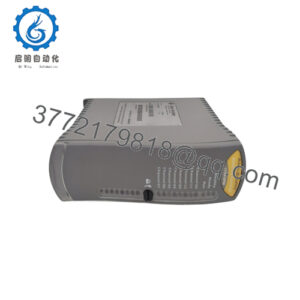
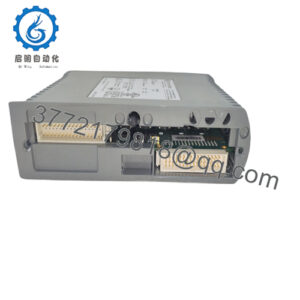
The Fives North American H3710-200-01 is the wide-angle receiver unit used with the H3701 LED transmitter in industrial edge-guide and width-measurement systems. The transmitter projects a continuous high-speed LED array; the H3710-200-01 receiver measures the light intensity at each corresponding photocell and sends the digital position data to the H3740 interface module.
This receiver is designed for continuous web, strip, or sheet processes where accurate edge position or material width must be maintained. The housing is gasketed and sealed for typical industrial environments and tolerates moderate shock and vibration.
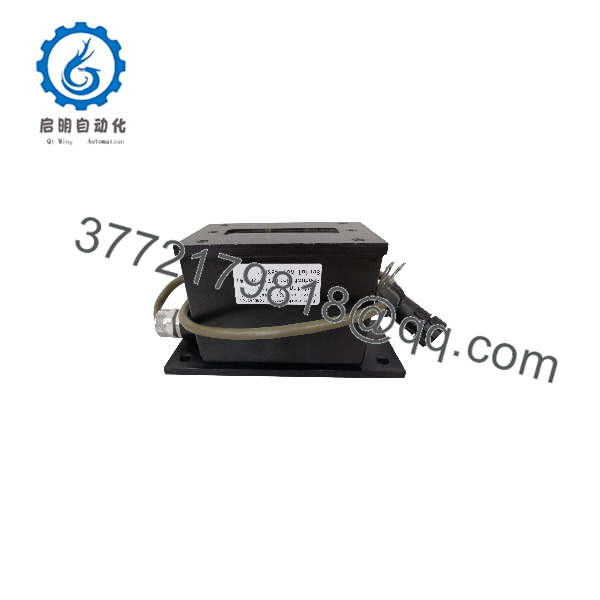
H3710-200-01
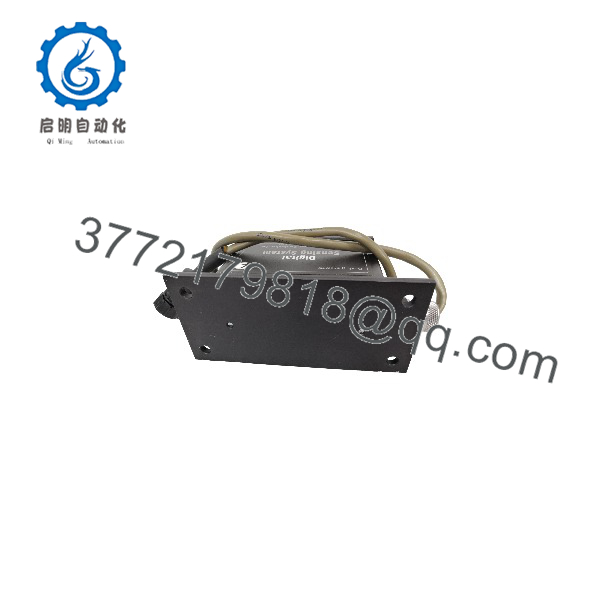
H3710-200-01
5. Troubleshooting Quick Reference
| Symptom | Possible Cause | Relevance to this Part | Quick Check Method | Recommendation |
|---|---|---|---|---|
| No position signal | Transmitter not powered or blocked | ✅ High | Verify H3701 LEDs are illuminated and line-of-sight is clear | Restore transmitter power; clear obstruction between units |
| Unstable or noisy reading | Contamination on photocell window or misalignment | ✅ High | Clean receiver window; check mechanical alignment with transmitter | Clean optics; realign transmitter and receiver parallel and at correct distance |
| Constant full-scale or zero output | Failed photocell array or wiring fault | ✅ Medium | Inspect cable continuity and connector pins | Repair wiring; replace receiver if internal failure confirmed |
| Intermittent dropouts | Loose connector or vibration-induced contact loss | ✅ Medium | Reseat connectors; check for fretting or corrosion | Secure connectors; add strain relief if vibration is high |
| Incorrect width or guide position | Calibration offset in H3740 interface | ❌ Low | Compare displayed value with known physical measurement | Recalibrate interface module per system procedure |
If the problem continues after these checks, provide photos of the installation, measured distances, and any H3740 diagnostic readings to technical support.
6. Frequently Asked Questions (FAQ)
Q: Does the H3710-200-01 work as a standalone sensor?
A: No. It must be paired with a compatible H3701 series LED transmitter and an H3740 interface module to produce usable edge or width signals.
Q: What is the typical sensing distance?
A: Distance is application-specific and set by the mechanical layout of the transmitter and receiver. Maintain clear line-of-sight and follow the original system installation guidelines for spacing and alignment.
Q: Can one receiver work with multiple transmitters?
A: The standard configuration uses one transmitter and one receiver. For wider materials, two transmitters can be combined; the receiver arrangement must match the system design.
Q: Is the H3710-200-01 still in current production?
A: Availability is typically limited to new-surplus or remaining OEM stock. Confirm exact compatibility with the existing H3701 transmitter and H3740 interface before ordering.
Q: Why is secondary-market pricing often lower than list?
A: These receivers are frequently available as new surplus from decommissioned web-handling or processing lines. Verified units remain functional, but they usually carry a seller warranty rather than a current factory warranty.
Q: What maintenance is required?
A: Keep the optical window clean and free of dust, oil, or process debris. Periodically check mechanical alignment and connector integrity. No routine internal calibration is normally required on the receiver itself.
Q: Is the unit sealed for wash-down or outdoor use?
A: The housing is gasketed and sealed for typical industrial environments and tolerates mild shock and vibration. It is not specified as fully wash-down or outdoor-rated unless additional protection is provided by the installation.