 WhatsApp: +86 16626708626
 Email:
  Phone: +86 16626708626
Description
3. Key Technical Specifications
| Parameter | Specification |
| Board Classification | General Purpose RAM / Expansion Board (GPRB) |
| Hardware Revision | Revision 2 (Rev 2, Optimized trace design and noise immunity) |
| Bus Compatibility | VMEbus / IEEE 1014 standard standard interface |
| Data Width Support | 8-bit, 16-bit, or 32-bit operations via backplane routing |
| Addressing Capabilities | Short I/O, A16, and Standard A24 addressing ranges |
| On-Board Memory Sockets | Multi-socket JEDEC configuration for high-speed SRAM or EPROM |
| Access Control | Jumper-selectable base memory addresses and wait-state delays |
| Interrupt Logic | Multi-level on-board interrupt routing via backplane lines |
| Form Factor | Double-Height (6U) standard VMEbus card format |
| Power Consumption | +5 V DC, ±5% |
| Operating Temperature | 0 to +60 °C |
4. Product Introduction & Supply Chain Strategy
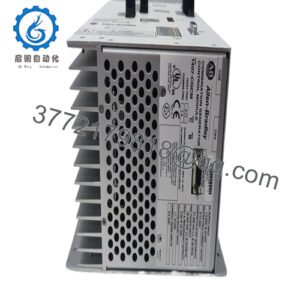
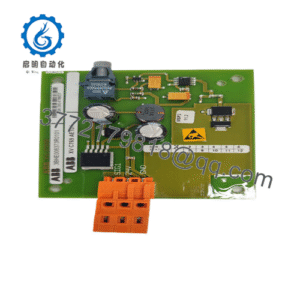
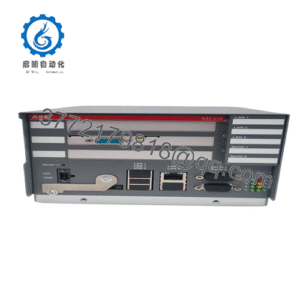
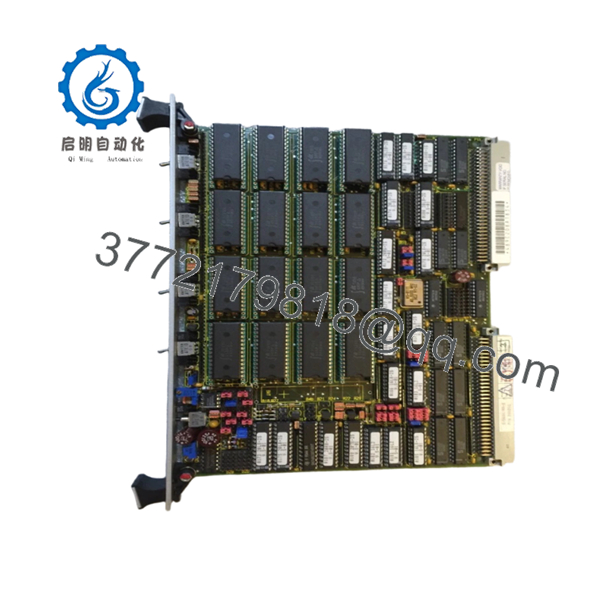
The FORCE SYS68K-GPRB-A Rev 2 is a specialized, double-height (6U) VMEbus system expansion module designed to provide high-speed local memory scaling, data logging pools, and buffer processing alongside Motorola-based single board computers. By providing dedicated, dual-ported data pathways, this Revision 2 card unloads data overhead from the main processor, managing dense I/O transactions in older process-control and telemetry applications.
As a highly specific, legacy EOL hardware component, the SYS68K-GPRB-A Rev 2 represents a significant hidden failure point in legacy subrack configurations. If a memory array or bus driver chip fails on an active board, it triggers direct bus error traps (BERR) on the main CPU, instantly cutting plant communication. Securing a verified New Surplus board provides an immediate drop-in replacement that eliminates hours of engineering diagnosis. Buying our original new stock over unverified secondary-market cards avoids the hazards of underlying material decay, keeps your Total Cost of Ownership (TCO) predictable, and extends the service life of multi-million dollar capital equipment.

- SYS68K-GPRB-A Rev 2
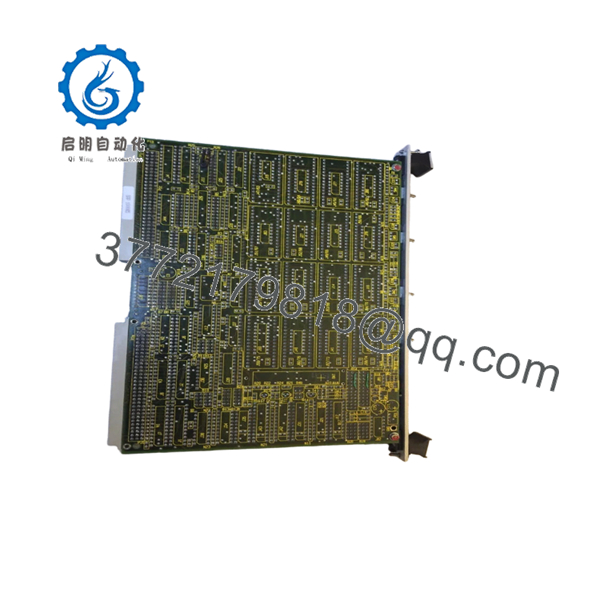
- SYS68K-GPRB-A Rev 2
5. Installation & Configuration Guide
Stage 1: Pre-Installation (Prep & Safety)
- Turn off all primary power loops running to the VMEbus rack enclosure and log the action under formal lock-out/tag-out rules.
- Put on a calibrated ESD grounding wrist strap and attach the clip securely to the metal subrack ear.
- Review the layout of the old board. Take sharp photographs of every jumper cap orientation and DIP switch block to confirm exact base address allocation.
Stage 2: Removal
- Loosen the front faceplate fastening screws on the defective module using an insulated screwdriver.
- Unlatch the upper and lower card handles smoothly to slide the board’s gold contacts away from the rear backplane connectors.
- Draw the board outward along the card cage rails, ensuring you do not touch any surface traces or exposed IC components.
Stage 3: Installation (Clone & Seat)
- Unbox the new FORCE SYS68K-GPRB-A Rev 2 board inside an ESD-safe workspace.
- Replicate all jumper shunts from the old card onto the replacement module to mirror the specific memory windows and byte-selection variables.
- Slide the card into the designated slot guides. Push the module smoothly in until the front-panel injector ears align, then snap them inward to fully compress the board into the DIN backplane socket. Tighten the retaining screws.
Stage 4: Power-On & Testing
- Confirm all connections are flush, then turn on the master VME system power supply.
- Observe the front indicators. The module’s status lights should follow your primary processor board’s initial boot sequence without triggering any continuous error indicators.
- Run local diagnostic utilities via your main system terminal to run read/write verify passes on the expanded memory block to confirm error-free integration.
6. Firmware/Software Versions & Upgrade Notes
The SYS68K-GPRB-A Rev 2 is primarily a hardware memory mapping expansion board. However, it relies heavily on the memory layout instructions written within the system boot code (such as VMEPROM, OS-9, or VxWorks) executed by the master CPU module.
⚠️ CRITICAL MEMORY MISALIGNMENT WARNING: Revision 2 of this board incorporates optimized timing and trace layout changes that change how long-term memory latency behaves under full-speed bus arbitration. If your primary master card is running older firmware (e.g., revisions below V1.5), ensure that the jumper configuration matches the required wait-state settings. A failure to synchronize memory timing delays between the processor and this expansion card can cause immediate memory corruption, intermittent runtime failures, or fatal bus lockups during high-speed burst cycles.
7. Frequently Asked Questions (FAQ)
Q: What is the benefit of Revision 2 over older revisions of the GPRB card?
A: Revision 2 features modified PCB layout routes that reduce signal cross-talk and improve noise margins across high-speed parallel lines. This delivers much higher data reliability in harsh electromagnetic fields, such as those near high-voltage motor drives and heavy welding applications.
Q: Does this board come populated with RAM chips, or is it an empty board?
A: This module is shipped as a fully verified New Surplus assembly configured to original stock specifications. Depending on the original OEM build profile, specific memory sockets may be pre-populated or left open for system customization. Please confirm your specific memory capacity needs with our technical team prior to delivery.
Q: Why shouldn’t we buy a refurbished card to cut procurement costs?
A: Refurbished memory and expansion cards frequently suffer from hidden thermal stress and latent chip degradation that simple visual inspections cannot identify. If an unverified card fails on your line, the resulting unplanned downtime can easily wipe out any initial procurement savings within the first hour. Our New Surplus inventory provides a true zero-hour component with pristine long-term reliability.
Q: Can this memory module be hot-swapped while the VME backplane is active?
A: No. The VMEbus standard utilized by this generation of FORCE hardware requires complete system isolation before any card extraction or insertion. Pulling or inserting this board while power is applied can cross active data lines with power pins, permanently ruining the logic components on this card and any adjacent processor modules.
Q: How do we determine the base address mapping for this card?
A: Base memory addresses are set manually via the shorting jumper matrix blocks located on the board surface. These blocks specify where the card’s memory block resides inside your system’s global memory map (A16, A24, or A32 spaces). These must be aligned to match your master CPU’s application code settings.
Q: What type of warranty comes with this FORCE expansion board?
A: This module includes a comprehensive 1-year operational warranty. Because this is unused New Surplus stock, our warranty matches original factory performance expectations, giving your engineering and maintenance teams complete peace of mind during system deployment.