 WhatsApp: +86 16626708626
 Email:
  Phone: +86 16626708626
Description
Key Technical Specifications
| Parameter | Value |
|---|---|
| Manufacturer | Foxboro (Schneider Electric) |
| Product Model | FBM203 |
| Product Family | Foxboro Evo™ / 200 Series FBM |
| Product Type | RTD Input Module |
| Input Channels | 8 isolated RTD input channels |
| Supported Sensors | Platinum, Nickel, and Copper RTDs |
| RTD Wiring | 2-wire or 3-wire (FBM203); 4-wire supported by FBM203d variant |
| Communication | Redundant Foxboro Fieldbus |
| Isolation | Channel-to-channel and channel-to-ground galvanic isolation |
| Input Range | 0–320 Ω (FBM203 standard version) |
| Mounting | 200 Series Baseplate or DIN Rail Termination Assembly |
| Typical Applications | Temperature measurement, process control, equipment monitoring |
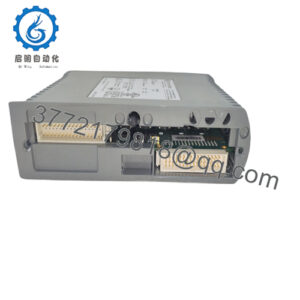
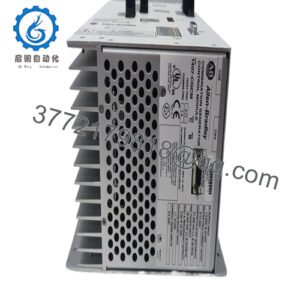
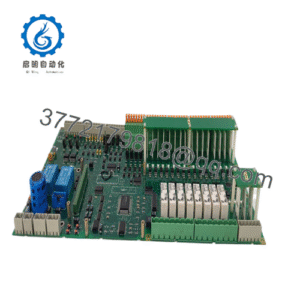
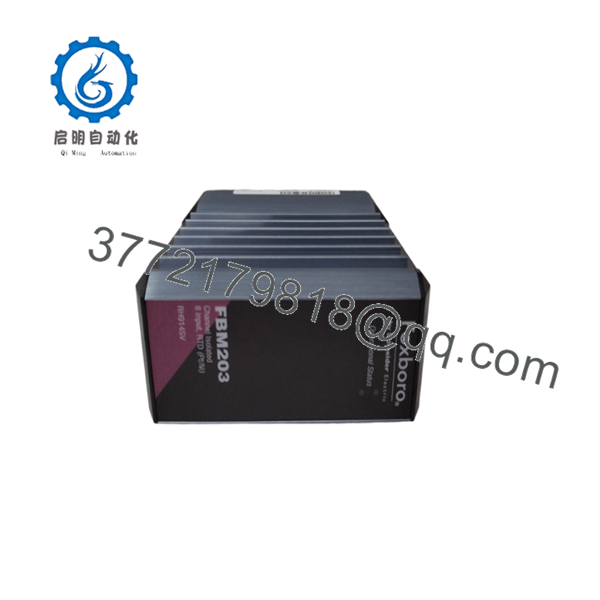
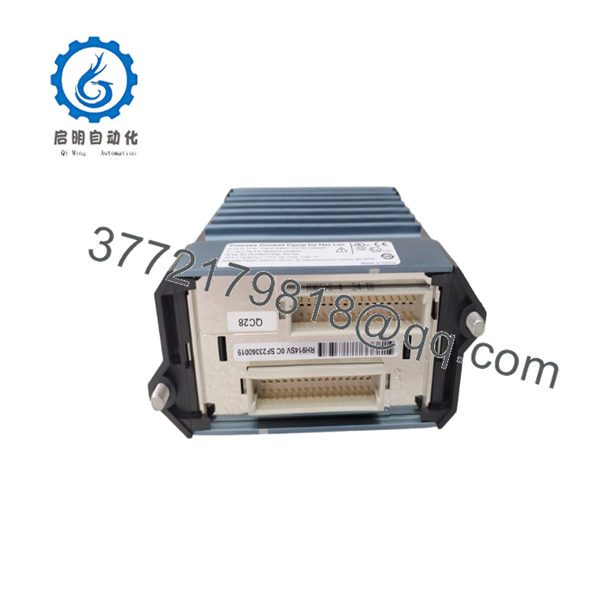
The FBM203 provides eight galvanically isolated RTD input channels that convert resistance signals from temperature sensors into digital data for the Foxboro DCS. Each channel performs independent signal conditioning and communicates through the optional redundant Fieldbus.
Product Introduction
The Foxboro FBM203 is a high-accuracy RTD input module designed for the Foxboro Evo™ and EcoStruxure™ Foxboro Distributed Control System. It acquires temperature measurements from platinum, nickel, or copper resistance temperature detectors (RTDs), making it suitable for continuous monitoring of critical industrial processes.
The module incorporates eight electrically isolated analog input channels, minimizing ground-loop interference and improving measurement stability in electrically noisy environments. Depending on the model variant, it supports 2-wire, 3-wire, or 4-wire RTD connections, allowing engineers to select the appropriate configuration for the required measurement accuracy.
FBM203 modules are widely deployed in power generation, oil and gas, petrochemical, pharmaceutical, and chemical processing facilities where reliable temperature monitoring is essential for process control, equipment protection, and regulatory compliance.
Installation & Configuration Guide
Stage 1 – Pre-Installation Preparation (10 Minutes)
⚠️ Safety First
- Notify operations before maintenance.
- Perform Lock-Out/Tag-Out procedures.
- Remove Fieldbus power.
- Wear a grounded ESD wrist strap.
Required Tools
- Digital multimeter
- RTD simulator (recommended)
- Phillips screwdriver
- ESD wrist strap
- Wire identification labels
Before Removal
- Back up the Foxboro control database.
- Record channel assignments and engineering units.
- Photograph all terminal wiring.
- Verify the installed RTD type (Pt, Ni, or Cu).
Stage 2 – Removing the Existing Module (5 Minutes)
- Disconnect Fieldbus power.
- Label every RTD cable.
- Remove the termination assembly.
- Release the locking mechanism.
- Remove the from the baseplate.
⚠️ Never interchange RTD extension wiring without verifying conductor resistance. Additional lead resistance directly affects measurement accuracy.
Stage 3 – Installing the New Module (10 Minutes)
- Verify the replacement model is .
- Install the module on the 200 Series baseplate.
- Reconnect all RTD wiring.
- Verify RTD wiring configuration (2-wire or 3-wire).
- Confirm shielding and grounding.
- Ensure the module is fully seated.
Installation Checklist
- ✔ Correct FBM installed
- ✔ RTD wiring verified
- ✔ Shield grounding confirmed
- ✔ Module securely locked
Stage 4 – Commissioning (15 Minutes)
- Restore Fieldbus power.
- Verify normal module LED status.
- Download or verify the existing configuration.
- Validate each RTD channel with a simulator or known temperature.
- Confirm engineering units and alarm limits.
- Record commissioning results.
⚠️ If every channel displays a similar offset, inspect RTD lead resistance, wiring configuration, and sensor type before replacing the module. Installation issues are a more common cause of temperature errors than module failure.
Frequently Asked Questions (FAQ)
Q1. What does the measure?
The measures temperature using Resistance Temperature Detectors (RTDs). It supports platinum, nickel, and copper RTD sensors and converts their resistance values into digital process variables for the Foxboro DCS.
Q2. How many input channels are available?
The module provides 8 independent, galvanically isolated RTD input channels, allowing multiple temperature measurements to be acquired simultaneously.
Q3. Which RTD wiring configurations are supported?
The standard supports 2-wire and 3-wire RTD sensors with a resistance range of 0–320 Ω. The FBM203d variant is designed for 4-wire RTD inputs. Other variants (FBM203b and FBM203c) support different RTD resistance ranges.
Q4. What is the difference between FBM202 and ?
- FBM202: Designed for thermocouple and millivolt inputs.
- : Designed specifically for RTD temperature sensors (platinum, nickel, and copper).
Q5. Can the replace the legacy 100 Series RTD modules?
Yes. The 200 Series is commonly used in Foxboro Evo systems and provides equivalent RTD measurement functionality with updated hardware architecture. Migration may require compatible termination assemblies and configuration updates.
Q6. Can the module be hot-swapped?
Replacement procedures should follow Schneider Electric maintenance guidelines. In most production systems, replacing the module with Fieldbus power removed is recommended to minimize communication interruptions and commissioning risks.
Q7. Which industries commonly use the ?
Typical applications include:
- Oil and gas
- Petrochemical processing
- Power generation
- Chemical manufacturing
- Pharmaceutical production
- Pulp and paper
- Water and wastewater treatment
These industries use the for continuous RTD-based temperature monitorin