 WhatsApp: +86 16626708626
 Email:
  Phone: +86 16626708626
Description
3. Key Technical Specifications
| Parameter | Value |
|---|---|
| Communication Ports | 4 independent, individually configurable |
| Physical Interfaces | RS-232, RS-422, or RS-485 (per port) |
| Protocol | Modbus RTU (primary); supports standard function codes |
| Baud Rates | 300 to 115,200 bps |
| Devices Supported | Up to 64 Modbus slave devices per module |
| DCI Connections | Up to 2,000 Distributed Control Interface point connections |
| Data Types | 2-byte/4-byte integers, IEEE floating point, binary; byte/bit swapping selectable |
| Scan Rate | Configurable 0.5 s to 255 s |
| Isolation | Galvanic isolation per communication channel |
| Power Supply | 24 V DC +5 % / –10 % (redundant capable) |
| Power Consumption | 7 W maximum |
| Operating Temperature | –20 to +60 °C (module) |
| Relative Humidity | 5 to 95 % non-condensing |
| Weight | Approx. 284 g |
| Mounting | Modular baseplate with associated 4-port Termination Assembly |
4. Product Introduction
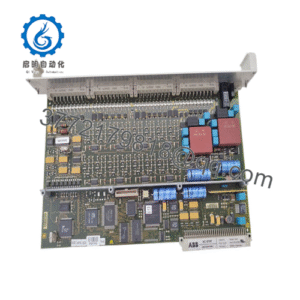
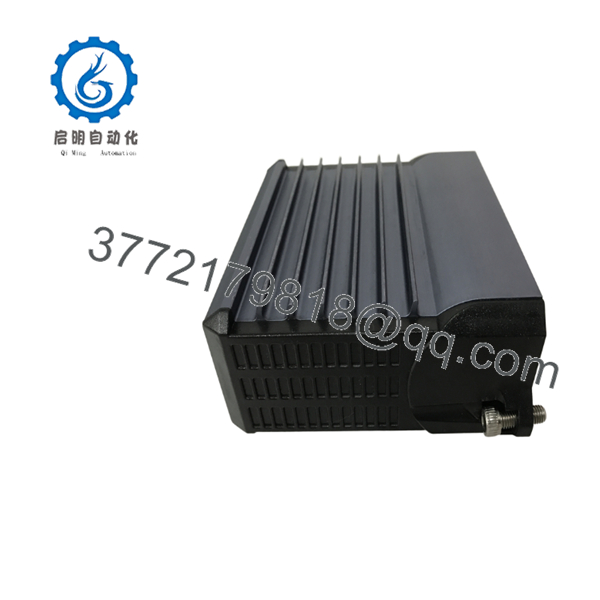
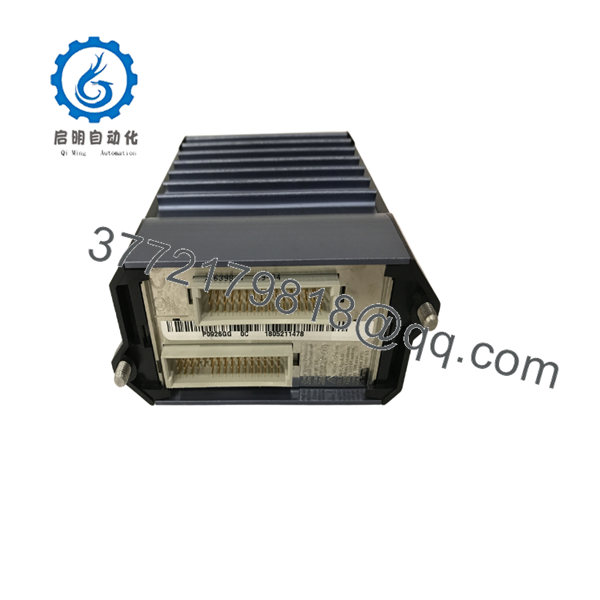
The Foxboro FBM224 is a Modbus Communication Interface Module for the I/A Series and Foxboro Evo DCS. It provides four independent serial ports that can each be configured for RS-232, RS-422, or RS-485, allowing direct connection to Modbus RTU slave devices such as PLCs, drives, flow computers, and other serial field equipment.
The module acts as a gateway, polling slave devices and mapping their data into the Foxboro control database via Distributed Control Interface (DCI) blocks. Output requests from the Control Processor are processed immediately. It is commonly used when third-party Modbus devices must be integrated into a Foxboro system without requiring additional external gateways.

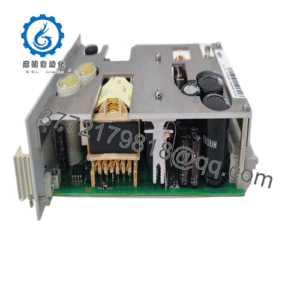
- FBM224
- FBM224
5. Troubleshooting Quick Reference
| Symptom | Possible Cause | Relevance to this Part | Quick Check Method | Recommendation |
|---|---|---|---|---|
| No communication on any port | Incorrect port configuration, wiring, or baud rate | ✅ High | Verify port settings (RS type, baud, parity, stop bits) in configuration; check TA DIP switches for termination | Match settings exactly to slave devices; confirm wiring polarity for RS-485 |
| One port fails while others work | Port-specific wiring fault or isolation issue | ✅ High | Swap cables between ports; measure signal levels at TA terminals | Isolate to cable, TA, or module port; replace cable first |
| Intermittent data or CRC errors | Noise, missing termination, or excessive cable length | ✅ Medium | Check shield grounding and termination resistors; verify cable length limits (RS-232 short, RS-485 up to 1200 m) | Install proper termination; improve grounding and cable routing |
| Devices not responding / timeouts | Incorrect slave address or poll rate too aggressive | ✅ Medium | Confirm slave addresses (1–247) and scan rate configuration | Adjust poll interval; verify device addresses match configuration |
| Module status LED indicates fault | Power or Fieldbus communication problem | ❌ Low | Measure 24 V DC at baseplate; check Fieldbus path health | Resolve power or Fieldbus issue before replacing the FBM224 |
| High CPU or Fieldbus loading | Too many transactions or short poll times | ✅ Medium | Review number of configured transactions and scan rates | Reduce poll frequency or number of simultaneous transactions |
If these checks do not resolve the issue, capture the module LEDs, TA DIP switch settings, a configuration screenshot, and a system diagnostic log, then contact technical support.
6. Frequently Asked Questions (FAQ)
Q: How many devices can one FBM224 support? A: Up to 64 Modbus slave devices, subject to performance limits based on baud rate, poll frequency, and number of data points. The practical limit is often lower depending on network loading.
Q: Can the ports be mixed (some RS-232, some RS-485)? A: Yes. Each of the four ports is independently configurable for RS-232, RS-422, or RS-485.
Q: Does it support Modbus ASCII? A: The primary and fully supported mode is Modbus RTU. Check the specific software version and configuration options for any ASCII capability.
Q: What termination assembly is required? A: A 4-port TA designed for the FBM224 (examples include P0926GH / RH926GH compression type). The TA provides the field terminals and selectable termination resistors for RS-422/485.
Q: Can ports be used for redundant cabling? A: Certain port pairs can be configured for redundant connections to dual-ported devices. Refer to the User’s Guide for supported redundant wiring topologies.
Q: Is this module still supported on current Foxboro Evo systems? A: Yes. It is compatible with appropriate I/A Series software and Foxboro Evo Control Core Services. Confirm the exact system software revision before installation.
Q: Why are surplus units priced lower than factory-new listings? A: Most available stock is New Surplus—never installed, from excess project inventory. Units are inspected for physical condition. A 1-year warranty is provided; the original OEM warranty does not transfer with surplus material.