 WhatsApp: +86 16626708626
 Email:
  Phone: +86 16626708626
Description
3. Key Technical Specifications
| Parameter | Value |
|---|---|
| Output Channels | 8 isolated 0–20.4 mA DC analog outputs |
| Accuracy | ±0.05% of span (0.1–20 mA) |
| Temperature Coefficient | ±50 ppm/°C |
| Resolution | 13 bits |
| Output Load | 750 Ω maximum |
| Output Processing Delay | 30 ms maximum |
| Isolation | Channel-to-channel and channel-to-ground galvanic isolation |
| Power Supply | 24 V DC +5% / –10% (redundant capable) |
| Power Consumption | 7 W maximum at 24 V DC |
| Heat Dissipation | 5 W maximum |
| Operating Temperature | –20 to +70 °C (–4 to +158 °F) |
| Relative Humidity | 5 to 95% (non-condensing) |
| Dimensions (H × W × D) | 102 mm (114 mm with lugs) × 45 mm × 104 mm |
| Weight | Approx. 185–284 g |
| Communication | Module Fieldbus to FCM / FCP |
| Environment | Class G3 (harsh) per ISA S71.04 |
4. Product Introduction
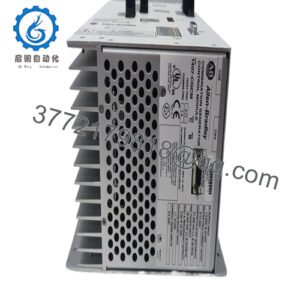
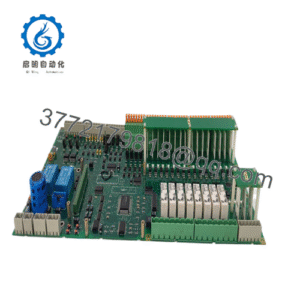
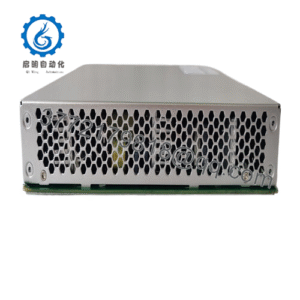
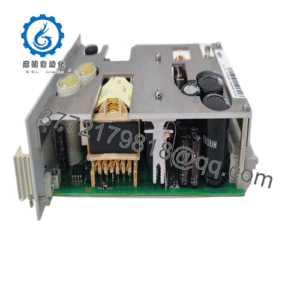
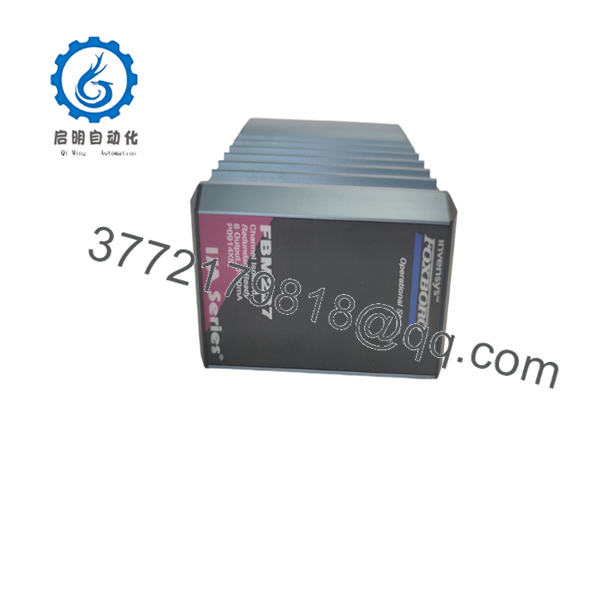
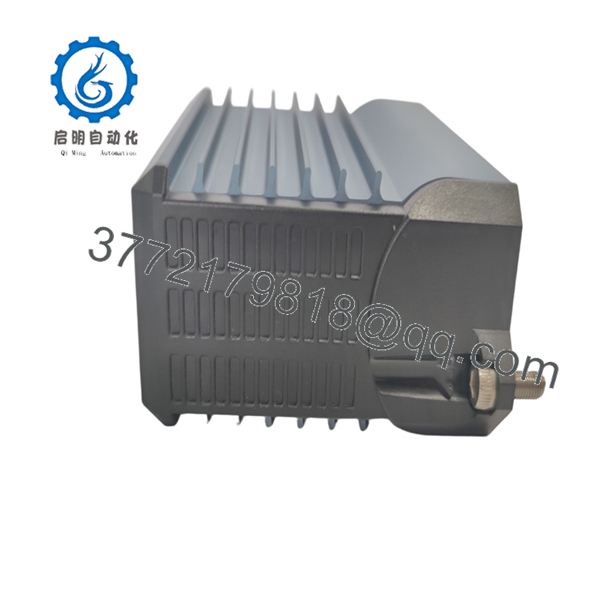
The Foxboro FBM237 is an 8-channel channel-isolated 0–20 mA analog output Fieldbus Module for the I/A Series and EcoStruxure Foxboro DCS. It drives valves, positioners, actuators, and other current-loop field devices from the control processor via the module Fieldbus.
Each channel is galvanically isolated. The module runs as a single unit or as a redundant pair sharing one common termination assembly. Accuracy holds at ±0.05% of span with 13-bit resolution and a 30 ms maximum processing delay. It fits standard 200 Series baseplates and is rated for Class G3 environments from –20 to +70 °C.

- FBM237
- FBM237
5. Troubleshooting Quick Reference
| Symptom | Possible Cause | Relevance to this Part | Quick Check Method | Recommendation |
|---|---|---|---|---|
| No output current on any channel | Module power loss or Fieldbus failure | ✅ High | Measure 24 V DC at module power terminals; check Fieldbus LEDs and communication status in system software | Confirm 24 V supply and Fieldbus path before replacing module |
| One channel stuck at 0 mA or full scale | Channel hardware fault or open field wiring | ✅ High | Force a known current in engineering software; measure actual mA at TA terminals with multimeter | If forced value does not appear at terminals, replace module; if it does, check field device and wiring |
| Output drifts or inaccurate | Load exceeds 750 Ω or wiring resistance too high | ✅ Medium | Calculate total loop resistance (cable + device); verify compliance voltage ≈18 V at 20.4 mA | Reduce load or shorten/increase wire gauge; module itself is rarely the cause if within load limit |
| Redundant pair not tracking | Missing or failed redundancy adapter / TA mismatch | ✅ High | Confirm both modules present, adapter installed, and common TA wired correctly | Install proper redundancy adapter and match TA; do not mix single and redundant wiring |
| Module fails to come online | Fieldbus path A/B problem or baseplate slot issue | ❌ Low | Swap module to known-good slot; check Fieldbus continuity and FCM/FCP status | Problem is usually upstream of the FBM237; verify Fieldbus before condemning the module |
| Outputs drop on power cycle | Fail-safe configuration set to fallback 0 mA | ❌ Low | Review fail-safe settings in control blocks | Configure hold or desired fallback value; this is configuration, not hardware failure |
If diagnostics are inconclusive, capture module status LEDs, diagnostic buffer screenshots, and TA terminal photos, then contact technical support with the exact part number and system software version.
6. Frequently Asked Questions (FAQ)
Q: Is the FBM237 hot-swappable? No. Remove power to the baseplate or isolate the module properly before insertion or removal. Hot-swapping risks backplane damage and unpredictable output states.
Q: Can I use the FBM237 in a redundant pair? Yes. It is designed as redundant-ready. Install two identical modules plus the correct redundancy adapter and wire both to one common termination assembly. Each module independently drives the outputs.
Q: Does this module support HART? No. The is a plain 0–20 mA analog output module. For HART-capable outputs use FBM215 or FBM218. The meets the impedance requirements so it will not interfere with a HART device on the same loop, but it does not communicate digitally.
Q: What is the difference between and Compact ? The standard mounts on 200 Series baseplates. Compact is the smaller form-factor version for Compact 200 Series systems. Confirm your baseplate type before ordering; they are not mechanically interchangeable.
Q: Why is new surplus pricing lower than current Schneider list? These are genuine OEM modules from excess or decommissioned stock. They have not been installed in continuous service. Every unit undergoes inbound inspection, power-up, and functional testing on a Foxboro I/A Series rack before shipment. Full test reports are available on request.
Q: What termination assemblies work with the ? Common TAs include P0916CC, RH916YE, P0916QC, and versions with output bypass jacks (e.g., RH917QZ/P0917QZ). Match the TA to your wiring method (compression or ring lug) and whether you need bypass capability for maintenance.
Q: What firmware or configuration is required when replacing a failed unit? The has no user-loadable firmware in the conventional sense. Configuration lives in the control blocks on the FCP/FCM. Document the old module’s fail-safe settings and any channel-specific parameters before removal, then apply the same settings to the replacement.