 WhatsApp: +86 16626708626
 Email:
  Phone: +86 16626708626
Description
Key Technical Specifications
| Parameter | Specification |
| Output Channels | 8 discrete channels, individually isolated |
| Channel Isolation | 1,500 V AC channel-to-channel and channel-to-ground |
| Output Voltage Range | 15 to 60 V DC / 100 to 120 V AC (depending on termination assembly) |
| Maximum Load Current | 2.0 A per channel at 70°C; total module current up to 8.0 A |
| On-State Voltage Drop | 1.2 V DC maximum at full load |
| Off-State Leakage Current | Less than 1.5 mA at maximum operating voltage |
| Power Consumption | 3.5 W maximum from 24 V DC baseplate bus |
| Response Time | Turn-on time < 10 ms; Turn-off time < 15 ms |
| Module Placement | Plugs directly into 4-slot or 8-slot Foxboro baseplates |
| Operating Temperature | −20 to +70°C (−4 to +158°F) |
| Relative Humidity | 5 to 95% non-condensing |
Product Introduction & Supply Chain Strategy
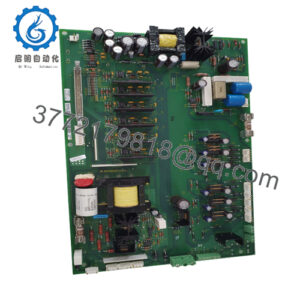
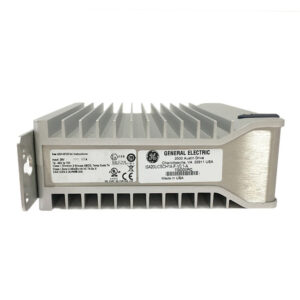
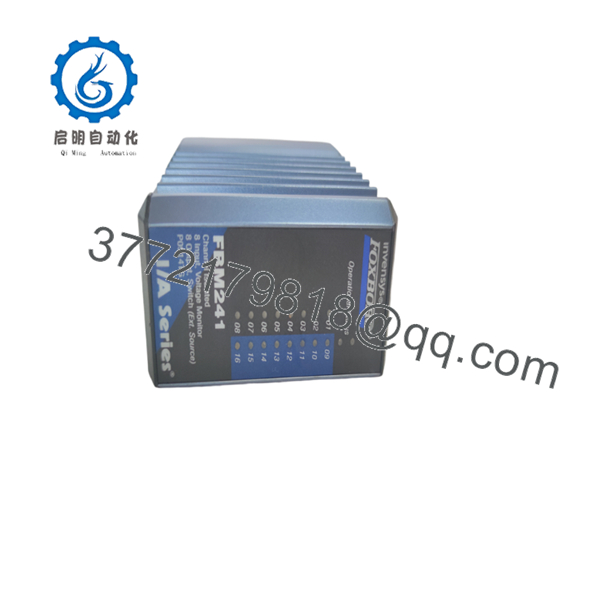
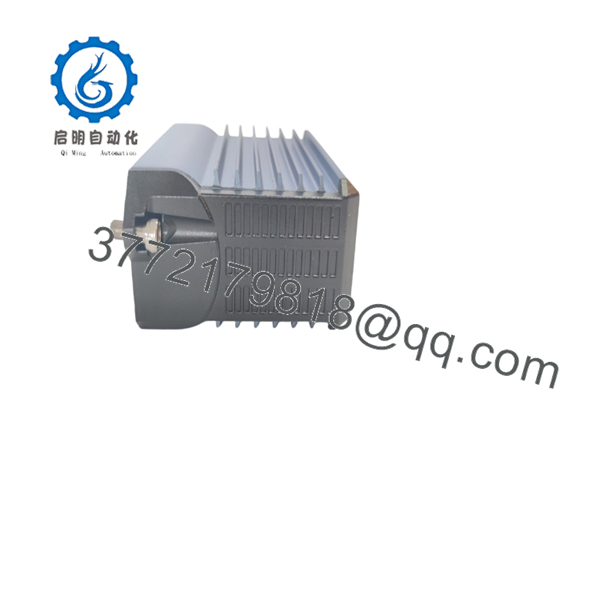
The Foxboro FBM241 is an 8-channel isolated discrete output module used in Foxboro I/A Series and EcoStruxure DCS installations to drive solenoids, motor starters, and field indicators. It interfaces field control processors (FCP270/FCP280) with discrete field actuators across power generation, petrochemical processing, and water treatment operations.
Procuring this module as New Surplus ensures immediate inventory availability for legacy systems facing OEM obsolescence, eliminating lead times that exceed 20 weeks. This strategy lowers Total Cost of Ownership (TCO) by providing 100% operational lifespan and avoiding the high risk of catastrophic plant shutdowns associated with degraded, second-hand components.
Installation & Configuration Guide
Stage 1: Pre-Installation (Prep & Safety)
- Execute Lock-Out/Tag-Out (LOTO) on field power supplies to prevent arc flash on the terminal assembly.
- Put on an ESD wrist strap connected to plant ground before handling the module.
- Record the physical slot number, baseplate position, and letter code on the old FBM241 module.
- Verify that the replacement unit matches the part number (P0914TG/P0914TH) and baseplate keying requirements.
Stage 2: Removal
- Loosen the top and bottom captive retaining screws on the existing FBM241 module faceplate.
- Pull the module release latches outward to disengage backplane electrical connections.
- Slide the module straight out of the baseplate guide rails. Avoid side-to-side twisting to prevent pin bending on the baseplate connector.
Stage 3: Installation (Clone & Seat)
- Inspect the backplane connector pins on the baseplate for contamination or physical damage.
- Align the replacement FBM241 module with the slot guide rails.
- Push the module firmly into the slot until the backplane connector seats completely.
- Tighten the top and bottom retaining screws to 0.5 Nm (4.4 in-lb) to secure ground continuity.
Stage 4: Power-On & Testing
- Restore 24 V DC bus power to the baseplate.
- Observe the front panel LEDs: verify the module status LED turns solid green (RUN) within 5 seconds.
- Verify that the communication LED blinks yellow, indicating active HDLC data transfer with the Field Control Processor.
- Test individual discrete outputs from the DCS workstation and measure 24 V DC / 120 V AC state transitions at the field terminal block.

- FBM241
- FBM241
Firmware/Software Versions & Upgrade Notes
- Recommended Firmware: Firmware Revision 1.42 or higher is recommended for full compatibility with Control Processor FCP270 and EcoStruxure Foxboro DCS v9.x software releases.
- Backward Compatibility: Modules with Revision 1.30 or later maintain full backward compatibility with legacy I/A Series software v8.x and CP60 control processors.
- Upgrade/Downgrade Warning: Changing firmware versions on an operational DCS node requires taking the associated control block offline. A firmware mismatch between redundant field control processors can cause heartbeat loss, triggering safety fail-safes and dropping output states. Always verify firmware versions via System Manager before hot-swapping hardware in mission-critical loops.
Frequently Asked Questions (FAQ)
Why is this New Surplus module priced lower than OEM list but higher than refurbished units?
Our pricing reflects verified, authentic New Surplus inventory sourced globally. OEM list prices carry overhead costs and long factory lead times, whereas refurbished parts carry high failure rates due to component fatigue. Our price balances immediate product availability with guaranteed OEM reliability, offering optimal Total Cost of Ownership (TCO).
Are these modules genuinely brand new and unused?
Yes. Every unit is a Brand New Surplus module. It is not pulled from a decommissioned facility, nor is it refurbished or repaired. Modules remain in original anti-static packaging and are opened solely for our inbound Quality Control testing process.
Why should I choose New Surplus instead of a cheaper refurbished module?
Refurbished I/O modules often contain degraded electrolytic capacitors, worn output relays, and invisible thermal stress from years of prior operation. A refurbished card saving 400 can trigger an unplanned batch trip costing over 40,000 in lost production. New Surplus provides an expected 10 to 15-year operational lifespan with zero prior thermal cycles.
Is the Foxboro hot-swappable in a live system?
Yes, the supports hot-swapping on powered Foxboro baseplates without turning off the 24 V DC system power. However, field output power supplied through the external termination assembly must be isolated to prevent electrical transients or unintended activation of field equipment during the swap.
Does the retain configuration settings when powered off?
No, the module does not hold local non-volatile logic configuration. Upon installation and power-up, the Field Control Processor (FCP) automatically detects the hardware ID, downloads channel parameters, and initiates communications within seconds.
What quality control process does this module undergo before shipping?
Every undergoes a 5-step SOP inspection: anti-counterfeit serial number verification, 24 V DC bus power-on self-test, communication handshake simulation, 1,500 V AC channel isolation verification, and final ESD-safe packaging sign-off.
What warranty covers this product?
We supply all New Surplus modules with a 1-year warranty covering functional hardware defects, providing twice the standard coverage period offered by secondary market vendors.