 WhatsApp: +86 16626708626
 Email:
  Phone: +86 16626708626
Description
3. Key Technical Specifications
| Parameter | Value |
|---|---|
| Output Channels | 16 isolated discrete outputs (externally sourced) |
| Applied Voltage | 15 to 60 V DC (maximum) |
| Load Current | 2.25 A maximum per channel |
| In-Rush Current | 8 A max for 20 ms (at 30 °C); 6.4 A max for 20 ms (at 70 °C) |
| On-State Voltage Drop | 0.2 V maximum at 2.25 A |
| Off-State Leakage | 0.1 mA maximum |
| Isolation | Channel-to-channel and channel-to-ground galvanic isolation |
| Supported Field Voltages (via TA) | 15–60 V DC, 120 V AC/125 V DC, 240 V AC |
| Power Supply | 24 V DC +5% / –10% (redundant capable) |
| Power Consumption | 3 W maximum at 24 V DC |
| Heat Dissipation | 6.5 W maximum (all outputs at 1.5 A) |
| Operating Temperature | –20 to +70 °C (–4 to +158 °F) |
| Relative Humidity | 5 to 95% (non-condensing) |
| Communication | Module Fieldbus to FCM / FCP |
| Application Programs | Discrete I/O or Ladder Logic with Fail-Safe, Sustained/Momentary options |
| Environment | Class G3 (harsh) per ISA S71.04 |
4. Product Introduction
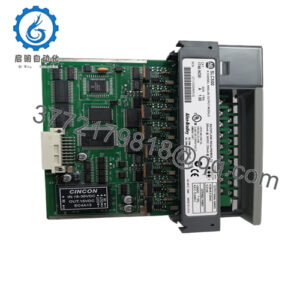
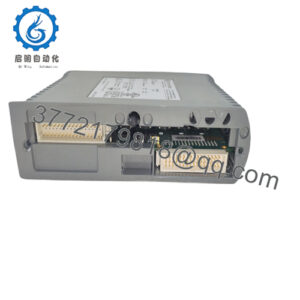
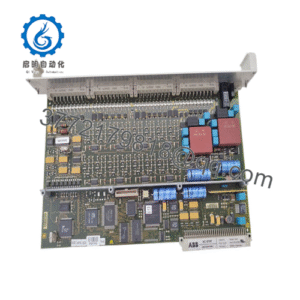
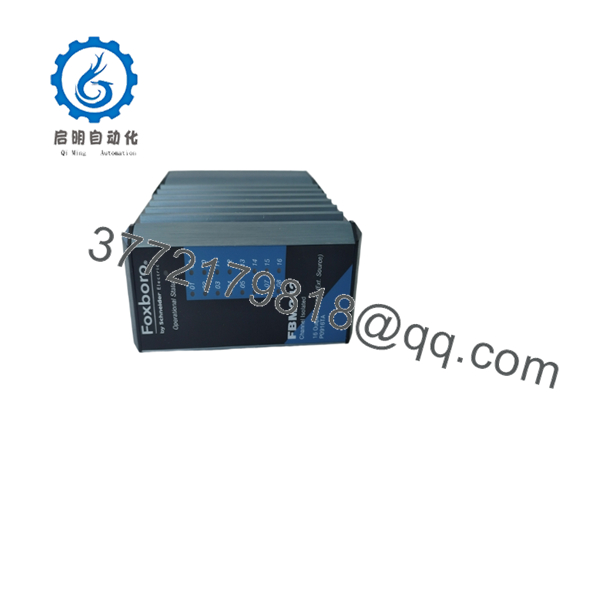
The Foxboro FBM242 is a 16-channel externally sourced discrete output Fieldbus Module for the I/A Series and EcoStruxure Foxboro DCS. It switches field loads such as solenoids, relays, motor starters, and indicators using an external power source.
Each channel is galvanically isolated. Associated termination assemblies support solid-state switching up to 2 A at 60 V DC or relay outputs for 120 V AC/125 V DC and 240 V AC, with optional fusing and power distribution. The module runs Discrete I/O or Ladder Logic programs and includes configurable Fail-Safe, sustained, or momentary output behavior. It mounts on standard 200 Series baseplates and is rated for Class G3 environments from –20 to +70 °C.

- FBM242
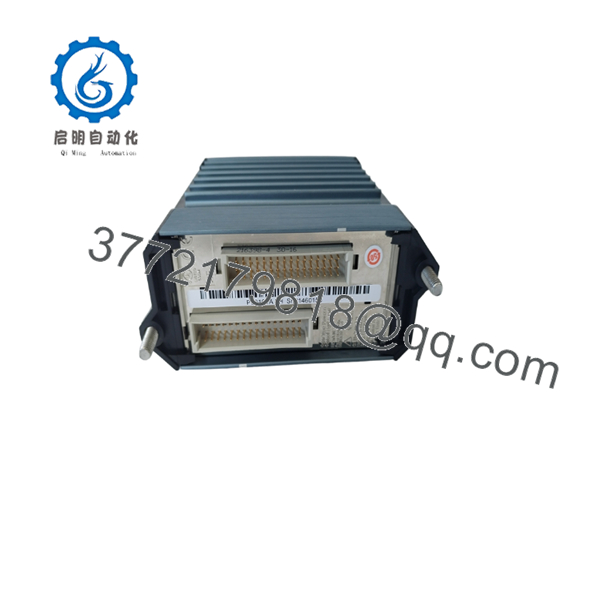
- FBM242
5. Troubleshooting Quick Reference
| Symptom | Possible Cause | Relevance to this Part | Quick Check Method | Recommendation |
|---|---|---|---|---|
| No outputs switch on any channel | Module power loss or Fieldbus failure | ✅ High | Measure 24 V DC at module power terminals; check Fieldbus LEDs and status in system software | Confirm 24 V supply and Fieldbus path before replacing module |
| Single channel will not energize | Blown fuse on TA, open field wiring, or channel fault | ✅ High | Force the channel ON in software; measure voltage at TA terminals and check fuse continuity | Replace fuse or correct wiring first; if forced output never appears at terminals, replace module |
| Output chatters or intermittent | Inductive load without snubber or marginal power supply | ✅ Medium | Check for flyback diode/snubber on inductive loads; measure external supply voltage under load | Add proper suppression; verify external field power capacity |
| All outputs drop on power cycle | Fail-Safe configuration set to de-energize | ❌ Low | Review Fail-Safe and fallback settings in control blocks | This is configuration, not hardware failure; set desired hold or fallback state |
| Module fails to come online | Fieldbus path problem or baseplate slot issue | ❌ Low | Move module to known-good slot; verify Fieldbus continuity and FCM/FCP status | Problem is usually upstream of the FBM242; check Fieldbus first |
| Outputs stuck ON after module removal | Incorrect TA or wiring still powered | ✅ Medium | Verify external field power is isolated and TA type matches application | Always isolate field power before module swap; confirm correct TA |
If diagnostics remain unclear, capture module status LEDs, diagnostic buffer screenshots, TA photos, and external supply measurements, then contact technical support with the exact part number and system software version.
6. Frequently Asked Questions (FAQ)
Q: Is the FBM242 hot-swappable? No. Isolate field power and remove module power before insertion or removal. Hot-swapping risks backplane damage and uncontrolled field device states.
Q: Does the FBM242 need an external power supply for the outputs? Yes. The outputs are externally sourced. You must supply the field voltage (15–60 V DC or higher AC via the appropriate TA). The module itself only needs 24 V DC for its logic and Fieldbus interface.
Q: Can I use the for 120 V AC or 240 V AC loads? Yes, with the correct termination assembly that provides relay outputs. The module itself switches low-voltage DC; the TA handles the higher voltage switching, fusing, and isolation.
Q: What is the difference between and Compact ? The standard mounts on 200 Series baseplates. Compact is the smaller form-factor version for Compact 200 Series systems. Confirm your baseplate type; they are not mechanically interchangeable.
Q: Why is new surplus pricing lower than current Schneider list? These are genuine OEM modules from excess or decommissioned stock. They have not seen continuous field service. Every unit receives inbound inspection, power-up, and functional testing on a Foxboro I/A Series rack before shipment. Test reports are available on request.
Q: Does the module support momentary (pulsed) outputs? Yes. In Ladder Logic or Discrete I/O applications you can configure sustained or momentary outputs. When momentary is selected, the pulse interval is also configurable.
Q: What happens on communication loss or power failure? Behavior is set by the Fail-Safe configuration in the control blocks. Common options are hold last state or go to a predefined fallback (usually de-energized). Document the existing settings before replacement so the new module matches site requirements.