 WhatsApp: +86 16626708626
 Email:
  Phone: +86 16626708626
Description
3. Key Technical Specifications
| Parameter | Value |
|---|---|
| Part Number | RH101FQ |
| Processor | Dual-core ARM System-on-Chip (SOC) with ECC |
| Device Capacity | Up to 256 field devices |
| Soft I/O Points | Up to 8,000 |
| Maximum Blocks | Up to 8,252 total blocks |
| Block Execution Rate | Up to 16,000 blocks/second |
| Control Network | 100 Mbps fiber-optic or copper Ethernet (via adapters) |
| Serial Ports | 4 ports configurable as RS-232 / RS-422 / RS-485 |
| Supported Drivers | Modbus TCP Client, EtherNet/IP Scanner, OPC UA Client, PROFINET, TSAA (Triconex), others |
| Power Supply | 24 V DC +5% / –10% (redundant capable) |
| Power Consumption | 8.5 W maximum (single non-fault-tolerant module) |
| Operating Temperature | –20 to +70 °C (–4 to +158 °F) typical |
| Relative Humidity | 5 to 95% (non-condensing) |
| Dimensions (H × W × D) | 105 mm (116 mm with lugs) × 51.8 mm × 147 mm |
| Weight | 0.8 kg (1.78 lb) approximate |
| Mounting | Dedicated 2-position baseplate (RH101KF) for single or fault-tolerant pair |
| Environment | Class G3 (harsh) capable |
4. Product Introduction
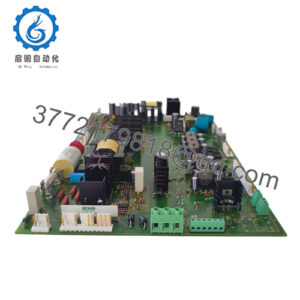
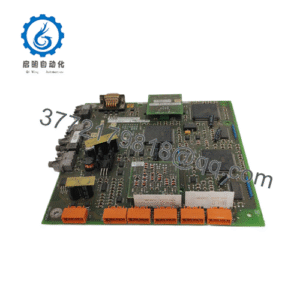
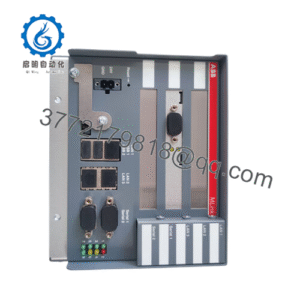
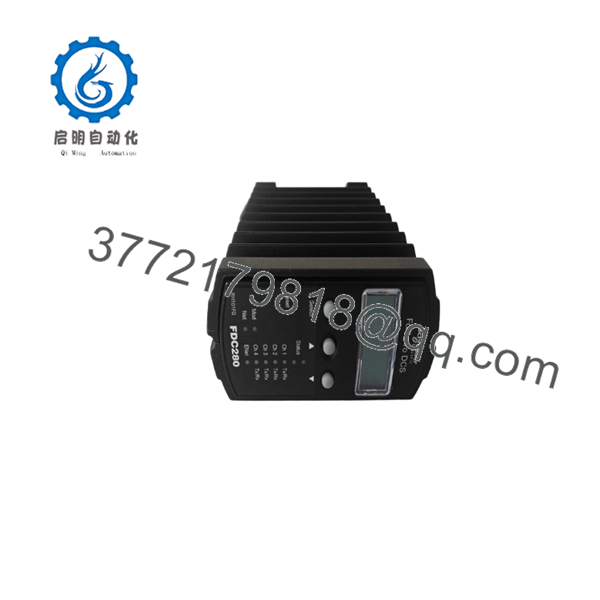
The Foxboro FDC280 RH101FQ is a distributed, optionally fault-tolerant Field Device Controller for the EcoStruxure Foxboro DCS. Its primary role is direct integration of Ethernet and serial field devices while also executing regulatory, logic, timing, and sequential control strategies internally.
A dual-core ARM SOC separates control functions (Core 1) from device-integration functions (Core 2). The controller supports up to 256 field devices, 8,000 soft I/O points, and 8,252 total blocks with a maximum execution rate of 16,000 blocks per second. It connects to the Control Network via fiber or copper 100 Mbps Ethernet adapters on the baseplate and requires no traditional Fieldbus Modules for device integration. Downloadable drivers cover Modbus TCP, EtherNet/IP, OPC UA, PROFINET, and Triconex TSAA protocols.

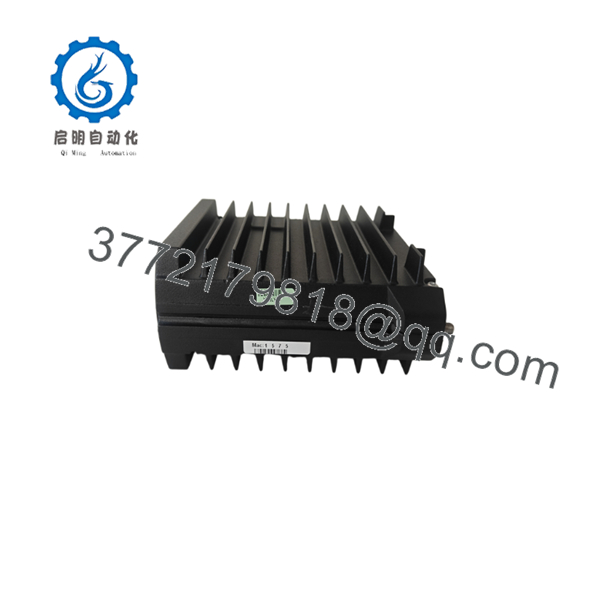
- FDC280 RH101FQ
- FDC280 RH101FQ
5. Troubleshooting Quick Reference
| Symptom | Possible Cause | Relevance to this Part | Quick Check Method | Recommendation |
|---|---|---|---|---|
| Module will not come online | Power loss, baseplate fault, or network adapter issue | ✅ High | Measure 24 V DC at baseplate; check fiber/copper link LEDs and adapter status | Confirm power and network adapters (RH924WA fiber or RH924UQ copper) before replacing module |
| Fault-tolerant pair mismatch | Firmware or configuration difference between modules | ✅ High | Compare image versions and control database on both modules | Load identical firmware and database; verify baseplate interconnect |
| No communication with field devices | Driver not loaded, network isolation, or protocol mismatch | ✅ High | Verify correct driver is downloaded to Core 2; check Ethernet/serial link status | Confirm driver version and network path; review device addressing |
| High CPU load or throttling | Excessive devices, points, or scan rates | ✅ Medium | Review FDC280 sizing tool (B0700GS) loading reports | Reduce scan rates or split devices across additional controllers |
| Serial ports not responding | Incorrect RS-232/422/485 configuration or cabling | ✅ High | Check port configuration in software and verify wiring/termination | Match port settings to device requirements; add proper termination resistors |
| Online driver update fails | Network interruption or insufficient privileges | ❌ Medium | Confirm stable network path and proper user rights | Follow official online driver download procedure; do not interrupt power |
If diagnostics remain unclear, capture module status LEDs, diagnostic screenshots, network adapter status, and baseplate photos, then contact technical support with the exact part number and Control Core Services version.
6. Frequently Asked Questions (FAQ)
Q: What is the main difference between FDC280 and FCP280? The FDC280 is optimized for direct field-device integration (Ethernet and serial) without traditional FBMs and runs control plus device drivers on a dual-core architecture. The FCP280 is the classic Field Control Processor that primarily communicates with Foxboro Fieldbus Modules (FBMs).
Q: Does the require Fieldbus Modules (FBMs)? No. Its primary purpose is direct device integration. Traditional FBMs are not required for Ethernet or serial field devices when the appropriate drivers are loaded.
Q: Is the hot-swappable in a fault-tolerant pair? Yes. In a fault-tolerant configuration one module can be replaced while the partner continues operation. Follow the official removal and insertion procedure.
Q: Which protocols are supported? Downloadable drivers include Modbus TCP Client, EtherNet/IP Scanner, OPC UA Client, PROFINET IO-Controller, and TSAA for Triconex systems. Additional drivers may be available depending on software version.
Q: Why is new surplus pricing lower than current Schneider list? These are genuine OEM modules from excess or decommissioned stock. They have not been installed in continuous service. Every unit undergoes inbound inspection, power-up, and functional testing on a Foxboro system before shipment. Test reports are available on request.
Q: What baseplate and adapters are required? Use the dedicated baseplate RH101KF. Network connection requires either the fiber adapter RH924WA (Rev. E or later) or the copper adapter RH924UQ (Rev. D or later).
Q: What software is required? A host workstation running Foxboro DCS Control Core Services software version 9.3 or later is required for configuration and operation.