WhatsApp: +86 16626708626
 Email:
  Phone: +86 16626708626
Description
Key Technical Specifications
- Manufacturer: Fuji Electric
- Model Number: FRS800B
- Product Type: AC servo control unit / servo amplifier
- Current Class: 19 A, according to distributor identification
- Primary Function: Converts incoming power and motion commands into controlled motor current for a compatible Fuji AC servo motor
- Typical Equipment Use: Semiconductor-process equipment; listed as an AC servo “chuck, dry” amplifier in semiconductor spare-parts inventory
- Motor Compatibility: Must match the existing Fuji servo motor model, feedback device, cable set, brake arrangement, and machine parameter configuration
- Control Compatibility: Must match the machine controller command interface, feedback wiring, drive parameter set, and safety/interlock circuit
- Installation Requirement: Match complete part number, suffix, connector arrangement, mounting dimensions, input supply, motor-output terminals, and control interface
- Lifecycle Status: Legacy/obsolete servo hardware; usually sourced through surplus, used-tested, or repair channels
- Output Voltage and Input Supply: Verify from the actual FRS800B nameplate and machine electrical schematic before installation
- Drive Parameters: Back up or document before replacement; motor tuning, encoder data, current limits, speed limits, homing behavior, and fault configuration are machine-specific
Industrial distributors identify FRS800B as a Fuji Electric servo AC control unit with a 19 A rating. Semiconductor-equipment inventory specifically describes it as a Fuji AC servo amplifier for a “chuck, dry” application. Public listings do not provide an authoritative Fuji datasheet for safe confirmation of input voltage, motor rating, feedback type, connector pinout, or parameter structure.
Product Introduction
The Fuji Electric FRS800B is a legacy AC servo control unit used to operate a compatible servo motor in precision industrial equipment. Semiconductor spare-parts inventory identifies this model as an AC servo amplifier associated with a chuck/dry machine function, where controlled speed, torque, and position response are required.
The FRS800B should be purchased as an exact maintenance replacement, not as a generic servo-drive substitute. A correct installation depends on matching the motor, encoder or resolver feedback, power cable, controller interface, safety circuit, drive parameters, and machine mechanics. The confirmed 19 A class rating is only one part of compatibility.
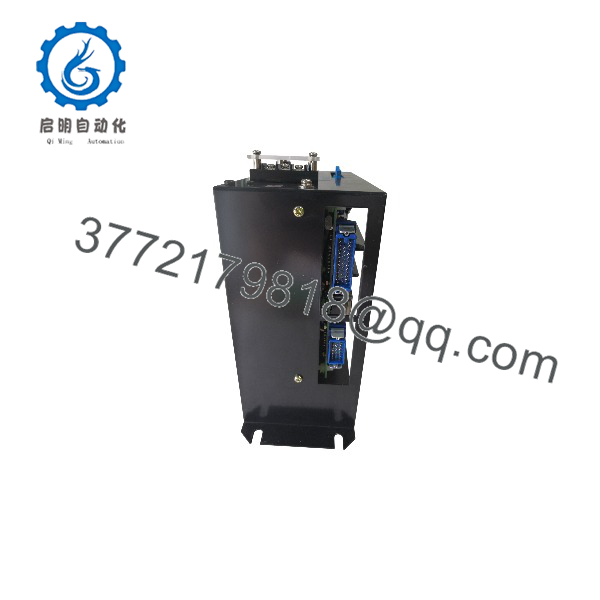
FRS800B
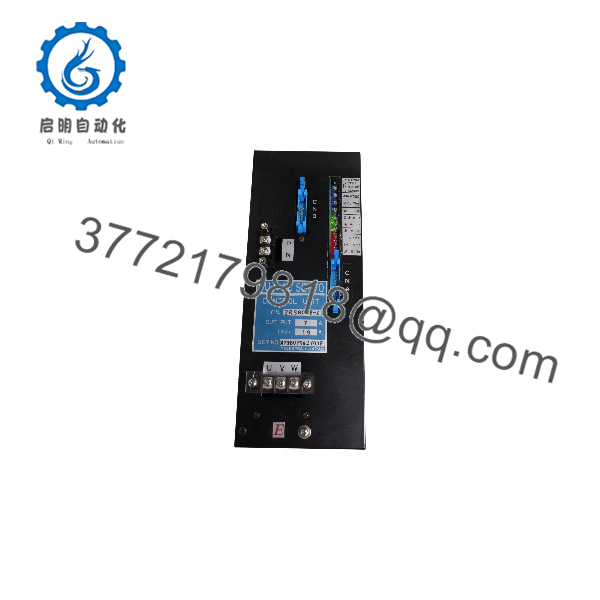
FRS800B
Troubleshooting Quick Reference
| Symptom | Possible Cause | Relevance to This Part | Quick Check Method | Recommendation |
|---|---|---|---|---|
| Drive display or LEDs remain off | Missing input power, blown fuse, open disconnect, failed control power, failed drive | ✅ Medium | Verify the specified input voltage at the drive terminals using the machine schematic; check upstream fuses, contactor, interlocks, and control transformer | Confirm input power and control enable before replacing FRS800B |
| Drive powers up but will not enable | Open safety chain, active interlock, missing enable command, external fault, parameter issue | ❌ Usually low | Read the drive fault code; verify emergency stop, door interlocks, thermal contacts, servo-enable command, and controller ready signal | Correct safety/interlock faults before condemning the drive |
| Overcurrent fault at startup | Motor cable short, ground fault, seized mechanism, incorrect motor parameters, failed output stage | ✅ High | Lock out power; disconnect the motor cable; measure phase-to-phase resistance and phase-to-ground insulation; inspect the mechanism for binding | Test motor and cable first. Replace drive only after an output-stage fault is supported |
| Encoder or feedback fault | Damaged encoder cable, loose connector, incorrect feedback compatibility, failed motor feedback device | ✅ Medium to high | Inspect pins under magnification; verify connector retention and shield continuity; compare feedback cable and motor label to the original configuration | Replace cable or motor-feedback component if defective; do not assume the is at fault |
| Axis hunts, vibrates, or overshoots | Loose mechanics, wrong gain settings, backlash, encoder noise, incorrect tuning | ✅ Medium | Check coupling, bearings, load, and mounting bolts; compare saved parameters; monitor encoder stability and servo current | Restore verified parameters and correct mechanics before drive replacement |
| Servo trips only under production load | Mechanical overload, excessive inertia, process binding, weak drive, deteriorated power supply | ✅ Medium | Trend motor current and DC bus/input voltage during the fault; test unloaded movement where safe; inspect process load | Determine whether the load or the drive causes the trip before replacing hardware |
| Axis runs in the wrong direction after replacement | Motor-phase order, feedback direction, controller command polarity, parameter mismatch | ❌ Low | Jog at minimum speed with the axis safely clear; compare motor wiring and parameter backup to original unit | Correct wiring or direction settings. Never jog toward a hard stop at production speed |
| Replacement drive powers up but controller reports alarm | Incorrect parameter set, identity mismatch, incompatible feedback, missing I/O handshake, wrong revision | ✅ High | Compare every connector, parameter, I/O state, and feedback specification; restore the verified drive configuration if available | Treat the change as a controlled commissioning task, not plug-and-play |
| Burnt odor, darkened terminals, or damaged output devices | Overvoltage, motor short, grounding issue, failed output stage, cabinet contamination | ✅ High | Lock out power; inspect drive, motor cable, grounding, contactor, and terminals; measure motor insulation only with the drive disconnected | Replace damaged hardware and remove the root cause before applying power |
Field warning: The drive is often blamed first, but a shorted motor cable, contaminated encoder connector, sticking chuck mechanism, or safety-chain fault can produce the same “servo fault” result. Pull the diagnostic code and measure the input supply before ordering an .
❗ Do not megger the motor through a connected servo drive. Disconnect motor phases from the first. A 500 V insulation test applied through the drive can destroy the output transistor stage immediately.
If the fault remains unclear, send technical support photos of the entire label, every connector face, motor label, drive fault indication, machine schematic references, saved parameters, input-voltage readings, and motor insulation measurements taken with the drive disconnected.
Frequently Asked Questions (FAQ)
What is Fuji Electric ?
The is a Fuji Electric AC servo control unit, also called a servo amplifier or servo drive. It controls a compatible AC servo motor by regulating motor current in response to command and feedback signals. Distributor data identifies the unit as a 19 A servo AC control unit.
Is a VFD or a servo drive?
Treat it as a servo drive, not a general-purpose variable-frequency drive. A servo system requires a matched motor, feedback circuit, control interface, and parameter set for accurate motion control. A conventional VFD might spin a motor, but it will not necessarily support the feedback, positioning, torque response, safety behavior, or machine interface required by this application.
Is the Fuji still manufactured?
It should be treated as legacy/obsolete equipment. Current availability is typically through industrial-surplus inventory, tested used stock, repair service, or exchange programs. Confirm actual inventory, condition, test status, lead time, and warranty before taking a machine offline.
Can I replace with any 19 A servo amplifier?
No. The 19 A rating does not establish compatibility. Match the original motor part number, motor voltage, feedback type, encoder or resolver interface, connector pinout, controller command interface, brake circuit, supply voltage, mounting, parameter configuration, and safety circuit. An incorrect servo amplifier may damage the motor or fail to enable.
Will a replacement retain machine parameters?
Do not assume it will. The machine may store parameters in the drive, a controller, a service laptop backup, or several locations. Before replacement, save or photograph all accessible parameter pages: motor model, feedback settings, current limits, velocity limits, position-loop gains, homing values, I/O assignment, fault settings, and communications configuration. If the old drive still powers, get the backup before it fails completely.
Can I hot-swap the ?
No. De-energize the machine, lock out/tag out the input power, wait for the DC bus to discharge, verify safe voltage, and mechanically secure any suspended or gravity-loaded axis before removal. Disconnecting motor or encoder wiring under power can damage the drive, create an uncontrolled-motion hazard, or corrupt controller communications.
Why does the replacement drive show a feedback or encoder fault?
Start with the cable and configuration. Inspect connector pins, compare connector keying, verify shielding and ground connections, confirm encoder supply voltage, and compare the replacement drive’s feedback requirements with the motor label. A good drive will fault if it receives the wrong encoder format or an incorrectly wired feedback cable.
Why is surplus stock cheaper than a new servo system?
The is legacy hardware. New-surplus or used-tested pricing reflects stock age, storage history, availability, repairability, test depth, and warranty—not current factory production. Request actual photos, full label verification, connector-condition inspection, controlled power-up test results, fault-free functional testing where compatible equipment exists, and written warranty terms before issuing a purchase order.