 WhatsApp: +86 16626708626
 Email:
  Phone: +86 16626708626
Description
Critical Communication in High-Speed Deterministic Control
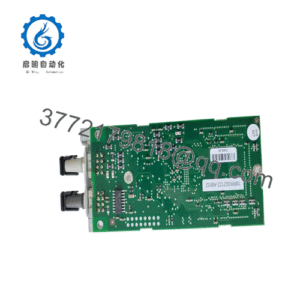
In the sophisticated world of real-time simulation and industrial synchronization, the absolute consistency of data transfer is the benchmark of success. Large-scale operations—such as multi-axis motion control in aerospace testing, high-frequency grid monitoring, and synchronized robotics—cannot tolerate the “best-effort” delivery and unpredictable latency of standard networking protocols. This is the specialized operational domain of the 332-006015-000. This module serves as a high-speed fiber optic interface designed to eliminate the data bottlenecks that occur when multiple processing nodes must share a massive, common dataset in real-time.
The 332-006015-000 is typically deployed as a Reflective Memory node, providing a hardware-based shared memory abstraction. In a typical industrial challenge, a master controller might need to update parameters across twelve different sub-systems simultaneously; using standard Ethernet, this would require complex “handshaking” and sequential packet delivery. With the 332-006015-000, a write operation to local memory is automatically replicated across the entire fiber optic ring at gigabaud speeds. This ensures that every node in the system sees the exact same data at nearly the exact same instant. By utilizing the 332-006015-000, engineers can build “hard real-time” systems where timing jitter is measured in nanoseconds rather than milliseconds, providing the deterministic foundation required for the world’s most sensitive automated environments.
System Integration and Reflective Memory Positioning
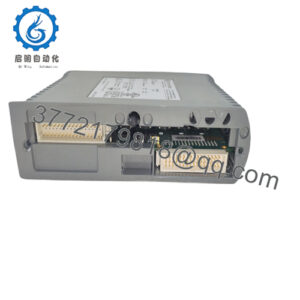
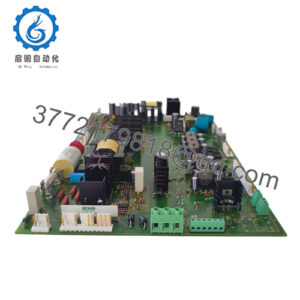
Technically classified as a Reflective Memory Interface, the 332-006015-000 functions as a transparent bridge between a host computer’s internal bus and a dedicated high-speed optical network. It is a core component of the GE (formerly VMI/Abaco) Reflective Memory ecosystem, which is designed to make distributed networking as simple as reading and writing to local RAM. Within the architecture of a VME or PCI-based control system, the 332-006015-000 acts as a “silent” co-processor, handling all network arbitration, error checking, and data broadcasting without requiring any intervention from the host CPU.
For a system integrator, the primary value of the 332-006015-000 is its ability to decouple communication logic from application logic. This allows developers to focus on complex control algorithms without worrying about network collisions or protocol overhead. The 332-006015-000 is designed to be plug-and-play within compatible chassis, supporting a variety of real-time operating systems including VxWorks and specialized Linux kernels. Its role is to provide the “global memory” that allows separate physical computers to behave as if they are sharing a single, unified backplane, regardless of whether they are feet or kilometers apart.
Engineering Excellence and Hardware Performance
The functional performance of the 332-006015-000 is defined by its ultra-low latency and high-bandwidth serial link. Utilizing high-quality optical transceivers, the module supports data transfer rates that allow for the synchronization of megabytes of data in the time it takes a traditional network to even acknowledge a packet. The 332-006015-000 is built with high-density onboard SDRAM that acts as the local “window” into the global memory map. This memory is protected by advanced error-correction logic, ensuring that data integrity is maintained even in the presence of the extreme electromagnetic noise found in heavy industrial plant rooms or near high-power radar installations.
From a ruggedization perspective, the 332-006015-000 is designed for a long service life in demanding conditions. The fiber optic interface provides inherent galvanic isolation, shielding the host system from the ground loops and transient surges that often plague copper-based networks. The hardware layout of the 332-006015-000 is optimized for thermal efficiency, ensuring that the high-speed serial engines do not overheat during periods of intense data throughput. Furthermore, the module includes comprehensive diagnostic LEDs and software-accessible registers that allow maintenance teams to monitor link quality and node health in real-time, providing a level of transparency that is critical for mission-critical infrastructure.

- 332-006015-000
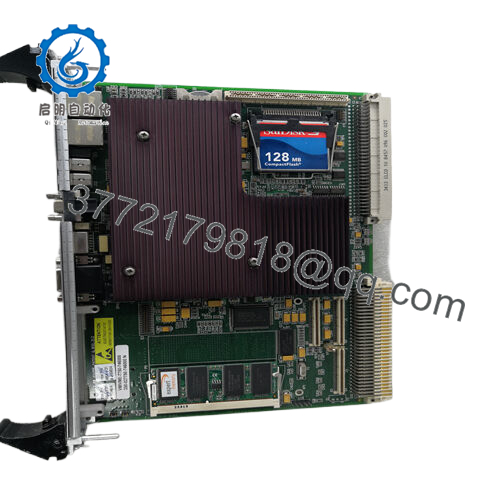
Detailed Technical Specifications
| Parameter | Value |
| Model | 332-006015-000 |
| Brand | GE / VMI (Abaco Systems) |
| Type | Reflective Memory Interface Module |
| Data Link Speed | 2.125 Gbaud (Standard) |
| Memory Capacity | 64MB or 128MB Onboard SDRAM |
| Network Media | Multi-mode or Single-mode Fiber Optic |
| Network Topology | Redundant Fiber Ring |
| Nodes per Ring | Up to 256 Nodes |
| Latency | < 1 Microsecond per Node Transfer |
| Operating Temperature | 0 to +60 Degrees Celsius |
| Cooling | Convection / Forced Air |
| Certifications | CE, UL, RoHS Compliant |
Related Modules and System Components
VMIVME-5565 – The modern high-speed version often utilized for ultra-fast VME/PCIe bridging.
VMIVME-9304 – A legacy-compatible Reflective Memory node often found in older VME architectures.
332-006016-000 – A similar variant with different memory or transceiver specifications for specialized rings.
VMIC-7700 – A Single Board Computer that frequently acts as the host processor for this memory node.
VMIVME-4514 – An analog output card that can be synchronized via the 332-006015-000 network.
VMIVME-1111 – A high-density digital input board used for capturing field data for the reflective ring.
Installation Notes and Maintenance Best Practices
Correct installation of the 332-006015-000 starts with the physical management of the fiber optic link. Technicians must use specialized cleaning kits for the LC or SC connectors to ensure that signal loss is kept to an absolute minimum; even a small amount of oil from a fingerprint can degrade the 2.125 Gbaud signal. When configuring the 332-006015-000 within the chassis, it is vital to set the unique Node ID using the onboard switches or software registers. This prevents data “collisions” and ensures that the ring can correctly identify which node is originating a specific memory write.
Maintenance for the 332-006015-000 focuses on link integrity monitoring. We recommend that operators regularly query the onboard error counters to detect any increase in “soft errors,” which are often the first sign of a failing optical cable or a dusty connector. Because the 332-006015-000 is a high-performance communication device, ensuring consistent airflow within the VME or PCI rack is essential to prevent thermal drift in the timing circuits. By performing these simple hardware checks during scheduled outages, you can ensure that the deterministic backbone of your control system remains completely transparent and reliable.