 WhatsApp: +86 16626708626
 Email:
  Phone: +86 16626708626
Description
Key Technical Specifications
| Parameter | Value |
| Form Factor | 6U VMEbus Standard Form Factor (Size-C: 6U x 340 mm) |
| VME Bus Compliance | Revision C.1, IEC 821-1987, IEEE 1014-1987 (Slave, A24/A16:D16/D08) |
| IP Slot Capacity | 4 single-size IndustryPack (IP) mezzanine sites (ANSI/VITA 4 compliant) |
| I/O Connectivity | Front panel high-density SCSI-2 connectors with lock-down threads |
| Data Clock Rates | 8 MHz and 32 MHz IP module clock speeds supported |
| Interrupt Channels | 2 distinct interrupt channels per IP slot (software-programmable levels) |
| Memory Mapping | Supports 1 MB to 8 MB of address space per IP module slot |
| Power Protection | Individually fused and filtered \pm5 V, +12 V, and -12 V DC power paths |
| Operating Temperature | 0 to +70 °C (Standard AVME-9668) / −40 to +85 °C (Rugged Extended ‘E’ Version) |
Product Introduction & Supply Chain Strategy
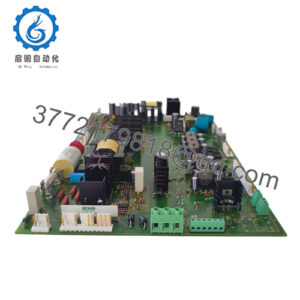
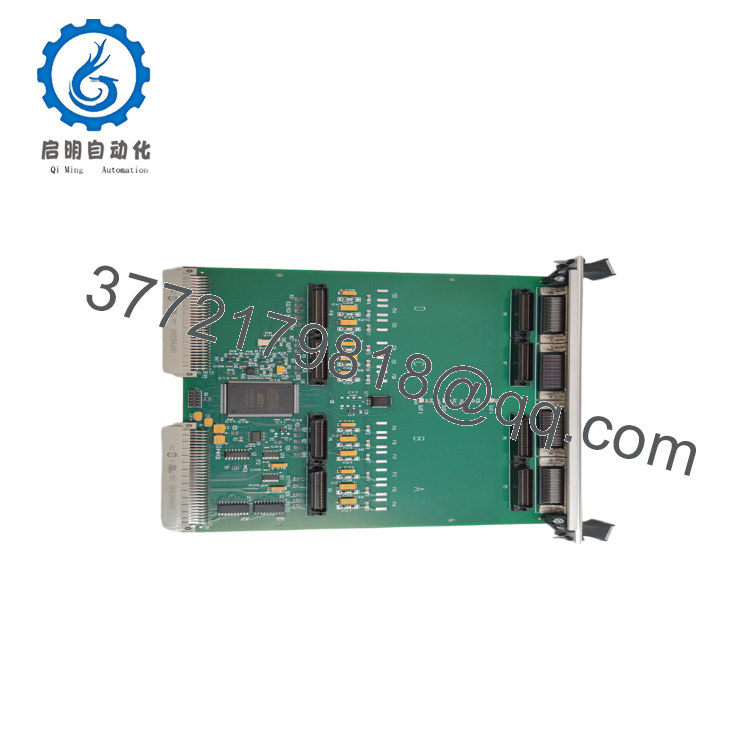
The AVME-9668 is a non-intelligent, passive 6U VMEbus carrier board engineered to bridge up to four standalone IndustryPack (IP) mezzanine modules directly into a standard VME processing matrix. By serving as an address mapper and signal router, this card permits a master VME processor to seamlessly read and write to varied analog I/O, digital I/O, counter/timer, or serial communication IP cards through standard SCSI-2 front faceplate plugs. It is highly valued in legacy automated test equipment (ATE), avionics flight simulations, and deep-subsystem process control loops where multi-channel signal flexibility must occupy minimal backplane space.
Retaining this exact carrier profile as New Surplus is a highly practical way to protect your plant’s Total Cost of Ownership (TCO). Since the IndustryPack carrier standard has transitioned into a mature legacy lifecycle state, direct OEM manufacturing channels are phased out, causing steep lead time variability when field hardware fails. Relying on lower-cost refurbished boards introduces serious risk; microscale hairline trace fractures and fatigued surface-mount fuse arrays are often overlooked during basic multi-meter bench tests, resulting in intermittent runtime drops under heat and vibration. Maintaining a factory-sealed surplus carrier directly in your stockroom keeps your old automation cells online instantly, sidestepping the massive engineering overhead required to redesign a legacy VME system topology.

- AVME-9668
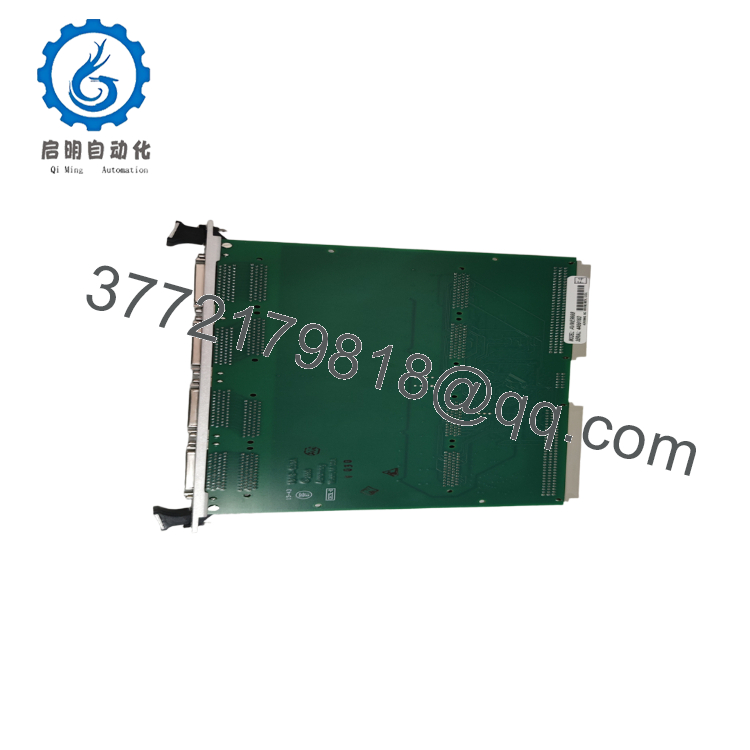
- AVME-9668
Installation & Configuration Guide
Stage 1: Pre-Installation (Prep & Safety)
- De-energize the entire VME chassis rack enclosure. Shut off primary power mains and pull the main breaker to guarantee zero backplane voltage.
- Put on a grounded ESD wrist strap and snap its clamp onto an unpainted, structural metal member of the enclosure frame before handling the carrier module.
- Inspect your target IP mezzanine modules for bent pin connectors, then verify and record all onboard jumpers on the AVME-9668 that establish base addressing (A16 vs. A24 spaces).
- Label and reference-photograph the external SCSI-2 interface cabling paths currently routed to the front plate area.
Stage 2: Removal
- Loosen the screw-down locking retainers on the front panel SCSI-2 connectors and gently ease the data harnesses out.
- Back off the upper and lower faceplate screws that lock the carrier into the chassis slot frames.
- Pivot the card’s injector/ejector handles outward simultaneously to clear the rear plug boundaries from the VME backplane slots.
- Pull the carrier assembly straight forward out along its guide tracks, taking extra care to preserve the exposed rear P1/P2 pin sets. Put the assembly in an antistatic pouch immediately.
Stage 3: Installation (Clone & Seat)
- Seat your chosen IP mezzanine modules into their designated locations (Sites A through D) on the new surplus AVME-9668 card frame. Secure them with their designated mounting screws to prevent mechanical detachment.
- Set the carrier’s VME address configuration DIP switches to perfectly mirror the active settings of the board you just removed.
- Slide the reassembled carrier board evenly down the guide tracks of the 6U rack slot until the front handle frames make light contact with the chassis lip.
- Push the injector/ejector handles inward firmly until they click shut, pressing the carrier fully into the backplane connectors. Tighten the front panel locking screws down.
- Plug the SCSI-2 field cables back into their matching front ports and tighten the locking threads.
Stage 4: Power-On & Testing
- Power up the central VME enclosure control system. Check the power indicator status lights on your master processor board immediately.
- Use your development workspace platform (such as VxWorks or a Windows DLL diagnostic utility) to query the carrier’s baseline status registry.
- Execute an identification check to poll the ID space of each embedded IP module site; this verifies that the passive backplane address decoding paths are fully functional.
- Run basic loopback or terminal trace checks across your external field lines to verify solid signal transmission before declaring the tool loop back online.
Firmware/Software Versions & Upgrade Notes
The AVME-9668 functions as a non-intelligent hardware platform, meaning it does not contain complex field-upgradable operating firmware chips. Address mapping logic and data path translations are handled entirely by fixed onboard logic.
However, system software drivers (such as Acromag IPSW-API-VXW or IPSW-LINUX libraries) must match the clock rate profiles (8 MHz vs. 32 MHz) of the specific IP cards installed. Shifting module configurations without rebuilding your OS kernel architecture can result in instant bus timeouts or failed interrupt handshakes (RORA cycle dropped). Always check that your host VME computer’s application stack is configured for the exact registry addresses designated by the carrier’s jumper configuration points before restoring automatic loop operations.
Frequently Asked Questions (FAQ)
Q: Why choose an original surplus AVME-9668 card instead of a cheaper refurbished alternative?
A: Refurbished complex circuit networks introduce unknown secondary operational risks. While a used board might pass a basic power-up sequence, its underlying multi-layer traces and miniature surface-mount filter fuses have been exposed to continuous thermal expansion cycles inside older control frames. A breakdown on a used carrier can drop multiple IP slots simultaneously, causing widespread data loss that can cost your plant far more than the initial cost savings of a used board.
Q: What exactly does “non-intelligent slave board” mean in relation to this device?
A: This means the AVME-9668 does not have a central CPU or an onboard microcontroller to run code independently. It acts purely as a passive electronic bridge. It maps the memory spaces (I/O, ID, and memory) of up to four IndustryPack modules directly onto the main VMEbus, allowing your primary VME single-board computer (SBC) to interact with them directly.
Q: Are standard commercial AVME-9668 boards drop-in compatible with the extended temperature “E” models?
A: The base layout, footprint, and pin interfaces are identical. However, the AVME-9668E version features military/industrial grade components rated for a temperature window of −40 to +85 °C. If your system runs in a temperature-controlled server rack or laboratory environment, the standard model will perform perfectly. If the hardware is mounted inside an unconditioned field junction cabinet or maritime control compartment, the extended “E” line is required.
Q: Can I use 32-bit IndustryPack modules on this specific carrier card interface?
A: No. The AVME-9668 is fully compliant with the standard ANSI/VITA 4-1995 protocol, which natively restricts support to 8-bit and 16-bit IP modules. High-density 32-bit IP modules are not supported by this architecture.
Q: What type of logistical warranty coverage protects this legacy carrier board?
A: We provide a comprehensive 12-month replacement warranty from your logistics delivery date on this item. This coverage guarantees that your surplus unit will meet or exceed standard OEM functional specifications, giving procurement teams complete peace of mind when backing up older industrial facilities.