 WhatsApp: +86 16626708626
 Email:
  Phone: +86 16626708626
Description
3. Key Technical Specifications
| Parameter | Value |
| Manufacturer | General Electric (GE) |
| Board Acronym | TBQD |
| Revision Level | G1AFF |
| Connection Type | Dual-row screw compression terminals |
| Compatibility | Mark V TMR (Triple Modular Redundant) Systems |
| I/O Support | Contact Inputs / Solenoid Outputs |
| Mounting | DIN-rail or Standoff mounting in or cores |
| Wiring Gauge | Supports up to 12 AWG field wiring |
| Environmental Rating | Industrial Grade (Coated for moisture resistance) |
| Isolation | Channel-to-channel barrier protection |
4. Product Introduction & Supply Chain Strategy
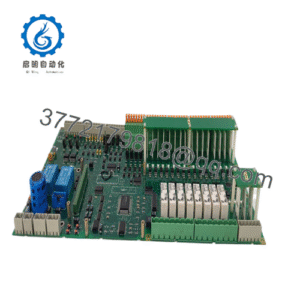
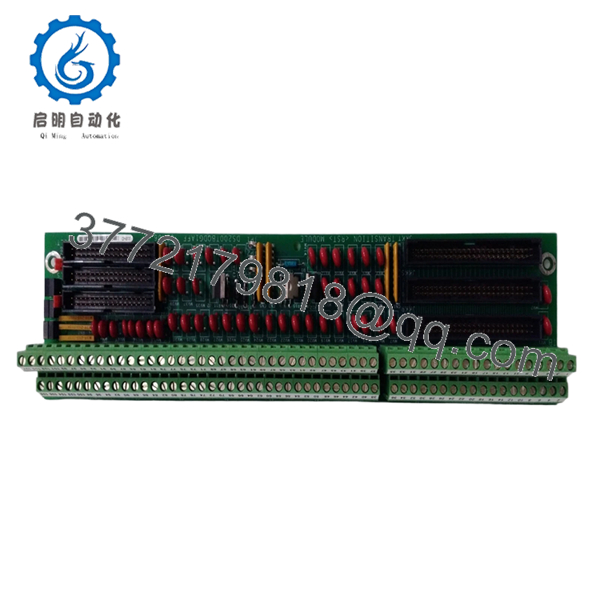
The GE DS200TBQDG1AFF is a specialized Termination Barrier Terminal Board designed for the Mark V Speedtronic control system. It acts as the physical interface between field devices (like switches and solenoids) and the internal control logic of the , , and cores. Because this board handles direct field wiring, it is often subject to mechanical stress, terminal strip wear, and environmental corrosion that can lead to high-impedance connections or intermittent signals.
From a procurement perspective, the TBQD board is a high-reliability component that should only be sourced as New Surplus. Refurbished terminal boards frequently suffer from “invisible” defects, such as hairline cracks in the PCB traces caused by over-tightened screws or weakened spring tension in the terminal blocks. By securing a New Surplus DS200TBQDG1AFF, you ensure a “clean slate” for your field wiring, significantly reducing the Total Cost of Ownership (TCO) by eliminating the need for repetitive signal troubleshooting and unplanned maintenance outages.
5. Installation & Configuration Guide
- Stage 1: Pre-Installation (Prep & Safety): Perform a complete system shutdown and follow LOTO protocols. Label every wire corresponding to its terminal number on the existing board. Use a grounded ESD strap, as the board contains traces that link directly to sensitive digital cores.
- Stage 2: Removal: Carefully unscrew each field wire. Avoid using excessive force that could damage the wire lugs. Remove the mounting hardware and pull the board away from its standoffs, ensuring no contact with the cabinet frame.
- Stage 3: Installation (Clone & Seat): Inspect the new DS200TBQDG1AFF for any transit damage. Mount the board securely. Reconnect all field wires to their designated terminals, ensuring each screw is tightened to the OEM-specified torque to prevent vibration-induced loosening.
- Stage 4: Power-On & Testing: Before powering up, perform a continuity check between the terminals and the core connectors. Once energized, verify the status of the field inputs at the HMI. Ensure that no “Ground Fault” alarms are triggered by the new termination points.

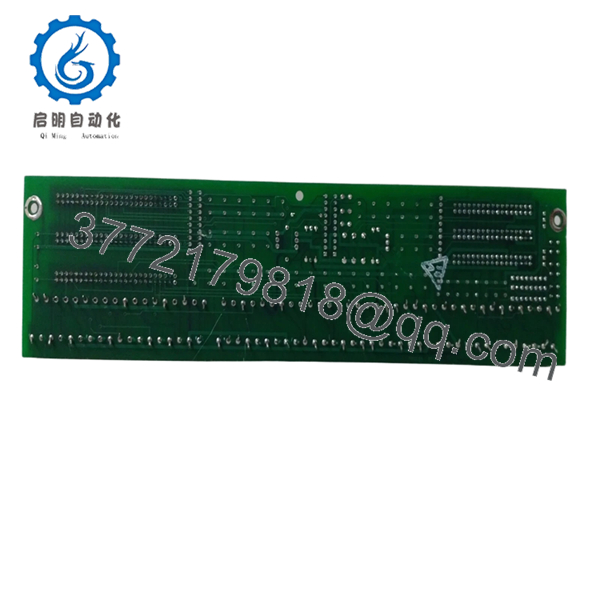
- DS200TBQDG1AFF
- DS200TBQDG1AFF
6. Firmware/Software Versions & Upgrade Notes
- Passive Component Logic: The TBQD is a passive termination board; it does not contain onboard firmware. However, its revision level (G1AFF) must match the physical footprint and cable pinouts of your existing configuration.
- Cable Compatibility: Ensure that the ribbon cables connecting the TBQD to the internal processor boards are in good condition. A new board cannot fix signal loss caused by a degraded or brittle ribbon cable.
- Hardware Matching: While the board is passive, it is often paired with specific PROMs on the digital boards. Always verify your I/O Configuration (IOCFG) file after a hardware swap to ensure the terminal mapping remains correct.
7. Frequently Asked Questions (FAQ)
Are the terminal blocks on this board replaceable?
The terminal blocks are soldered directly to the PCB for maximum signal integrity. If a terminal is stripped or damaged, the standard industry practice is to replace the entire board to ensure OEM-level reliability and safety.
Why shouldn’t I just buy a used TBQD board?
Used terminal boards often have “metal fatigue” in the screw connectors or corrosion hidden under the plastic barriers. These defects lead to intermittent “flickering” signals that are notoriously difficult to diagnose and can cause the turbine to trip unexpectedly.
Does this version support Triple Modular Redundant (TMR) systems?
Yes, the DS200TBQDG1AFF is specifically designed to facilitate the distribution of signals across the redundant , , and processors in the Mark V architecture.
Is there a difference between the “G1A” and “G1AFF” revisions?
The “FF” suffix usually denotes a specific factory-level revision or a minor update in the board’s insulation coating or terminal manufacturer. The G1AFF is generally backward compatible with G1A applications, but always check your specific wiring diagram.
How should I store this part as a long-term spare?
Keep the board in its original anti-static moisture-barrier bag. Store it in a cool, dry place. Because there are no electrolytic capacitors on this board, it has an excellent shelf life of 20+ years if kept away from corrosive atmospheres.