 WhatsApp: +86 16626708626
 Email:
  Phone: +86 16626708626
Description
3. Key Technical Specifications
| Parameter | Value |
| Manufacturer | GE Energy / General Electric |
| System Slot | Typically located in the Core (Protective) |
| Speed Sensing | Supports 3 Magnetic Pickup (MPU) inputs |
| Relay Logic | High-speed trip solenoid driver circuits |
| Input Channels | Flame detection, Vibration, and Over-speed inputs |
| Connectors | 1PL through 4PL Ribbon Connectors |
| Voltage Monitoring | PT and CT scaling for bus voltage/current sensing |
| Hardware Revision | G1ACE (Group 1, Revision ACE) |
4. Product Introduction & Supply Chain Strategy
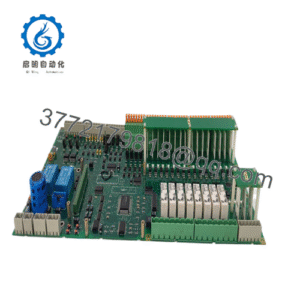
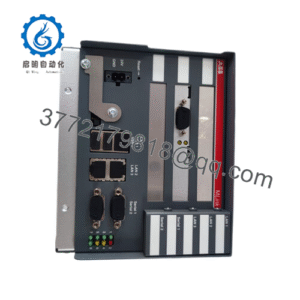
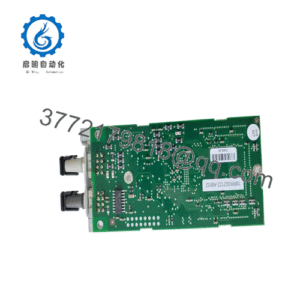
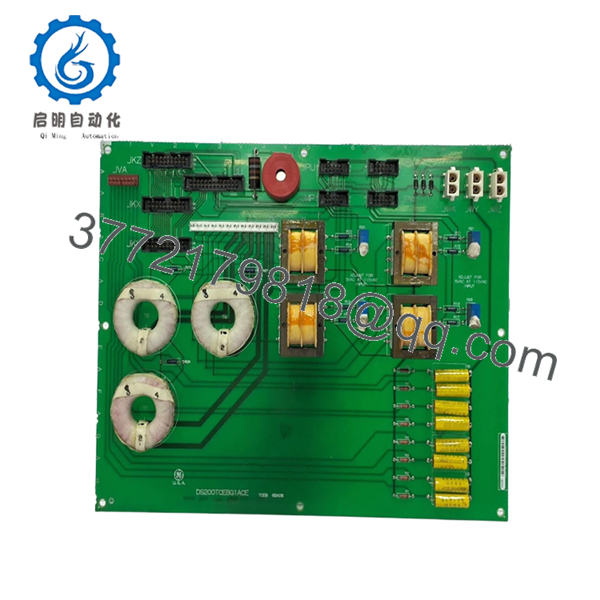
The GE DS200TCEBG1ACE is the critical safety interface of the Mark V Speedtronic system. Residing primarily in the core, it processes high-speed signals for over-speed protection, flame detection, and generator synchronization. It is the board responsible for firing the trip solenoids during an emergency, making it the most vital hardware component for asset protection.
Strategically, the TCEB board should never be sourced as a refurbished unit. Because this board manages emergency shutdowns, a failure in a refurbished capacitor or an aged relay can lead to a “fail-to-trip” scenario—a catastrophic event for turbine safety. By stocking a New Surplus DS200TCEBG1ACE, procurement managers ensure the highest Total Cost of Ownership (TCO) efficiency, balancing the cost of a new spare against the multi-million dollar liability of a turbine over-speed incident.
5. Installation & Configuration Guide
Stage 1: Pre-Installation (Prep & Safety)
Verify the turbine is at zero speed and the control system is powered down. Use an ESD wrist strap to prevent static discharge. Document all jumper settings (J1-J20) on the original board; these often determine the scaling for speed sensors and potential transformers (PTs).
Stage 2: Removal
Carefully disconnect the ribbon cables from headers 1PL, 2PL, 3PL, and 4PL. If there are hard-wired terminal connections for speed pickups or trip solenoids, label every wire before removal. Unscrew the mounting hardware and carefully slide the board out of its tracks.
Stage 3: Installation (Clone & Seat)
Set the jumpers on the new DS200TCEBG1ACE to match the original board exactly. Failure to match jumpers can cause incorrect speed readings or prevent the turbine from latching. Secure the board in the rack and reconnect all ribbon cables and wiring harnesses.
Stage 4: Power-On & Testing
Power up the core. Verify that the “Protective” core communicates with the , , and cores. Check the HMI for any “Emergency Trip Board Fault” or “Speed Pickup Loss” alarms. Before firing fuel, perform a “Static Trip Test” to ensure the TCEB can successfully actuate the trip solenoids.

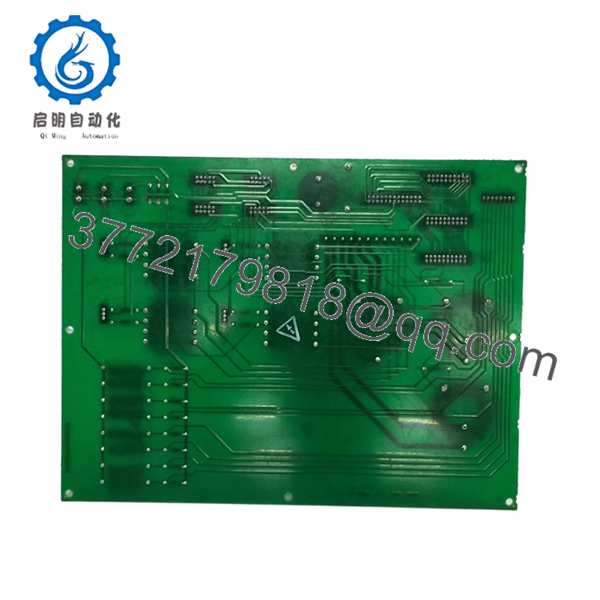
- DS200TCEBG1ACE
- DS200TCEBG1ACE
6. Firmware/Software Versions & Upgrade Notes
The DS200TCEBG1ACE “ACE” revision is a specific hardware build that includes various noise-filtering updates. While physically similar to older G1A or G1B boards, the “ACE” revision is often required for systems running later versions of Mark V software to ensure proper signal scaling. Warning: Always verify your “IO.ASG” or configuration files if you are moving to a later revision, as signal offsets for flame intensity or speed may require recalibration.
7. Frequently Asked Questions (FAQ)
Why is the TCEB considered the most critical board in the Mark V?
The TCEB acts as the final “gatekeeper” for turbine safety. It operates independently of the main control processors to ensure that if the turbine exceeds safe limits, the fuel is cut immediately, regardless of what the main logic is doing.
Can I use a DS200TCEBG1ACE in place of a DS200TCEBG1A?
Yes, the “ACE” suffix represents the latest engineering revision. It is generally backward compatible, provided you mirror the jumper settings and verify the terminal wiring for your specific turbine type (Gas vs. Steam).
Is this board tested before shipping?
Absolutely. Each New Surplus unit undergoes a power-on handshake test and a visual inspection of all solder joints and relay contacts to ensure it meets OEM performance standards upon arrival.
Does this board manage the flame detectors?
Yes, the TCEB scales the pulses from the flame sensors. If you receive a “Loss of Flame” trip shortly after installing a new board, double-check your jumper settings, as they dictate the sensitivity levels for the flame inputs.
What is the shelf life of this New Surplus board?
When stored in its original anti-static packaging in a climate-controlled environment, these boards have an indefinite shelf life. We recommend periodic inspection of the packaging to ensure the ESD seal remains intact.