 WhatsApp: +86 16626708626
 Email:
  Phone: +86 16626708626
Description
3. Key Technical Specifications
| Parameter | Specification |
| Input Sources | 125 V DC (Battery) and 115/230 V AC (UPS) |
| Output Rails | Distributes to , , , and cores |
| Monitoring | Voltage and Ground Fault detection circuitry |
| Protection | Onboard fuses for every distribution branch |
| Connectors | Plug-in headers and high-current terminal strips |
| Form Factor | Full-height Mark V cabinet mount |
| Isolation | Independent branch circuit isolation |
| Revision Level | G2BEC (Enhanced hardware revision) |
4. Product Introduction & Supply Chain Strategy
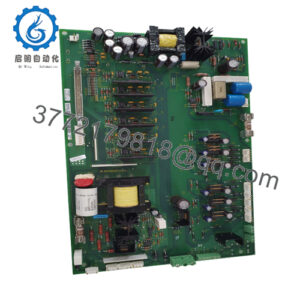
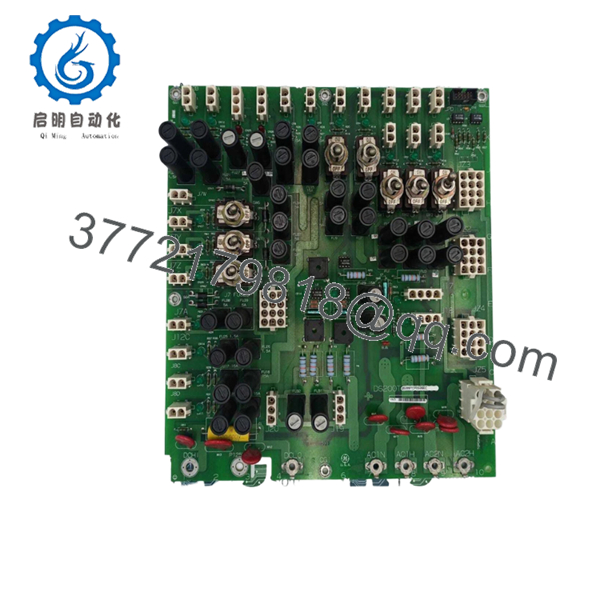
The GE DS200TCPDG2BEC is a foundational Power Distribution Board (TCPD) for the Speedtronic Mark V turbine control system. It serves as the primary gateway for both AC and DC power entering the control cabinet, branching it out to the internal , , and cores. Beyond mere distribution, the TCPD provides critical diagnostic feedback to the system, monitoring for ground faults and voltage drops that could jeopardize the TMR (Triple Modular Redundant) architecture.
From a strategic management perspective, the TCPD is a “Single Point of Failure” component for the cabinet’s power bus. While the Mark V is redundant, a catastrophic failure or ground fault on the TCPD can take down multiple cores simultaneously. Procuring this as New Surplus is the only way to ensure the internal traces and high-voltage capacitors have not been degraded by decades of “on-time” and heat soak. Investing in a New Surplus G2BEC revision provides the highest level of dielectric protection, securing the plant against the high-current surges that typically destroy refurbished power boards.
5. Installation & Configuration Guide
Stage 1: Pre-Installation (Prep & Safety)
Power down the control cabinet and verify that both the 125 V DC and the AC supply breakers are locked out. Use a multimeter to confirm zero potential on the bus bars. Attach an ESD wrist strap. Document the color-coding and placement of every power lead connected to the terminal strips, as wiring errors here can result in immediate hardware damage across all cores.
Stage 2: Removal
Carefully label and disconnect all branch circuit wiring. Remove the ribbon cables connecting the TCPD to the core status boards. Unscrew the mounting hardware and lift the board from the cabinet frame. Inspect the backplane area for any signs of heat discoloration or carbon tracking.
Stage 3: Installation (Clone & Seat)
Inspect the fuse ratings on the new DS200TCPDG2BEC to ensure they match your site’s specific amperage requirements. Mount the board securely. Reconnect the high-current power leads first, ensuring all terminal screws are torqued to spec to prevent high-resistance “hot spots.”
Stage 4: Power-On & Testing
Energize the DC source first and verify the “DC OK” LEDs on the board. Then, energize the AC source. Use the Mark V operator interface (HMI) to check for any power distribution or ground fault alarms. Ensure all three cores (, , and ) are receiving balanced power before attempting a turbine start.

- DS200TCPDG2BEC
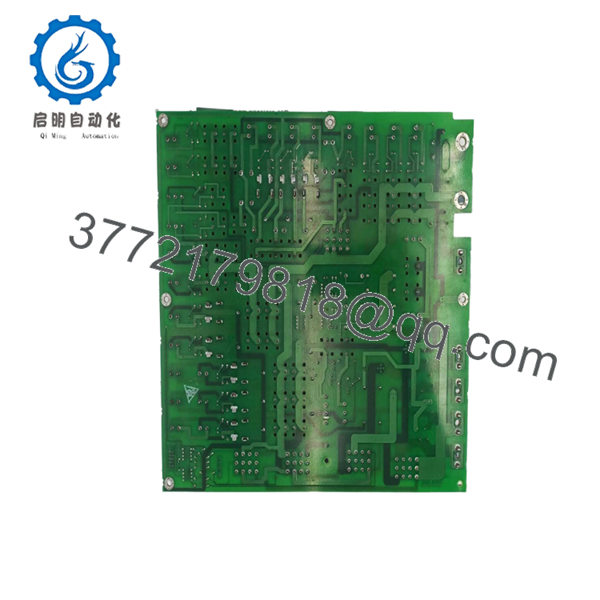
- DS200TCPDG2BEC
6. Firmware/Software Versions & Upgrade Notes
The TCPD is a hardware-heavy distribution card, but the “G2BEC” revision is critical for compatibility.
- Revision Significance: The “G2” designation indicates a second-generation layout with improved surge suppression. The “BEC” suffix denotes specific component updates for later Mark V builds.
- Backward Compatibility: While generally backward compatible with earlier TCPD versions, verify that the terminal block spacing and connector pinouts match your existing cabinet layout.
- Warning: Never bypass a fuse on this board. A blown fuse on the TCPD is an indicator of a downstream short in a processor or I/O card; replacing it with a higher rating will likely cause a fire in the wiring harness.
7. Frequently Asked Questions (FAQ)
Does this board ship with the fuses pre-installed?
Yes, all New Surplus DS200TCPDG2BEC boards include a full set of original GE-spec fuses. We recommend verifying the amperage of each fuse against your master wiring diagram prior to installation.
Can I hot-swap the TCPD if only one core is failing?
No. Replacing the TCPD requires a complete cabinet power-down. Because it handles the primary AC/DC distribution for the entire system, pulling it while energized will result in a total system crash and potential electrical arcing.
Why is New Surplus better than a refurbished TCPD?
The TCPD handles high-current distribution. Over time, the solder joints and PCB traces on these boards experience thermal expansion and contraction. A refurbished board is a used board with thousands of thermal cycles. Our New Surplus units have zero cycles, offering the same mechanical and electrical life as the day they were manufactured.
How do I verify the ground fault detection is working on this new board?
Once installed and powered, the board’s diagnostic circuits will automatically poll the ground state. You can verify this through the Mark V “I/O Configurator” or by checking the diagnostic LEDs on the board itself.
What is the shelf-life of a New Surplus TCPD?
When stored in a climate-controlled, ESD-protected environment, these boards have a virtually indefinite shelf-life. Since they do not rely on high-capacity liquid electrolytes as much as primary power supplies, they are ideal for long-term strategic hoarding.