 WhatsApp: +86 16626708626
 Email:
  Phone: +86 16626708626
Description
3. Key Technical Specifications
| Parameter | Value |
| Manufacturer | General Electric (GE) |
| Board Acronym | TCTG |
| Revision Level | G1AFF |
| Application | Mark V TMR / Simplex Control Systems |
| Input Signals | Contact Inputs / Logic Level Signals |
| Output Signals | Control Signals / Trip Circuit Interfacing |
| Connectors | Dedicated Ribbon Cable Headers (J-Series) |
| Terminal Type | Compression Screw Terminal Blocks |
| Protection | EMI/RFI Filtering on signal lines |
| Mounting | Cabinet Rack/Standoff Mount |
4. Product Introduction & Supply Chain Strategy
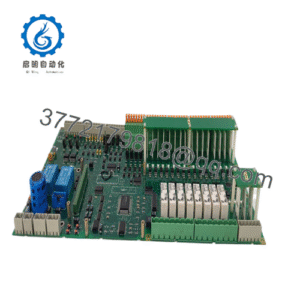
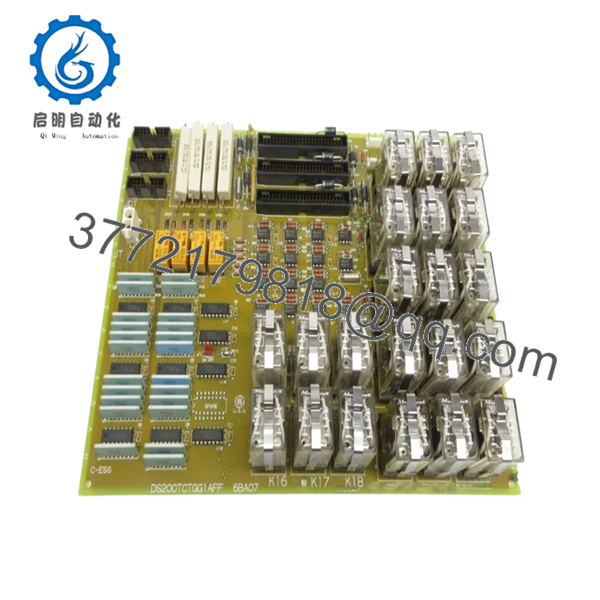
The GE DS200TCTGG1AFF is a fundamental component of the Mark V Speedtronic turbine control system, serving as the Turbine Control Terminal Board (TCTG). This module provides the physical connection points for digital inputs and outputs that are critical to the turbine’s governing and protection logic. Specifically, it handles the routing of signals from the field to the , , and control cores, making it a “choke point” for system reliability.
From a supply chain standpoint, the TCTG board should be managed as a high-priority insurance spare. Because it interfaces directly with field wiring, it is susceptible to terminal fatigue and accidental electrical surges. Purchasing this board as New Surplus is a strategic safeguard against the risks inherent in refurbished modules, such as degraded opto-isolators or micro-fractures in the PCB traces. By securing New Surplus stock, you minimize the Total Cost of Ownership (TCO) by avoiding the labor-intensive troubleshooting sessions required when used boards introduce intermittent signal noise into the control loop.

- DS200TCTGG1AFF
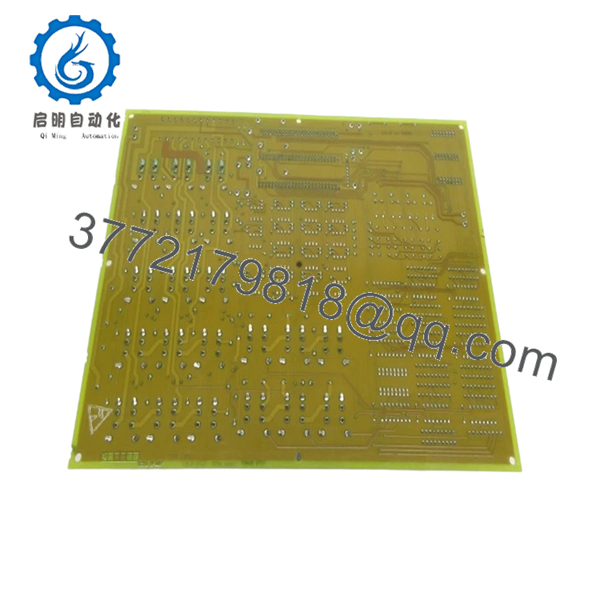
- DS200TCTGG1AFF
5. Installation & Configuration Guide
- Stage 1: Pre-Installation (Prep & Safety): Perform a full system shutdown and engage LOTO protocols. Wear an ESD wrist strap to prevent static discharge to the onboard filtering components. Label every field wire clearly and take high-resolution photos of the original wiring and any jumper positions.
- Stage 2: Removal: Carefully disconnect the ribbon cables from the J-headers. Unscrew the field wiring from the terminal blocks. Remove the mounting screws and lift the board out, ensuring no debris falls into the backplane area.
- Stage 3: Installation (Clone & Seat): Verify that any configurable jumpers on the new DS200TCTGG1AFF match the original unit. Mount the board onto the standoffs and tighten securely. Reconnect the ribbon cables first, followed by the field wiring, adhering to original torque specifications.
- Stage 4: Power-On & Testing: Perform a “Loop Check” for all digital inputs and outputs connected to this board. Observe the HMI for any diagnostic alarms related to terminal board communication. Force a test signal to verify that the core logic is receiving the correct state change from the field terminal.
6. Firmware/Software Versions & Upgrade Notes
- Passive/Active Hybrid: The TCTG is primarily a termination board, but its interaction with the I/O processor means revision levels are critical. The “G1AFF” revision must be checked against your system’s
CONFIG.DATor I/O configuration files. - Compatibility: While the hardware footprint may look similar to other revisions, the “AFF” suffix indicates specific component tolerances or noise-filtering characteristics required for later Mark V iterations.
- Software Mapping: No firmware resides on the TCTG itself, but a hardware swap may necessitate an I/O re-initialization in the control software to ensure signal paths are mapped correctly to the redundant cores.
7. Frequently Asked Questions (FAQ)
What is the difference between a TCTG board and other terminal boards?
The TCTG is specifically designed for turbine control signals and digital I/O. Unlike generic termination boards, it includes specialized circuitry to interface with the core logic of the Mark V, ensuring high-speed signal processing for trip circuits.
Why is New Surplus better than a professional repair of my old board?
Repairing a TCTG board often only addresses the visible failure. However, the entire board has been subjected to years of heat and vibration. New Surplus inventory provides a “zero-hour” component with fresh capacitors and un-oxidized terminal contacts, ensuring another 15–20 years of service.
Can I use this board in a Simplex (non-redundant) system?
Yes, the DS200TCTGG1AFF is compatible with both Simplex and Triple Modular Redundant (TMR) Mark V configurations, though its wiring density is optimized for the redundant architecture.
Does this board include the ribbon cables?
No, the board includes the header pins (J-connectors) for the cables, but ribbon cables are typically sold separately or reused from the existing installation. We recommend inspecting your cables for brittleness before reuse.
What is the “AFF” revision significance?
The “AFF” indicates a factory-specific revision level. In GE’s nomenclature, this typically reflects a minor hardware optimization that maintains backward compatibility while improving component reliability over the base “G1” version.