 WhatsApp: +86 16626708626
 Email:
  Phone: +86 16626708626
Description
Key Technical Specifications
- Manufacturer: General Electric
- Series: Mark IV Speedtronic DS3800
- Function: Regulator board for turbine‑generator control
- Application: Stabilizes voltage and load response under changing load and input conditions
- Control behavior: Provides fixed output regardless of load or input voltage swing; suppresses spikes and sags
- User adjustments: 7 jumper switches (JP1–JP7) and 1 potentiometer for calibration and loop behavior
- Test points: 3 factory test points (not for routine field use)
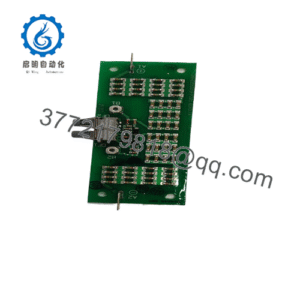
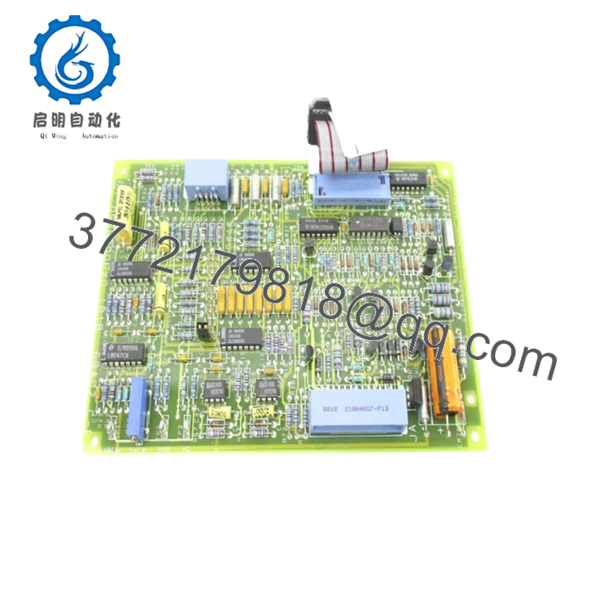
- Connectors: 3 right‑angle board‑edge connectors, one with a ribbon cable; designed for Mark IV backplane and I/O stacks
- Mechanical: Small rectangular PCB, mounting holes along the edge, GE‑logo and part‑code silk‑screen
- Environment: Industrial control cabinet, no direct water or high‑vibration zones
- Obsolescence status: Legacy Mark IV board, no current‑production GE stock
Product Introduction
GE DS3800DFXD1B1B is a regulator board used in GE Mark IV Speedtronic turbine‑control systems to maintain stable generator output under variable load and input voltage. It sits in the DS3800 regulator stack and provides the core analog‑style feedback loop for voltage and speed control, smoothing spikes and dips that would otherwise cause power swings.
Engineers typically replace this board when the old DS3800DFXD1B1B shows erratic regulation or fails to hold setpoint, not when the turbine trips for external reasons. The main advantage is that it matches the original regulator layout and connector pattern, so calibration and loop behavior stay close to the original design; the downside is that it is obsolete and must be handled carefully because of the sensitive analog components.
Troubleshooting Quick Reference
| Symptom | Possible Cause | Relevance to this Part | Quick Check Method | Recommendation |
|---|---|---|---|---|
| Output voltage drifts under load | Failed regulator or wrong potentiometer setting | ✅ High | Compare potentiometer setting to the original board; verify that load is within rated limits | Match the original pot position first; if drift persists, assume the board is faulty |
| Large voltage spikes or sags | Defective regulator or bad feedback wiring | ✅ High | Inspect generator feedback wiring and check regulator output with an oscilloscope | If wiring is clean, replace DS3800DFXD1B1B |
| Regulator unstable or oscillatory | Wrong jumper settings or degraded analog components | ✅ High | Inspect all 7 jumper switches and verify against the original board | Restore jumpers exactly; do not experiment with settings online |
| No output from regulator | Dead board or incorrect power input | ✅ High | Check ±15 V or ±24 V supply rails at the regulator stack; verify ribbon‑cable connections | If rails are good, assume the board is failed |
| Turbine trips on load step | Overly aggressive regulator response | ✅ Medium | Review loop parameters and check potentiometer setting against the original | Adjust cautiously only during offline tests |
| Board fails after swap | ESD or mechanical damage to connectors | ✅ High | Inspect right‑angle connectors and ribbon cable for bent pins or crushed wires | Handle with ESD protection and avoid forcing the ribbon into the slot |
If the symptom pattern is unclear, contact technical support with photos of the ribbon‑cable connections, potentiometer, and any event logs from the Mark IV control system.

- DS3800DFXD1B1B
Frequently Asked Questions
Is this DS3800DFXD1B1B interchangeable with other DS3800 regulator codes (e.g., DS3800DFXB1B1C, DS3800DFXD)?
Only if the documentation and wiring exactly match. Different DS3800 regulator codes can have different jumper logic and loop behavior; blindly swapping regulators can cause instability or protection trips. Always match the exact model and trace code.
Can I hot‑swap this board in a live Mark IV rack?
No. Power down the Mark IV regulator section before removing or inserting DS3800DFXD1B1B. The analog regulator stack is sensitive to transient coupling and can be damaged by hot‑plug transients or ESD.
Does this board store any firmware or configuration?
No. DS3800DFXD1B1B is an analog‑style regulator card; loop behavior is set by potentiometer and jumpers, not by onboard firmware. Settings live in the pot position and jumper configuration, so copying these from the old board is critical.
Why is this board so expensive even though it’s obsolete?
Because it is a legacy Mark IV DS3800 component with limited sources; most units come from decommissioned plants or surplus. The price reflects acquisition, testing, and limited‑run re‑calibration rather than current‑production costs.
What condition is this unit in?
Listed as New Surplus / Tested. That means it typically comes from stored or decommissioned gear, not new GE‑production runs, and may not be factory‑sealed. The board has been power‑tested and basic regulation function verified before shipment.
What should I check before installing?
- Match the exact DS3800DFXD1B1B model and jumpers.
- Inspect all right‑angle connectors and ribbon cables for pin damage.
- Copy the potentiometer position and any tag‑settings from the original board.
- Work in an ESD‑safe environment with a grounded wrist strap.
Can this board be repaired if it fails?
Some third‑party vendors attempt repairs, but the analog regulator circuit is difficult to restore without factory‑level calibration. For critical‑path Mark IV units, most engineers treat DS3800DFXD1B1B as a non‑repairable spare and keep a matched unit on site.