 WhatsApp: +86 16626708626
 Email:
  Phone: +86 16626708626
Description
3. Key Technical Specifications
| Parameter | Specification / Value |
| Manufacturer | GE (General Electric) |
| Part Number | DS3800HIOD1G1G |
| System Compatibility | Mark IV Speedtronic Turbine Control Systems |
| Application | Internal Signal Routing and I/O Bus Driving |
| Bus Interface | High-density parallel backplane communication |
| Signal Lines | Fully buffered and isolated digital logic routing |
| On-Board Hardware | Diagnostic test points, resistor networks, decoupling capacitors |
| Hardware Variant | D1G1G (specific multi-layer revision profile) |
| Operating Temperature | 0 to +50°C |
| Storage Temperature | −40 to +70°C |
4. Product Introduction & Supply Chain Strategy
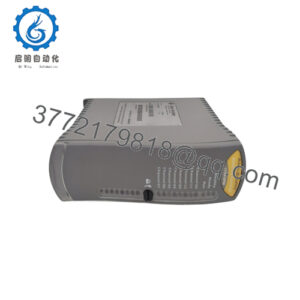
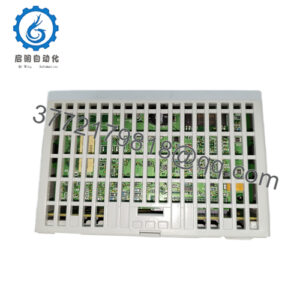
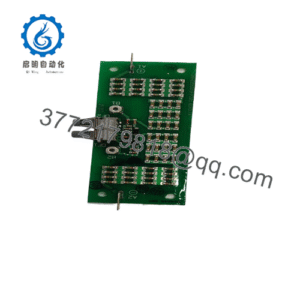
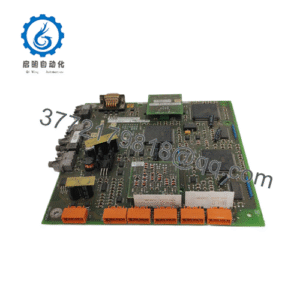
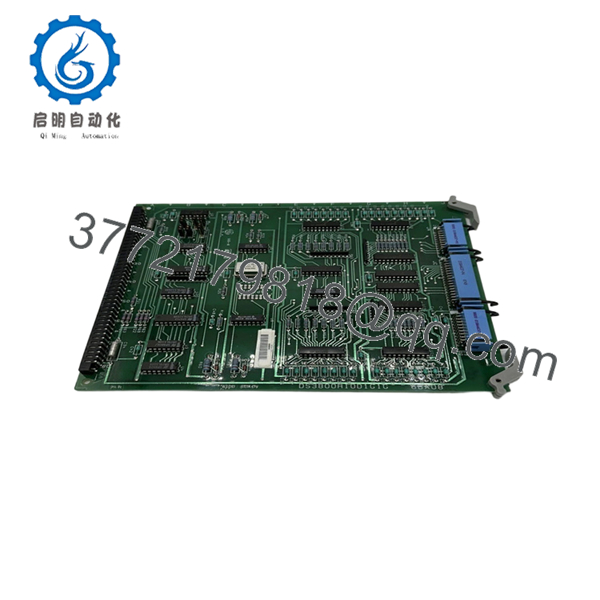
The GE DS3800HIOD1G1G is an Intra-System I/O Driver Board built exclusively for legacy Mark IV Speedtronic turbine control architectures. It serves as an essential communications routing link, driving logic signals between primary control microprocessors and peripheral terminal connection blocks. By buffering and maintaining signal integrity across the internal system bus, this module prevents data corruption and communication timeouts caused by electrical noise or signal degradation in heavy industrial turbine environments.
From a supply chain perspective, this board is a critical target for obsolescence planning. Because the Mark IV system is a mature, legacy platform completely phased out of active factory production, lead times for replacement parts through conventional channels can stall operations indefinitely. Sourcing this module as a verified New Surplus component offers an immediate Total Cost of Ownership (TCO) benefit. It delivers an unused, reliable component that eliminates the high infant-mortality rates associated with aged, refurbished boards, keeping your plant online without the risk of an unforced breakdown.
5. Installation & Configuration Guide
Stage 1: Pre-Installation (Prep & Safety)
- Execute full lock-out/tag-out (LOTO) procedures on all AC distribution panels and auxiliary DC power banks feeding the control bay.
- Confirm that all system power indicator lights on the main rack are entirely dark, and verify zero voltage at the bus lines using a digital multimeter.
- Secure a grounded, corded ESD wrist strap to a bare metal chassis grounding post before touching the replacement card.
- Document the orientation, seating, and connected cable routing of the existing card with a high-resolution camera.
Stage 2: Removal
- Systematically label every ribbon cable and wire harness assembly fixed to the board headers to prevent routing errors during reinstall.
- Gently disconnect the high-density ribbon cables from the board pins, pulling strictly from the connector strain-relief tabs.
- Back out the retaining screws locking the card edges to the rack assembly guide frame.
- Extract the card with a smooth, straight pull along the card tracks to protect the rear connectors, and slide it immediately into an ESD shield bag.
Stage 3: Installation (Clone & Seat)
- Remove the new DS3800HIOD1G1G board from its protective anti-static packaging inside an ESD-safe workspace.
- Inspect the board layout to match the D1G1G revision profile and confirm that all physical configuration jumpers match your original card exactly.
- Slide the board into the designated rack slot tracks, pushing evenly until the rear pins seat completely into the backplane socket.
- Re-engage and tighten the card retaining screws along the faceplate to hold the module firmly in place against structural vibrations.
- Reattach all high-density ribbon connectors and wire bundles to their respective headers, ensuring the locking clips click shut.
Stage 4: Power-On & Testing
- Verify the work area is clear of all tools, stray wire clips, or dynamic debris before closing the card cage.
- Energize the low-voltage logic supply lines while leaving high-voltage field devices isolated.
- Monitor the rack diagnostic assembly; look for stable power rails and confirm that no master bus fault indicators trip on the operator interface terminal.
- Perform an internal bus handshake check through the diagnostic terminal to verify proper data flow before running the turbine system.

- DS3800HIOD1G1G
6. Firmware/Software Versions & Upgrade Notes
The DS3800HIOD1G1G operates via hardwired logic configurations and analog bus-driving components tied directly to Mark IV system software parameters. The D1G1G suffix identifies the specific revision history, multi-layer circuit design, and component layout for this module.
When swapping out a failed board, matching this full alphanumeric code is vital to maintain signal timing parameters across the parallel bus. Deploying a mismatched revision tier can throw off logic synchronization, causing immediate system initialization errors or unmapped bus communication faults during operation. Always pull a comprehensive backup of the turbine operating configuration through the technician terminal prior to replacing any internal system boards.
7. Frequently Asked Questions (FAQ)
What defines the “New Surplus” condition of this GE DS3800HIOD1G1G board?
A New Surplus designation means this module is an completely unused, authentic OEM component. It has never been deployed in an active plant rack, nor has it been subjected to field operation, component modification, or aftermarket refurbishment. It has been kept in a climate-controlled inventory space, preserving its factory insulation, solder joints, and component lifespan.
Why shouldn’t we choose a cheaper, refurbished driver board?
Refurbished driver boards often carry micro-fractures in copper traces or degradation in passive components like decoupling capacitors due to past thermal cycles. While a refurbished board may pass a simple bench continuity test, it can fail when exposed to high-frequency bus speeds and operational heat inside a packed control rack. Investing in New Surplus avoids the risk of unexpected outages that can disrupt production schedules and inflate your plant’s TCO.
Is this specific model still supported with new production from the factory?
No. The GE Mark IV series has been legacy-obsolete for years, and the factory no longer manufactures these parts. Because replacement assets are increasingly rare, keeping 1 or 2 verified units on hand within your plant’s critical buffer stock is an essential step to prevent extended outages when active online modules require replacement.
Are there configuration jumpers that need to be adjusted during setup?
Yes. You must inspect and copy all onboard jumper layouts from your old board onto the new DS3800HIOD1G1G. These jumpers set the signal routing paths and identify the specific slots on the internal bus. Shifting an incorrect jumper link can cross signal lines, causing the master processor to misread system status and trigger immediate fault shutdowns.
What kind of warranty accompanies this component?
We provide a comprehensive commercial warranty with this New Surplus DS3800HIOD1G1G board that matches or exceeds standard OEM coverage periods. This ensures your engineering and procurement groups are fully protected, offering long-term reliability that used or refurbished parts cannot guarantee.