 WhatsApp: +86 16626708626
 Email:
  Phone: +86 16626708626
Description
3. Key Technical Specifications
| Parameter | Specification |
| Logic Type | TTL (Transistor-Transistor Logic) |
| Board Function | Signal Buffering and Bus Line Driving |
| Connector Type | Standard Gold-Plated Backplane Edge Connector |
| Series | HPBC (High-Performance Buffer Component) |
| Compatibility | Speedtronic Mark IV Turbine Control Frames |
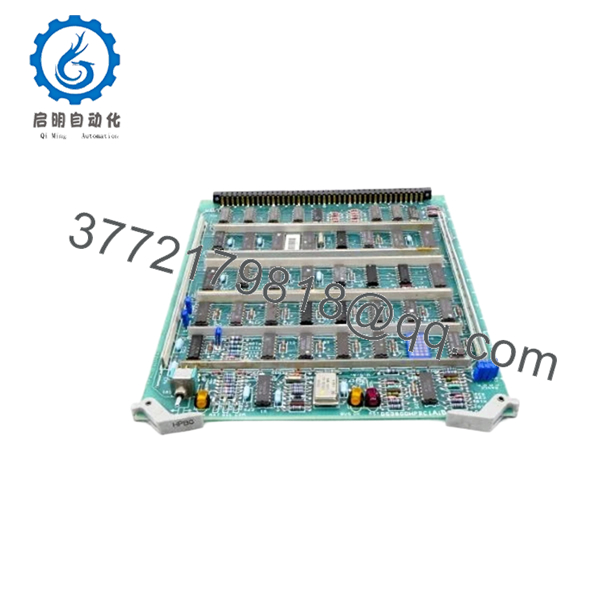
| Onboard Components | Logic ICs, Resistor Networks, Bypass Capacitors |
| Revision Level | 1A1B (Hardware enhancement level) |
| Operating Voltage | +5 V DC (Internal Bus Power) |
4. Product Introduction & Supply Chain Strategy
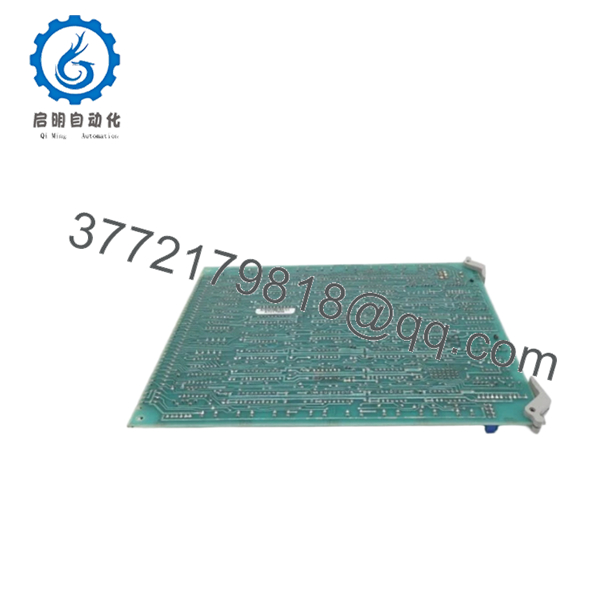
The GE DS3800HPBC1A1B is a High-Performance Parallel Line Buffer (HPBC) designed for the Speedtronic Mark IV control system. Its primary role is to strengthen logic signals as they travel across the system backplane, ensuring that data transmitted between the processor and various I/O modules remains crisp and free from electrical noise. Without adequate buffering, long signal paths can experience “voltage sag,” leading to intermittent communication errors or “voter disagreement” faults in redundant systems.
Strategically, the HPBC board is an essential component of a “Last-time-buy” inventory plan. As the Mark IV platform reaches extreme maturity, these logic-intensive boards are increasingly difficult to source in reliable condition. Opting for New Surplus over refurbished units is a critical ROI decision. Refurbished logic boards often suffer from “infant mortality” after installation due to the thermal stress placed on aged integrated circuits during the desoldering/resoldering process. Our New Surplus stock provides original factory-spec logic timing, ensuring your control bus remains stable for the next decade of plant operation.
5. Installation & Configuration Guide
Stage 1: Pre-Installation (Prep & Safety)
Verify the system is in a controlled shutdown or that the specific rack being serviced is isolated. Follow standard Lock-out/Tag-out (LOTO) procedures on the power distribution unit. Wear a grounded ESD wrist strap at all times. Use a camera to document any specific jumper settings or custom wiring that may be present on the existing board.
Stage 2: Removal
Unlock the card ejector tabs at the top and bottom of the board. Pull the board straight out of the slot using steady, even pressure to avoid damaging the backplane pins. Place the removed board directly into an ESD-safe bag for storage or analysis.
Stage 3: Installation (Clone & Seat)
Confirm that the jumpers on the new DS3800HPBC1A1B are positioned exactly as they were on the original unit. Align the board with the card guides in the rack and slide it in. Once the edge connector touches the backplane, use the ejector tabs to lever the board into a fully seated position.
Stage 4: Power-On & Testing
Restore power to the rack. Monitor the system’s diagnostic HMI for any bus-related alarms or “Communication Timeout” errors. Check that all adjacent boards are communicating correctly, as a poorly seated buffer board can disrupt the entire parallel data bus for that rack.

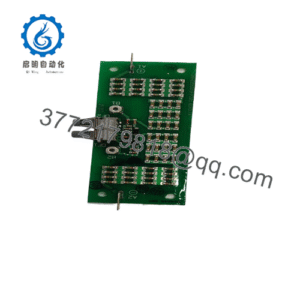
- DS3800HPBC1A1B
- DS3800HPBC1A1B
6. Firmware/Software Versions & Upgrade Notes
As a hardware-level logic buffer, the DS3800HPBC1A1B does not require software downloads; however, hardware revisions are paramount.
- Revision Compatibility: The “1A1B” revision includes improved impedance matching for the data lines. It is generally backward compatible with earlier HPBC versions.
- Logic Integrity: This board uses high-speed TTL logic. Mixing it with significantly older revisions in a high-speed data bus may require a verification of the system clock timing.
- Warning: Do not attempt to “hot-swap” this board. The HPBC handles the core parallel bus; removing it while the system is live will likely crash the entire control core and could cause a turbine trip.
7. Frequently Asked Questions (FAQ)
Does this board require any programming? No. The DS3800HPBC1A1B is a “set-and-forget” hardware component. Its logic is hardwired into the integrated circuits. Once jumpers are set to match your old board, it is ready for service.
Why is New Surplus better for logic boards like this? Logic boards contain dozens of ICs. In refurbished boards, these ICs have been exposed to 20+ years of heat. This degrades the internal silicon and can lead to “intermittent logic flaking”—errors that only appear when the cabinet gets hot. New Surplus boards have zero “on-time,” ensuring the silicon is in pristine condition.
Can I use this board in any Mark IV slot? No. It must be placed in the specific Parallel Line Buffer slots designated by your cabinet’s wiring diagram. Placing it in an I/O slot will result in a hardware mismatch alarm and potential electrical damage.
What is the “Total Cost of Ownership” (TCO) advantage here? A refurbished board might save 400 today, but a single logic-related turbine trip can cost 50,000 in lost generation and restart fuel. Buying New Surplus eliminates that $50,000 risk, making it the lower TCO choice over the long term.
How do you verify these are “New”? We perform a multi-point physical inspection. New boards have zero “tracking” on the edge connectors and no dust accumulation in the crevices of the IC sockets. We also verify the serial number against OEM manufacturing batches to ensure authenticity.