 WhatsApp: +86 16626708626
 Email:
  Phone: +86 16626708626
Description
Key Technical Specifications
| Parameter | Specification |
| Board Identifier | NHVD (High Voltage Display) |
| System Compatibility | GE Speedtronic Mark IV Control Systems |
| Voltage Isolation | Up to 600V (Signal dependent) |
| Revision Level | 1E1B |
| Power Requirements | +5V, +/- 15V, and 24V DC Rails |
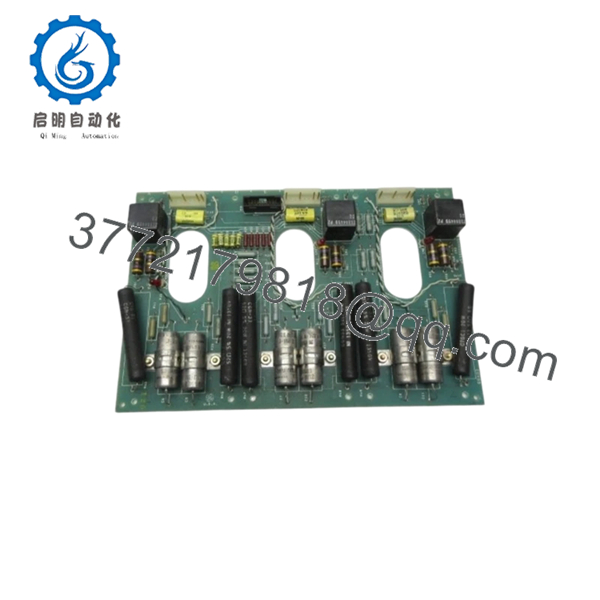
| Component Density | High (Includes electrolytic caps and power resistors) |
| Operating Temp | 0 to 60°C (32 to 140°F) |
| Form Factor | Standard Mark IV Rack-Mount PCB |
| Interface | Card edge connector + discrete terminal points |
Product Introduction
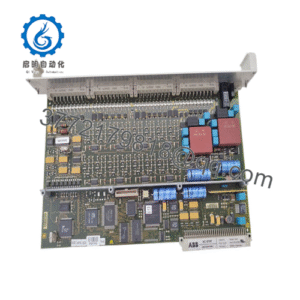
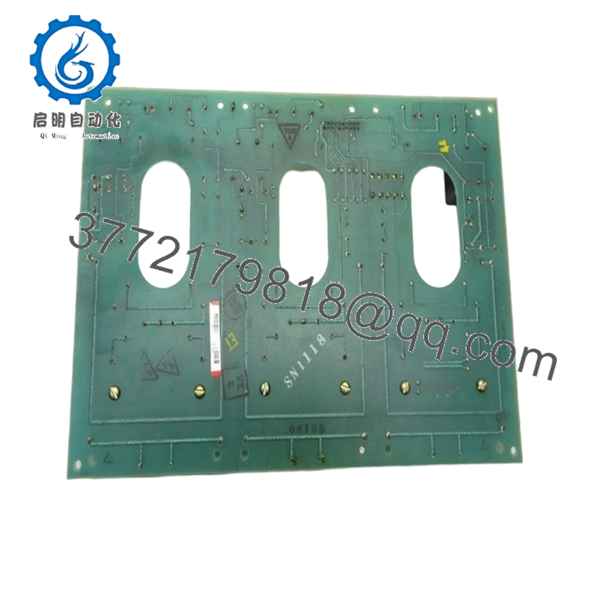
The GE DS3800NHVD1E1B is a critical High Voltage Display (HVD) board designed for the Speedtronic Mark IV turbine control system. Unlike standard logic cards, the NHVD is engineered to interface with higher voltage signals, providing the necessary isolation and conditioning required to bridge the gap between heavy-duty field sensors and the sensitive microprocessor backplane.
This board is primarily utilized for monitoring and driving display elements or feedback loops that operate outside of standard 5V logic levels. The 1E1B revision is a highly stable iteration of the HVD series, featuring upgraded thermal management for the onboard power resistors. For maintenance teams managing legacy Mark IV installations, this “New Surplus” board offers a reliable alternative to refurbished units that may have suffered heat-related component degradation over decades of service.
Installation & Configuration Guide
Stage 1: Pre-Installation Preparation (Estimated Time: 15 mins)
- ⚠️ Safety First: The NHVD board handles high-voltage signals. Ensure the turbine is in a complete lockout/tagout (LOTO) state. Verify that the DC bus and any auxiliary high-voltage feeds to the card rack are de-energized.
- Tools Required: ESD wrist strap, insulated Phillips #1 screwdriver, and a Fluke multimeter (or equivalent) to verify zero voltage before handling.
- Documentation: Mark IV cabinets are often “spaghetti” nests of wiring. Take high-resolution photos of all auxiliary wiring connected to the front-facing terminals of the NHVD.
Stage 2: Removing the Old Module
- Disconnect the logic power to the rack.
- Use your multimeter to verify that no residual high voltage remains on the front-side terminal blocks.
- Label and disconnect any discrete wires or ribbon cables attached to the board’s faceplate.
- Loosen the retaining screws and use the card pullers to slide the unit out. Inspect the backplane connector for signs of arcing or carbon tracking—common in high-voltage cards.
Stage 3: Installing the New Module (Estimated Time: 20 mins)
- Jumpers and Hardware Config: Compare the DS3800NHVD1E1B to the unit you just removed. Replicate the jumper positions exactly. These jumpers often set voltage thresholds or signal attenuation levels.
- Ensure the guide rails are clear of debris.
- Slide the new card into the slot. Apply firm, even pressure until the card edge connector is fully seated.
- Reconnect the terminal wiring and ribbon cables. Ensure screws on terminal blocks are torqued correctly; a loose high-voltage connection is a fire hazard.
- Self-Checklist: [ ] No exposed wire strands at terminals, [ ] Jumpers match old board, [ ] Card seated flush.
Stage 4: Power-On & Testing
- Apply logic power first (Low Voltage). Observe the diagnostic LEDs.
- If the logic checks out, apply the high-voltage/field power.
- Monitor for “Overvoltage” or “Ground Fault” alarms on the operator interface.
- Use a multimeter to verify that the conditioned output signals on the board match the expected scaling for your specific turbine application.

- DS3800NHVD1E1B
Frequently Asked Questions (FAQ)
Q: Can the DS3800NHVD1E1B be used in a Mark V or Mark VI system?
A: No. This board is physically and electrically specific to the Mark IV rack architecture. Attempting to force this into a newer system will damage the backplane and likely fry the card’s isolation circuits.
Q: Why do these NHVD boards fail more often than standard logic boards?
A: Because they handle higher voltages, these cards generate more heat. The power resistors and electrolytic capacitors on the NHVD are subject to thermal aging. Over 20+ years, the capacitors can dry out, and resistors can drift out of tolerance, leading to signal “noise” or total failure.
Q: My current board is a revision 1D; is the 1E1B compatible?
A: Yes, the 1E1B is a backward-compatible successor. It contains minor component improvements intended to increase the board’s lifespan under high-heat conditions. You can swap a 1D for a 1E1B without hardware modifications.
Q: Are the firmware chips included on this HVD board?
A: Most NHVD boards are hardware-centric and do not carry “firmware” in the traditional microprocessor sense, but some variations have socketed PROMs for specific scaling. Always check your old board. If it has a socketed chip, move it to the new board to ensure your scaling stays consistent.
Q: What happens if I seat the card but don’t tighten the faceplate screws?
A: On high-voltage cards, the faceplate screws often provide a secondary path to the chassis ground. Leaving them loose can lead to floating grounds, which introduces electrical noise into your control loop and could potentially damage the card. Tighten them every time.