WhatsApp: +86 16626708626
 Email:
  Phone: +86 16626708626
Description
Key Technical Specifications
| Parameter | Value |
|---|---|
| Manufacturer | General Electric (GE) |
| Model Number | DS3800NHVM1C1C |
| Series | Mark IV (DS3800 family) |
| Product Type | High Voltage Circuit Board |
| Primary Function | Stable voltage regulation in industrial turbine control systems |
| High Voltage Tolerance | Specialized hardware for high voltage withstand |
| Failure Rate | One of the lowest in the DS3800 series |
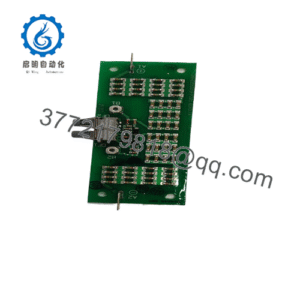
| Capacitors | 6 large metal, 12 large black, 12 average white |
| Total Components | 17 major components on PCB |
| Mounting | Standard backplane rack installation |
| Operating Temperature | −20°C to +70°C (typical for Mark IV) |
| Country of Origin | USA |
Product Introduction
GE DS3800NHVM1C1C is a Mark IV high voltage circuit board designed to support stable voltage regulation in GE Speedtronic turbine control systems. It uses specialized hardware to withstand high voltages and has one of the lowest failure rates in the DS3800 series
This board is selected when the existing high voltage regulation circuit shows instability, voltage drift, or fails diagnostic checks. The PCB includes 17 major components—six large metal capacitors, twelve large black capacitors, and twelve average-sized white capacitors—providing the filtering and energy storage needed for reliable high voltage operation.
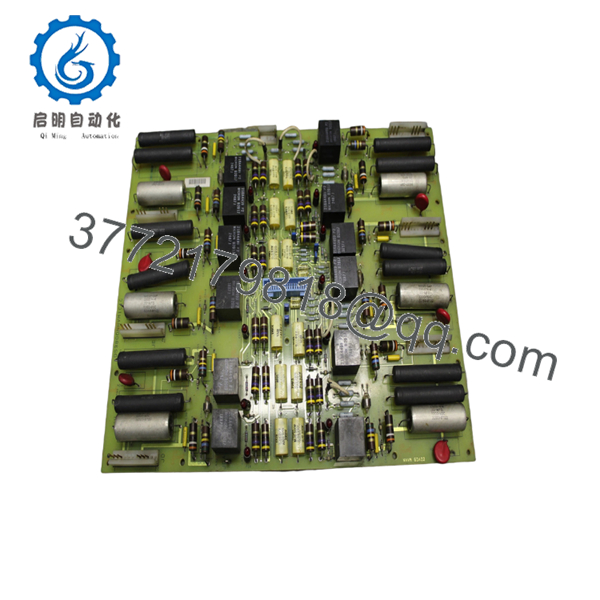
- DS3800NHVM1C1C
Troubleshooting Quick Reference
| Symptom | Possible Cause | Relevance to this Part | Quick Check Method | Recommendation |
|---|---|---|---|---|
| Voltage output unstable | Capacitor failure, voltage regulation drift | ✅ High | Measure output voltage under load; check for ripple with oscilloscope | Replace board if voltage drifts or ripples exceed spec |
| High voltage fault alarm | Protection circuit triggered, board failure | ✅ High | Check diagnostic logs for HV fault codes; inspect board for burnt components | Replace if fault follows the board and external wiring is good |
| No output voltage | Power supply failure, backplane issue, board failure | Medium | Measure 24 V DC input at board terminals; verify adjacent cards power up | Check PSU first; replace board if input is good but no output |
| Overheating board | Thermal stress, component failure, poor ventilation | ✅ High | Touch test (carefully) or use thermal camera; check cabinet temperature | Replace if board runs hot; improve cabinet cooling if needed |
| Intermittent operation | Loose connector, marginal component, thermal stress | ✅ High | Reseat board, inspect connector pins; monitor during warm-up | Replace if issue persists after reseating |
| Visible capacitor damage | Bulging, leaking, burnt capacitors | ✅ High | Visual inspection of the 18 capacitors on the board | Replace immediately if any capacitor shows damage |
| System trips on start-up | HV circuit fault, protection trip, power issue | ✅ High | Check start-up diagnostic logs and fault codes | Replace board if fault follows the card |
Contact technical support with photos, fault codes, and diagnostic logs if the issue persists after these checks.
Frequently Asked Questions
Q: Is this a direct replacement for every DS3800NHVM high voltage board?
A: Not automatically. GE Mark IV parts vary by revision and suffix (like the 1C1C ending). Verify the exact model suffix, connector layout, and system revision before ordering to avoid fit or compatibility issues.
Q: Can I hot-swap this high voltage board?
A: No. Power down the cabinet first. Hot-swapping a high voltage board can damage the backplane, fry the new card, or cause an arc that trips the turbine. Follow lockout/tagout procedures before removal.
Q: Will my existing settings transfer to the new board?
A: This is a hardware regulation board, not a programmable module, so there are no user settings to transfer. However, document your system configuration and take photos before removal for reference.
Q: Why is this cheaper than buying from GE directly?
A: This is typically new surplus or tested surplus stock, not factory fresh production from GE’s current line. That lowers cost, but you should still verify condition, test status, and revision match before installation.
Q: What condition should I expect for this part?
A: Best sold as new surplus or tested surplus with a documented test report. For legacy Mark IV parts, expect aftermarket support rather than factory-sealed inventory. Transparency on testing matters more than marketing language.
Q: What usually causes failure on a high voltage board like this?
A: In the field, common issues are capacitor aging (bulging/leaking), thermal stress from poor cabinet ventilation, power supply problems, or ESD damage during handling. The capacitors are the most likely failure point given there are 18 of them on the board.
Q: How do I avoid a bad swap and rework?
A: Take a clear photo of the original board’s connectors and capacitor arrangement, verify the exact model suffix (DS3800NHVM1C1C), confirm the system revision, and compare connector positions before installation. That prevents most rework and saves downtime. Keep these checks in mind and you’ll save yourself 90% of typical rework time.