 WhatsApp: +86 16626708626
 Email:
  Phone: +86 16626708626
Description
Key Technical Specifications
- Model: DS3800NOAB1C1B
- Manufacturer: General Electric / GE Fanuc
- Series: Mark IV Speedtronic
- Function: Operational amplifier board
- Application: Gas/steam turbine control system
- Form Factor: Printed circuit board assembly
- System Family: GE Mark IV
- Replacement Type: Exact suffix match recommended
- Condition: Typically sold as new surplus or tested refurbished
- Availability: Obsolete legacy control hardware
Product Introduction
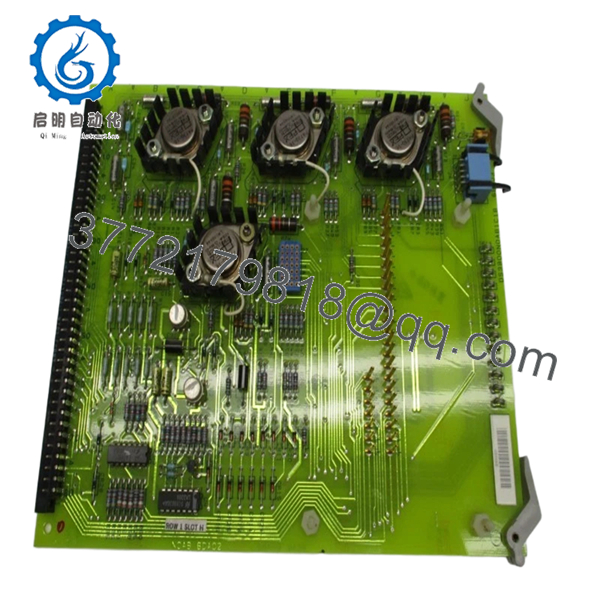
GE DS3800NOAB1C1B is a Mark IV operational amplifier board used in legacy GE Speedtronic turbine control systems. It is a board-level control component for older industrial cabinets where exact part-number match matters more than generic interchangeability.
This part is typically sourced for maintenance, repair, and exact replacement work on obsolete Mark IV equipment. The main buying filters are revision match, physical compatibility, and whether the unit is new surplus or certified refurbished.

- DS3800NOAB1C1B
Troubleshooting Quick Reference
| Symptom | Possible Cause | Relevance to this Part | Quick Check Method | Recommendation |
|---|---|---|---|---|
| Board not recognized after install | Wrong revision, bad seating, or incompatible replacement | ✅ High | Verify the full suffix and reseat the board in the rack | Match the exact part number before assuming a failure |
| Turbine cabinet alarm appears immediately | Upstream wiring issue or related Mark IV card fault | ⚠️ Medium | Check cabinet diagnostics and compare against the previous board | Inspect the system first; this board is not always the root cause |
| Output signal is unstable or noisy | Analog path issue, connector corrosion, or failed op amp stage | ✅ High | Measure signal behavior at the card edge and compare to the known-good channel | Replace only after confirming clean input power and connectors |
| No visible change at the controller | Loss of rack power or backplane issue | ❌ Low | Measure rack supply voltages and check adjacent modules | Check the cabinet power path first |
| Intermittent faults during vibration | Loose mounting, worn connector, or cabinet contamination | ✅ High | Inspect board retention, edge contacts, and cabinet vibration points | Reseat, clean, and retest before ordering another unit |
| Board runs hot | Cabinet cooling problem or internal component failure | ✅ High | Measure cabinet temperature and feel for abnormal heat rise after power-up | Stop operation and verify cooling before reuse |
If you are stuck, send photos of the board, cabinet wiring, and alarm logs to technical support.
Frequently Asked Questions
Is this a direct replacement for my DS3800NOAB1C1B?
Yes, if the suffix and Mark IV cabinet match exactly. On these older GE boards, small revision differences can matter more than they should.
Can I swap it live?
No. Shut the system down first. Live insertion on legacy turbine control hardware is asking for backplane trouble.
Is this part obsolete?
Yes, this is legacy Mark IV hardware. Stock usually comes from surplus or refurbished channels, not current factory production.
Why does the price vary so much?
Condition and test status drive the price. A clean, verified board costs more than an untested pull.
What should I check before installing it?
Confirm the exact suffix, inspect the connector fingers, verify cabinet cooling, and compare the old board to the new one side by side. That catches most installation errors.
Does this board need programming?
Usually no board-level programming is involved, but the surrounding system configuration still has to be right. Back up the existing setup before any change.
What if the symptoms look like a board failure but the board tests fine?
Then the problem is probably elsewhere in the cabinet, wiring, or another Mark IV card. On these systems, the board gets blamed first, but it is not always guilty.