 WhatsApp: +86 16626708626
 Email:
  Phone: +86 16626708626
Description
3. Key Technical Specifications
| Parameter | Value |
| System | GE Speedtronic Mark IV |
| Component Name | Power Supply Filter Board (PSF) |
| Revision Number | 1D1E |
| Input Voltage | System Backplane DC Rails |
| Function | Noise suppression and voltage stabilization |
| Form Factor | Mark IV standard card edge |
| Indicators | On-board status LEDs for rail monitoring |
| Weight | Approximately 1.2 lbs (0.54 kg) |
4. Product Introduction
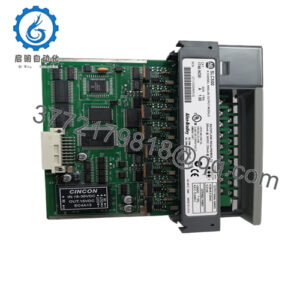
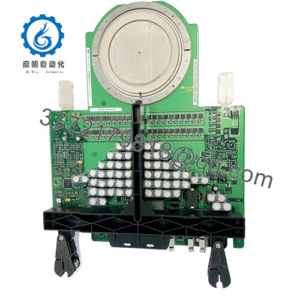
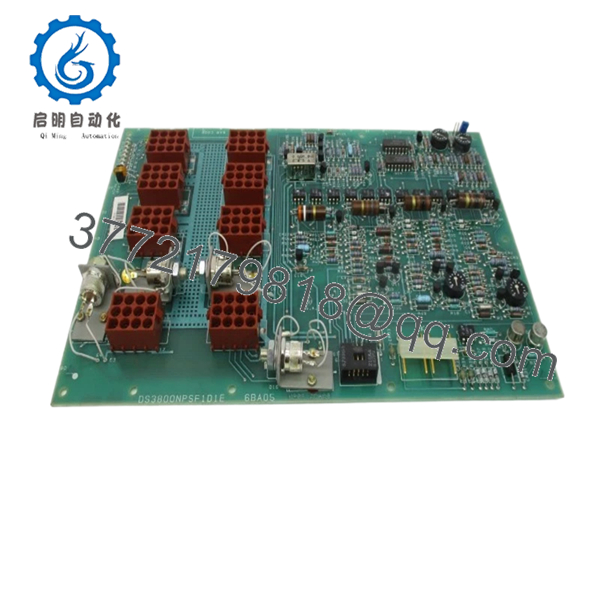
The GE DS3800NPSF1D1E is a specialized Power Supply Filter (PSF) board designed for the Speedtronic Mark IV turbine control system. It acts as a critical line of defense for sensitive control electronics, filtering out electrical noise and ripple from the DC power rails before they reach the I/O and processor modules.
This specific revision (1D1E) is engineered to maintain high signal integrity in the electrically noisy environments typical of power plants. By stabilizing the internal power distribution, it prevents intermittent “Ghost” alarms and communication resets that often plague aging Mark IV racks with degraded filtration components.
5. Installation & Configuration Guide
Stage 1: Pre-Installation Preparation
- ⚠️ Safety First: Power supply boards handle high-current DC rails. De-energize the entire Mark IV cabinet. Verify the absence of voltage on the distribution bus using a calibrated multimeter.
- Tools Required: ESD-safe gloves/wrist strap, non-conductive adjustment tool (if tuning is required), and a multimeter (e.g., Fluke 87V).
- Documentation: Mark the specific rack slot. Check the labels on the cables connected to the front of the board (if applicable).
Stage 2: Removing the Old Module
-
- Open the rack door and locate the PSF board.
-
- If there are front-mounted wires, label them and disconnect them carefully.
-
- Grip the extraction handles and pull the board firmly away from the backplane.
-
- ⚠️ Note: Check the edge connector of the old board for signs of localized heating or “charring,” which could indicate a short-circuit on the backplane side.
Stage 3: Installing the New Module
-
- ESD Prep: Ground yourself to the cabinet frame. Static discharge can damage the filter capacitors or resistors on this board.
-
- Hardware Check: Compare the revision “1D1E” on the new board with the old one. Verify that any physical jumpers or potentiometers match the factory or site-specific settings.
-
- Insertion: Align with the card guides and slide the board in until the edge connector is fully seated.
-
- Self-Checklist: [ ] Connector pins aligned, [ ] Board locked in slot, [ ] Front wiring reconnected.
Stage 4: Power-On & Testing
-
- Re-apply power to the Mark IV system.
-
- Critical Step: Immediately check the status LEDs on the front faceplate of the DS3800NPSF1D1E. Green LEDs usually indicate healthy power rails.
-
- Use a multimeter to verify the DC test points on the board faceplate (if present) match the expected system voltages (e.g., +5V, ±15V, +24V).
-
- Monitor the system for “Low Voltage” or “Power Supply Fault” messages.

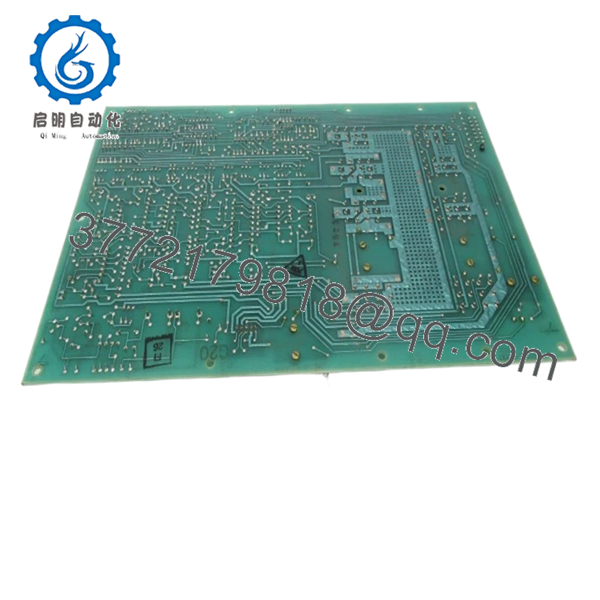
- DS3800NPSF1D1E
- DS3800NPSF1D1E
6. Frequently Asked Questions (FAQ)
Q: Can this board be replaced while the system is live? A: Absolutely not. Removing a power filter board while under load can cause a sudden voltage spike or drop that will crash the entire turbine control system and potentially damage downstream cards. Always perform a cold swap.
Q: Why does my old board have scorched marks on the edge connector? A: This is usually due to “fretting corrosion” or a loose fit in the backplane over decades of operation. If your old board is burnt, we recommend cleaning the backplane connector with an approved electronic cleaner before installing the new DS3800NPSF1D1E to ensure a low-resistance contact.
Q: Is the “1D1E” revision compatible with earlier versions? A: Generally, GE designed later revisions to be backward compatible. However, you should check your specific system manual. The “1D1E” suffix indicates specific component updates or improved capacitor ratings compared to earlier “A” or “B” revisions.
Q: What is the most common failure mode for this board? A: Electrolytic capacitor aging is the primary culprit. Over 20+ years, these capacitors dry out and lose their ability to filter noise, leading to unexplained system reboots. Replacing an old PSF board with a New Surplus unit is a standard preventative maintenance move for Mark IV systems.
Q: Do I need to calibrate anything after installation? A: Most DS3800NPSF boards are “plug and play.” However, some versions have trim pots for fine-tuning voltage rails. If your specific site requires precise voltage levels, use a calibrated multimeter to check the test points after a 15-minute warm-up period.