 WhatsApp: +86 16626708626
 Email:
  Phone: +86 16626708626
Description
3. Key Technical Specifications
| Parameter | Value |
|---|---|
| Model Number | DS3800NVAA |
| Manufacturer | General Electric |
| Product Type | Isolation Converter Board |
| System Platform | Speedtronic Mark IV DS3800 |
| Primary Function | Signal isolation and conversion |
| Application | Gas and steam turbine control systems |
| Power Requirement | +5 V DC |
| Supply Voltage | 24 V DC |
| Operating Temperature | −40 °C to +55 °C |
| Weight | Approx. 0.6 kg |
| Integrated Circuits | Approx. 22 EEPROM/EPROM devices |
| Variable Components | 7 onboard potentiometers |
| Transformer Count | 4 onboard transformers |
| LED Indicators | 1 amber status LED |
| Product Lifecycle | Obsolete |
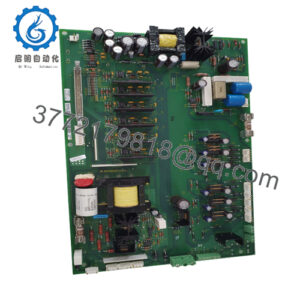
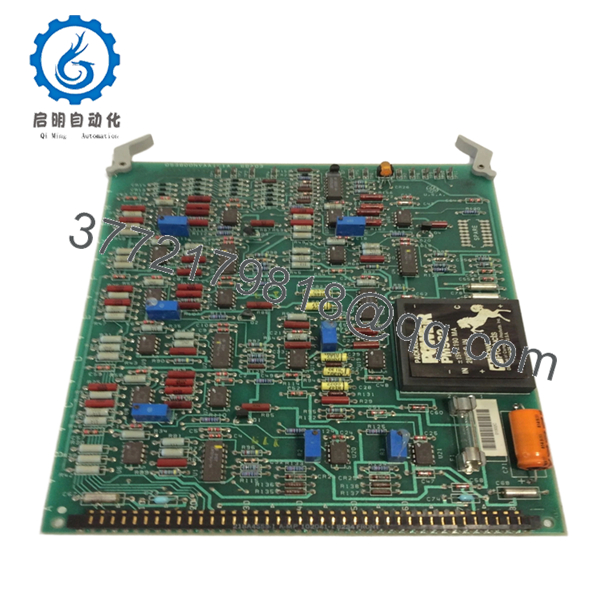
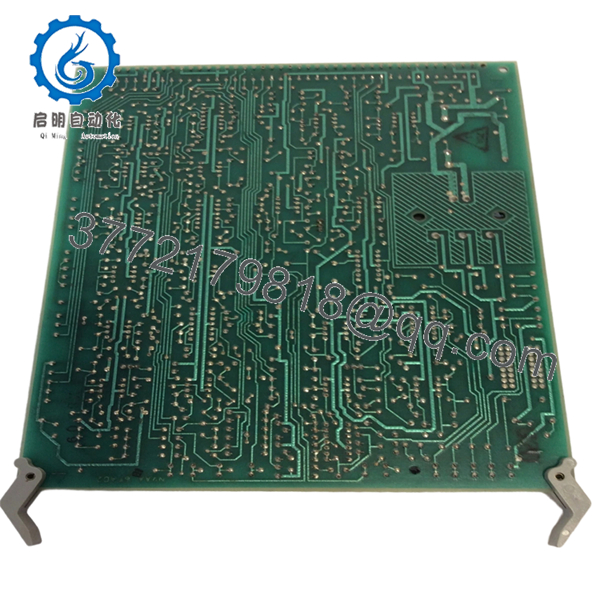
DS3800NVAA functions as an isolation converter board within the GE Mark IV architecture and contains an onboard battery pack, signal transformers, and configurable analog adjustment components.
4. Product Introduction
GE DS3800NVAA is an isolation converter and interface board designed for the GE Speedtronic Mark IV turbine control system. It handles signal isolation and conversion tasks used between interconnected control modules inside gas and steam turbine control cabinets.
In field deployments of Mark IV systems, isolation boards frequently sit in the background unnoticed until they fail. Then communication anomalies, unstable analog readings, or intermittent control behavior suddenly appear. Plants running long-life turbine assets usually keep spare inventory because these boards support signal integrity across aging control hardware.
5. Installation & Configuration Guide
Stage 1: Pre-Installation Preparation (Estimated: 10 minutes)
⚠️ Safety First: Notify operations of downtime. Confirm turbine equipment is in a safe state. Apply lockout/tagout procedures and isolate cabinet power. Wait 5 minutes minimum for stored capacitor discharge.
Tools Required:
- ESD wrist strap
- PH1 screwdriver
- Fluke 115 multimeter
- Wire labels
- Smartphone camera
- ESD work mat
Data Backup
- Export system settings if applicable.
- Record cabinet alarm status.
- Photograph wiring and connector layouts.
- Photograph any jumper settings.
- Record board revision labels.
I’ve been on outages where a technician skipped documentation because “I’ll remember it.” Twenty minutes later everyone was standing around staring at four identical connectors.
Stage 2: Removing the Old Module (Estimated: 5 minutes)
- Remove cabinet covers.
- Label and disconnect all field wiring.
- Release board locking hardware.
- Pull the board out straight. Avoid twisting.
- Inspect connector pins and mating surfaces.
⚠️ Do not force extraction.
Mark IV connectors age. Excessive force bends pins and turns a ten-minute replacement into a two-day parts hunt.
⚠️ Keep the old board until startup succeeds.
Stage 3: Installing the New Module (Estimated: 10 minutes)
- Connect ESD protection first.
- Verify exact part number: DS3800NVAA
- Configuration Clone (Crucial): Match jumper positions and hardware settings exactly.
- Insert board evenly into position.
- Confirm retention clips engage.
- Reconnect wiring.
Self-Checklist:
- Model confirmed
- Connectors fully seated
- Wiring secure
- Lock tabs engaged
- ESD procedure followed
⚠️ This is the most common rookie mistake, but it happens constantly. Take a picture before you pull it. I can’t stress this enough.
Stage 4: Power-On & Testing (Estimated: 10 minutes)
Pre-Power Check
Verify no short exists across the 24 V rail using a Fluke meter.
Power sequence:
- Power rack only.
- Observe amber status LED behavior.
- Verify communication activity.
- Confirm converter operation.
- Perform dry-run signal verification.
⚠️ Troubleshooting Note: If communications become unstable immediately after installation, suspect revision differences before assuming hardware failure.
Technical Pitfall & Survival Guide
❗ Firmware Revision Mismatch
Issue: Newer board revisions occasionally behave differently in older cabinets.
Avoidance: Document all revision labels before replacement.
I’ve seen technicians spend two days chasing a “Communication Timeout” alarm that turned out to be a board revision issue.
❗ DIP Switch / Jumper Misconfiguration
Issue: Factory defaults may not match plant settings.
Avoidance: Photograph every switch and jumper before removal.
Night-shift replacements generate most of these calls.
❗ Terminal Block / Wiring Incompatibility
Issue: Similar boards may not use identical connector arrangements.
Avoidance: Verify wiring diagrams.
Even similar GE DS3800 variants can route signals differently. Never wire from memory.
❗ Power Draw Specifications
Issue: Aging power supplies sometimes run near capacity.
Avoidance: Leave approximately 20% headroom.
A loaded cabinet can quietly push power margins beyond acceptable limits.
❗ Electrostatic Discharge (ESD)
Issue: Static damage before installation.
Avoidance: Use grounded wrist straps and ESD mats.
I once watched an engineer unpack a board during winter with no wrist strap. Power came on. Smoke followed immediately. Expensive lesson.
Keep these checks in mind and you’ll save yourself 90% of typical rework time.

- DS3800NVAA
- DS3800NVAA
6. Frequently Asked Questions (FAQ)
Q1: Can I hot-swap this module?
No.
Mark IV systems were not built around hot-swap hardware. Pulling boards under power risks backplane faults and connector damage.
Q2: Is GE DS3800NVAA obsolete?
Yes.
This belongs to the legacy Speedtronic Mark IV family. Inventory generally comes from surplus channels or tested refurbished stock.
Q3: Is this board genuinely new?
Usually “New Original” means unused surplus inventory.
Factory packaging may not survive long-term warehouse storage. Ask for serial photos and inspection documentation.
Q4: What is the direct replacement if inventory becomes unavailable?
There is not always a clean replacement path.
Mark IV systems frequently depend on exact board suffixes and cabinet configuration. Verify with OEM documentation before substitution.
Q5: Will I lose programming when replacing this board?
Normally no.
DS3800NVAA performs signal isolation and interface functions. Main turbine logic generally resides elsewhere in the Mark IV architecture.
Still perform backups first.
Q6: Why are some prices much lower than original GE pricing?
OEM production ended years ago.
Current market pricing depends on inventory age, testing history, condition, and urgency. Surplus stock varies substantially.
Q7: How do you verify quality before shipment?
Our SOP follows documented inspection steps:
- OEM packing and serial verification
- Counterfeit inspection and label checks
- Visual inspection for corrosion or rework marks
- Functional verification using compatible test hardware
- Communication verification
- 500 V Megger insulation testing (>10 MΩ)
- Hardware revision documentation
- QC signoff and ESD packaging
Test videos and inspection photos are available upon request.
Technical hardware details and operating specifications were validated against documented DS3800NVAA inventory records and field descriptions.