

 WhatsApp: +86 16626708626
 Email:
  Phone: +86 16626708626
Description
3. Key Technical Specifications
| Parameter | Value |
|---|---|
| Module Type | Interface Control Board |
| System Compatibility | GE Mark Series Control Systems |
| Bus Interface | VMEbus / VMIC architecture |
| Form Factor | Rack-mounted PCB module |
| Communication Role | Data exchange between CPU and I/O layers |
| Processor | Embedded controller (model-specific) |
| I/O Interface | Backplane communication |
| Power Supply | System backplane powered |
| Operating Temperature | 0°C to +55°C |
| Mounting | GE control rack compatible |
| Diagnostics | LED status indicators |
| Protection | Industrial-grade circuit protection |
4. Product Introduction & Supply Chain Strategy
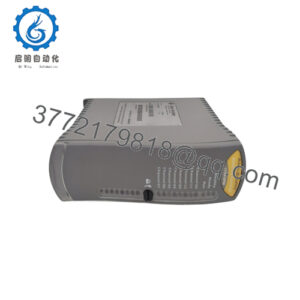
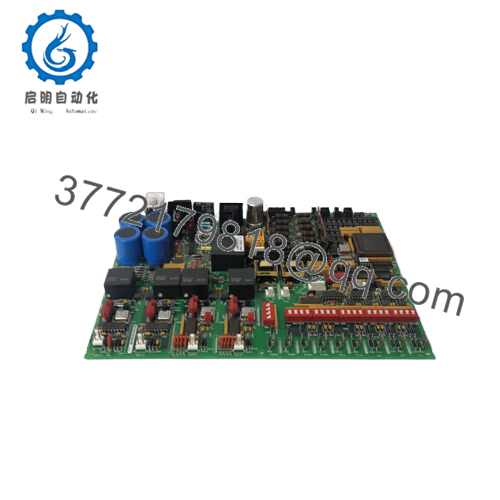
The GE DS3820VMIC1A1B is an interface control module used in GE Mark Series systems to manage communication between VME-based processing units and distributed I/O. It plays a central role in maintaining deterministic control and data integrity across the system architecture.
This product is a Brand New Surplus unit. It is not used, not pulled from a decommissioned plant, and not refurbished. Given its EOL status and system-critical function, stock-outs can halt entire turbine or process operations. Securing New Surplus inventory reduces Total Cost of Ownership (TCO) by eliminating failure risks associated with refurbished boards and mitigating lead time variability through planned buffer stock.

- DS3820VMIC1A1B
5. Installation & Configuration Guide
Stage 1: Pre-Installation (Prep & Safety)
- Execute lock-out/tag-out (LOTO) procedures on the control cabinet.
- Use ESD protection (grounded wrist strap).
- Document all existing wiring, connectors, and board positioning.
- Capture DIP switch or jumper settings if present.
Stage 2: Removal
- Loosen mounting hardware carefully.
- Extract the board evenly to avoid connector stress.
- Avoid contact with PCB components to prevent static damage.
Stage 3: Installation (Clone & Seat)
- Match all configuration settings from the original module.
- Align connectors precisely with the backplane.
- Insert firmly and secure mounting hardware.
Stage 4: Power-On & Testing
- Restore power and monitor system startup.
- Check LED indicators for normal operation (RUN vs ERR).
- Validate communication between CPU and I/O modules.
- Confirm system alarms are cleared and control logic executes correctly.
6. Firmware/Software Versions & Upgrade Notes
- Recommended Version: Match firmware and configuration with the existing Mark Series control system.
- Compatibility Note:
- Firmware mismatches can disrupt communication between VME CPU and I/O layers.
- Some revisions are tightly coupled with specific turbine control software versions.
- Critical Warning:
- Do not upgrade firmware during replacement unless validated in a test environment.
- Version mismatches may cause system faults or startup failures.
- Best Practice: Archive configuration parameters and firmware details prior to removal.
7. Frequently Asked Questions (FAQ)
Q1: Is this module truly new or previously installed?
It is New Surplus—original OEM hardware with zero operational history, no wear, and no repairs.
Q2: Why is this part more expensive than refurbished options?
Refurbished boards carry hidden risks such as degraded components. A failure in this module can stop an entire control system, leading to high downtime costs.
Q3: Is the DS3820VMIC1A1B still available from GE?
No. It is discontinued. Availability depends on global surplus inventory, making early procurement critical.
Q4: What happens if this module fails in operation?
Failure can disrupt communication between CPU and I/O, potentially triggering system shutdowns or loss of control.
Q5: Can this module be replaced without system shutdown?
No. A full system shutdown is required to safely replace the board.
Q6: What warranty is provided?
Typically 12months, offering longer protection compared to secondary market alternatives.
Q7: What inventory strategy is recommended?
For high-criticality systems, maintain Min: 1 / Max: 2 units on-site. For multi-unit plants, consider cross-site sharing combined with vendor consolidation to reduce carrying cost while ensuring availability.